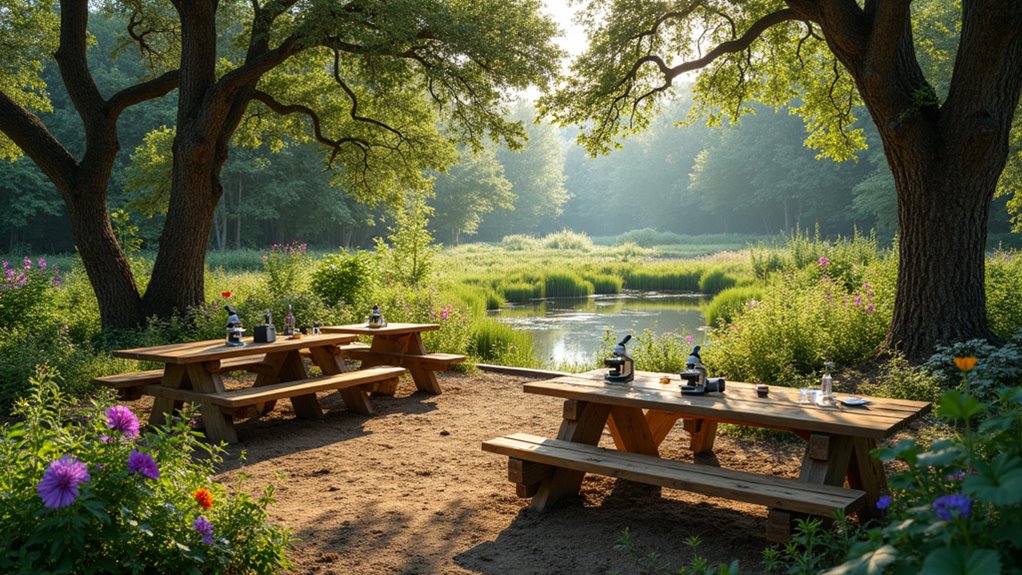
Universities offer diverse environmental programs tailored to different career paths and interests. Environmental Science & Policy combines natural and social sciences, while Environmental Engineering focuses on technical solutions through ABET-accredited programs. Environmental Studies integrates humanities perspectives, and Sustainability Science takes a holistic systems approach. Specialized tracks like Conservation Biology and Environmental Health Sciences provide focused expertise. These programs equip graduates with essential skills to tackle today’s pressing ecological challenges. The journey toward environmental leadership starts with choosing the right educational path.
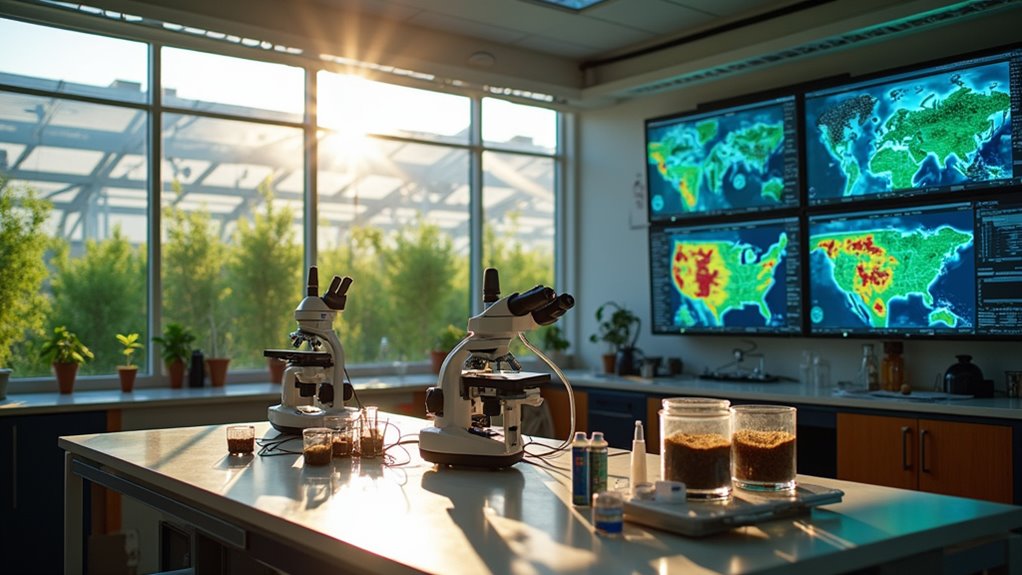
The growing environmental challenges of the 21st century have sparked a surge in university programs designed to equip the next generation of environmental leaders. These diverse academic pathways reflect the complex, interconnected nature of today’s ecological issues, offering students multiple routes to make a meaningful impact in their careers.
Environmental Science & Policy programs stand at the forefront, combining natural and social sciences to tackle sustainability challenges. These programs emphasize hands-on experience through internships and fieldwork, preparing graduates for roles in government agencies, non-profits, and consulting firms. Students dive deep into ecology, environmental chemistry, and policy analysis, developing a well-rounded skillset that bridges scientific understanding with practical solutions. With core curriculum covering biological systems, ecological systems, climate change, land use, and water management, students receive comprehensive training in essential environmental topics. The curriculum emphasizes scientific inquiry through hypothesis formulation and data analysis to solve real-world environmental problems. These programs also incorporate indigenous knowledge for enriched environmental stewardship perspectives.
For those drawn to technical problem-solving, Environmental Engineering offers a rigorous path focused on protecting our planet through innovative design. ABET-accredited programs guarantee graduates meet professional standards, with coursework covering air and water quality, waste management, and environmental remediation. These engineers often find themselves at the cutting edge of renewable energy development and urban sustainability planning. Students in these programs are also introduced to green steel production methods, which have the potential to significantly reduce sector emissions by 2050.
Environmental Studies takes a broader approach, weaving together insights from humanities, economics, and law. This flexibility allows students to specialize while maintaining a thorough understanding of environmental challenges. The program’s strong emphasis on communication skills makes graduates particularly effective in advocacy, education, and management positions where explaining complex issues to diverse audiences is vital. As sustainable transportation evolves, urban public transit expansion becomes a critical focus, showcasing the importance of multidisciplinary education.
The emerging field of Sustainability Science represents a systems-based approach to environmental challenges, integrating environmental, social, and economic perspectives. Programs often include business and entrepreneurship components, preparing students for roles across various sectors as sustainability becomes increasingly central to organizational strategy. As extreme weather events increase in frequency and intensity, students in these programs learn to develop strategies to mitigate these impacts on communities and ecosystems.
Conservation Biology focuses on protecting Earth’s biodiversity through field research and habitat restoration. Students gain practical experience in wildlife management and ecosystem protection, skills that are increasingly valuable as climate change threatens species worldwide.
Meanwhile, Environmental Health Sciences examines how environmental factors impact human wellbeing, combining toxicology, epidemiology, and risk assessment to address public health challenges.
Geosciences programs round out the environmental education landscape, offering deep insight into Earth’s physical systems. These programs feature strong quantitative components and immersive field experiences, preparing students for careers in resource management, hazard mitigation, and the energy sector. The combination of technical expertise and practical experience makes graduates particularly valuable in addressing climate-related challenges.
These programs share a common thread: they prepare students to tackle real-world environmental challenges while providing diverse career opportunities. Whether through scientific research, engineering solutions, policy development, or public advocacy, graduates from these programs are positioned to make meaningful contributions to environmental protection and sustainable development.
As environmental challenges continue to evolve, these academic pathways provide essential training for those ready to take on the significant work of safeguarding our planet’s future.
Frequently Asked Questions
What Internship Opportunities Are Available for Environmental Science Students?
Environmental science students have diverse internship opportunities across government agencies, non-profits, private companies, and universities.
NOAA, EPA, and the National Park Service offer hands-on experience in weather, ocean studies, and conservation.
Non-profits like EDF and WWF provide positions in policy and sustainability.
Private firms like Geosyntec offer technical roles, while universities like Stanford and UC Davis maintain research opportunities.
Many positions include stipends and valuable networking connections.
How Can Students Fund Their Environmental Program Studies?
Students can fund their environmental studies through multiple channels.
Federal aid like FAFSA provides access to Pell Grants (up to $6,895) and Direct Loans (up to $12,500).
Specialized environmental scholarships from organizations like Udall ($7,000) and Annie’s ($10,000) offer additional support.
University-specific merit scholarships can range from $1,000 to full tuition.
Research opportunities through NSF and EPA provide stipends, while work-study programs offer part-time employment to offset costs.
Which Companies Actively Recruit Graduates From Environmental Programs?
Multiple sectors actively recruit environmental program graduates.
Large consulting firms like AECOM, Tetra Tech, and Arcadis regularly hire entry-level positions.
Government agencies, including EPA and NOAA, offer dedicated programs for recent graduates.
Leading nonprofits such as The Nature Conservancy and World Wildlife Fund provide opportunities in conservation.
Green tech companies like Tesla and First Solar seek environmental talent for sustainable innovation projects.
State-level environmental departments also recruit new graduates year-round.
What Prerequisites Are Needed Before Applying to Environmental Programs?
Environmental programs typically require strong foundations in science and mathematics. Core prerequisites include college-level calculus, general chemistry, biology, and physics – all with lab components.
Students need a minimum GPA of 2.5-3.0 in both science/math courses and overall. Additional requirements include statistics, computer science, environmental science, and earth science coursework.
Non-academic prerequisites often involve relevant volunteer experience, faculty recommendations, and standardized test scores like the SAT or GRE.
Can International Students Participate in Environmental Field Studies Abroad?
Yes, international students can actively participate in environmental field studies abroad. Most programs welcome international participants, though specific eligibility requirements vary.
Students typically need a valid passport, health insurance, and must meet GPA minimums of 2.6-2.8. Language proficiency prerequisites may apply for some locations.
Popular destinations include Costa Rica, Australia, and Tanzania, offering experiences in tropical ecology, marine biology, and wildlife conservation. Visa requirements differ by country and program duration.