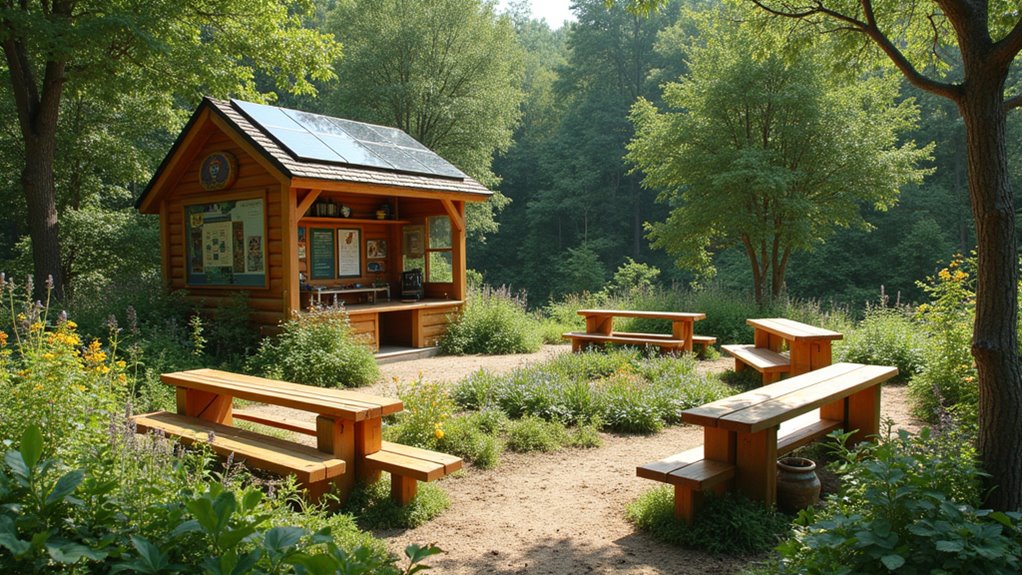
Modern climate change education combines classroom learning with real-world action. Students collect and analyze actual climate data, participate in community sustainability projects, and engage directly with scientists. Through hands-on experiments, simulations, and cross-subject integration, learners develop critical thinking skills while exploring solutions. Teachers receive specialized training to balance scientific urgency with hope-driven approaches. These innovative methods transform students into informed climate leaders who catalyze positive change in their communities. The journey toward climate literacy opens doors to deeper environmental understanding.
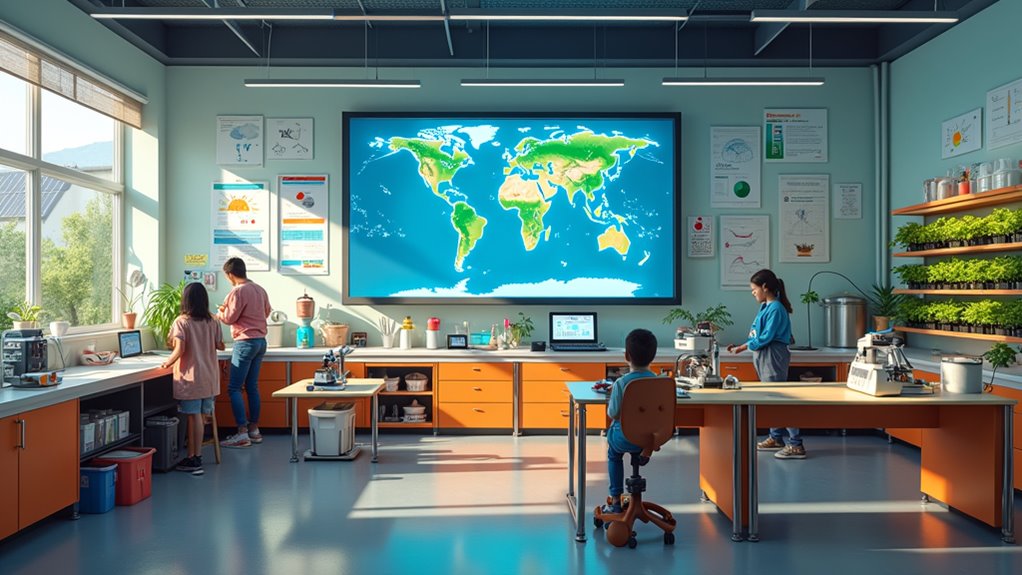
While global temperatures continue to rise at an unprecedented rate, climate change education has emerged as a critical tool in preparing current and future generations to understand and address the climate crisis. Critical thinking skills are essential for students to evaluate complex climate data effectively. Effective climate education programs seamlessly weave together scientific understanding with practical action, creating a thorough approach that empowers students to become informed and engaged climate citizens. Environmental education for adults also supports lifelong learning by continually updating knowledge and skills necessary to address evolving climate challenges.
Climate education equips today’s learners with essential tools to understand, confront, and solve the growing challenges of our warming planet.
In classrooms across the globe, innovative educators are moving beyond traditional lectures to implement hands-on learning experiences that bring climate science to life. Students collect and analyze real-world climate data, participate in simulations that demonstrate the complexities of climate systems, and engage directly with climate scientists through virtual and in-person connections. Following UNESCO’s framework, educators increasingly emphasize participatory teaching methods to motivate and engage learners in sustainable development. These experiential approaches help transform abstract concepts into tangible understanding, while building critical thinking and problem-solving skills essential for addressing climate challenges.
The most successful programs take an interdisciplinary approach, recognizing that climate change isn’t just a science issue. Social studies classes explore the human impacts and policy implications, language arts courses examine climate literature and communication, and arts programs channel climate awareness through creative expression. Integrating sustainability into school curricula enables students to see the relevance of climate education in everyday learning. This cross-curricular integration helps students grasp the interconnected nature of the climate crisis while developing a more nuanced understanding of potential solutions. To ensure these programs are effective, educators employ tools and strategies to measure the impact of education on environmental knowledge and behavior. Environmental education plays a vital role in fostering informed citizens who can effectively tackle ecological challenges.
Teachers receive specialized training to effectively deliver climate education, including professional development focused on both scientific content and pedagogical strategies. They learn to address the emotional aspects of climate change, balancing the urgency of the crisis with messages of hope and empowerment. Support networks enable educators to share best practices and access up-to-date resources as climate science continues to evolve.
Action-oriented learning stands at the heart of effective climate education. Students participate in school and community projects that directly address climate change, from implementing energy-efficiency measures to developing local climate adaptation strategies. These hands-on initiatives demonstrate that individual and collective actions can make a meaningful difference, while building practical skills and fostering civic engagement.
The impact of climate education extends beyond the classroom walls. Students often become climate ambassadors within their families and communities, sharing knowledge and inspiring action. Schools track various metrics to measure success, including knowledge gains, behavior changes, and concrete emissions reductions achieved through student-led initiatives. This data helps refine educational approaches while demonstrating the tangible benefits of climate literacy.
Through these thorough approaches, climate change education is preparing a generation equipped with the knowledge, skills, and motivation to tackle the climate crisis head-on. By combining scientific understanding with practical action and emotional resilience, these programs create pathways for students to move from awareness to meaningful engagement in climate solutions.
Frequently Asked Questions
How Can Parents Support Climate Change Education at Home?
Parents can support climate education at home by making it personally relevant and interactive. This includes conducting simple science experiments, tracking local weather patterns, and discussing climate news as a family.
Hands-on activities like gardening teach ecosystems while reducing household energy creates real-world impact. Regular conversations about environmental values, paired with family actions like recycling and sustainable shopping, help children understand their role in climate solutions.
What Age Should Children Start Learning About Climate Change?
Children can start learning about climate change as early as age 3, but the approach should match their developmental stage.
For young children (3-7), the focus should be on building a positive connection with nature through outdoor exploration and simple environmental care activities.
As children grow older, educators can gradually introduce more complex climate concepts, moving from basic observations in elementary years to detailed scientific analysis in high school.
Are There Online Resources for Self-Studying Climate Science?
Numerous high-quality resources exist for self-studying climate science online. The IPCC reports and NASA’s Global Climate Change website provide authoritative scientific foundations.
Interactive tools like En-ROADS simulator and NOAA’s Data in the Classroom allow hands-on learning with real climate data.
Free courses are available through platforms like Coursera, EDX, and the SDG Academy. The OpenLearn platform offers university-level content, while the Carbon Literacy Project provides structured training modules.
How Do Different Countries Approach Climate Change Education?
Countries take diverse approaches to climate education, reflecting different priorities and resources. Italy and New Zealand have made it mandatory in schools, while Sweden integrates climate topics across various subjects.
Some nations, like Morocco, use hands-on projects to engage students. However, many countries face challenges like political resistance and limited teacher training.
UNESCO reports only 53% of nations mention climate change in education policies, highlighting room for improvement globally.
What Careers Focus on Addressing Climate Change Solutions?
Several career paths focus directly on climate change solutions.
Environmental Scientists study pollution and develop remediation strategies. Renewable Energy Engineers design sustainable power systems like wind and solar installations. Climate Change Analysts track weather patterns and create predictive models.
Sustainability Consultants help organizations reduce their environmental impact. These professionals earn competitive salaries, typically ranging from $73,000 to $92,000 annually, while working to address our climate challenges.