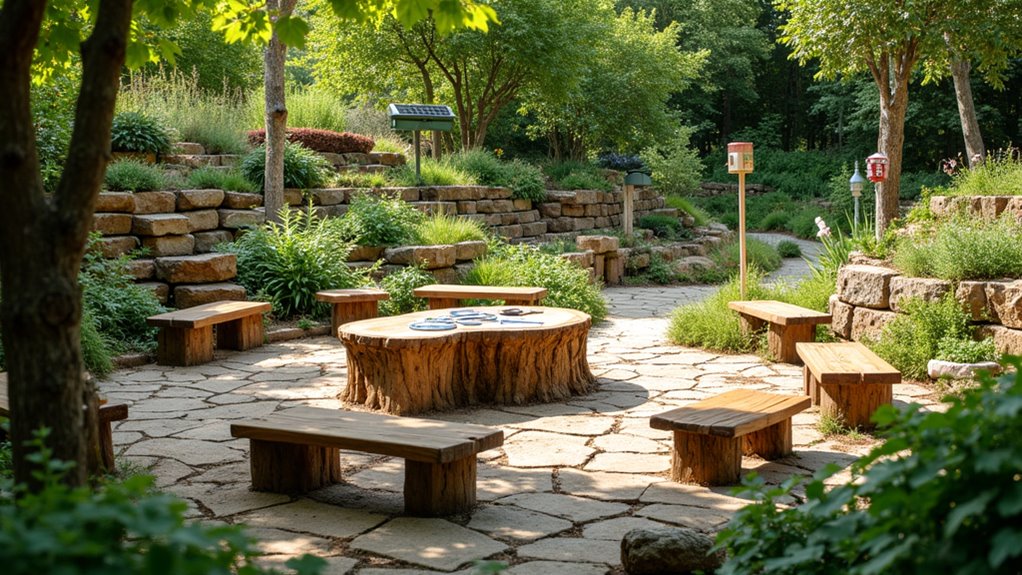
Schools are revolutionizing environmental education through cross-disciplinary integration. Beyond traditional science classes, students now engage in hands-on projects like school gardens, citizen science initiatives, and community partnerships. Digital tools and mobile apps enable data collection and analysis, while outdoor learning experiences provide direct contact with nature. Teachers receive specialized training and use diverse assessment methods to measure environmental literacy. This all-encompassing approach creates environmentally conscious citizens ready to tackle sustainability challenges head-on.

As schools increasingly recognize the urgent need to prepare students for environmental challenges, educators are implementing extensive strategies to weave environmental education throughout the academic experience. Progressive institutions are moving beyond traditional science classes, integrating environmental themes across multiple subjects and creating interdisciplinary projects that tackle real-world sustainability issues. The critical thinking skills gained from analyzing environmental issues through various subjects enable students to make better-informed decisions about ecological matters.
The classroom walls are becoming increasingly permeable as schools embrace outdoor and experiential learning opportunities. Students are stepping into school gardens, conducting field research in local parks, and partnering with environmental organizations for hands-on learning experiences. These practical encounters with nature help students develop a deeper understanding of ecosystems and environmental processes while building critical thinking skills. Tools and strategies are utilized to measure the impact of these educational programs, helping educators understand how well students are grasping environmental knowledge and behaviors. Educators are guided through the development of an eco-friendly curriculum to ensure that environmental learning experiences are both relevant and impactful. Environmental NGOs play a crucial role in providing resources and programs that support these educational endeavors and expand eco-literacy worldwide. One such program is highlighted in the Innovative Global Programs for Environmental Education, which showcases how various organizations are leading the way in environmental literacy.
Technology is playing a pivotal role in modernizing environmental education. Students use mobile apps for citizen science projects, create digital stories about environmental challenges, and employ geographic information systems to analyze ecological data. These tools enable learners to participate in global environmental monitoring efforts while developing valuable technical skills.
Digital tools transform environmental learning, empowering students to engage in global science while mastering modern technical capabilities.
Project-based learning has emerged as a cornerstone of effective environmental education. Schools are implementing student-led initiatives ranging from waste reduction campaigns to water conservation projects. These long-term endeavors give students ownership over environmental solutions while teaching valuable project management and leadership skills.
Community partnerships have become vital to creating meaningful environmental learning experiences. Local businesses share sustainable practices, environmental organizations provide expert speakers, and government agencies offer specialized programs. These collaborations extend learning beyond school grounds and help students understand how environmental principles apply in various real-world contexts.
Teachers are receiving thorough support through professional development programs focused on environmental education. Regular workshops keep educators updated on current environmental issues, while mentorship programs and collaborative planning sessions help them develop effective teaching strategies. This investment in teacher preparation guarantees high-quality environmental instruction across grade levels.
Assessment methods are evolving to effectively measure environmental literacy and skills. Schools are moving beyond traditional tests to implement project-based assessments and student portfolios that track environmental understanding over time. Pre- and post-surveys help educators measure changes in environmental attitudes and behaviors, while guaranteeing alignment with state standards.
The integration of environmental education is creating a new generation of environmentally literate citizens who understand ecological principles and are prepared to address sustainability challenges. Through this thorough approach, schools are not just teaching about the environment – they’re helping students develop the knowledge, skills, and motivation to become effective environmental stewards.
This educational transformation represents a vital investment in our planet’s future, equipping young people with the tools they need to create positive environmental change.
Frequently Asked Questions
How Much Does Implementing an Environmental Education Program Typically Cost Schools?
The cost of implementing environmental education programs varies considerably. While basic curriculum integration can be achieved with minimal expenses through free resources and existing facilities, thorough programs may require more investment.
Tuition for advanced environmental degrees ranges from $450-$12,895 per semester. Schools can offset costs through grants, partnerships, and sustainability practices.
Many institutions successfully implement programs by starting small and scaling gradually, utilizing available resources and local expertise.
What Qualifications Do Teachers Need to Teach Environmental Education Effectively?
Teachers need specific qualifications to effectively teach environmental education. Core requirements include a bachelor’s degree in environmental science or related field, with many positions preferring a master’s degree.
Essential knowledge areas span ecology, sustainability, and climate science. Teachers must also possess strong pedagogical skills for experiential learning and outdoor instruction.
Professional certifications, like environmental education credentials, enhance expertise. Ongoing professional development keeps teachers current with evolving environmental topics.
How Can Parents Support Environmental Education Initiatives at Home?
Parents can support environmental education by creating dedicated learning spaces and incorporating nature-based elements at home.
They should engage children in hands-on activities like gardening, recycling projects, and energy conservation.
Regular family discussions about environmental issues, combined with practical actions like home energy audits and neighborhood cleanups, help reinforce ecological awareness.
Parents can also collaborate with schools through volunteering and participating in eco-friendly initiatives.
What Are the Measurable Academic Benefits of Environmental Education Programs?
Research shows environmental education delivers significant academic gains across multiple areas.
Students demonstrate a 27% improvement in science scores and consistently outperform peers on standardized tests in math, reading, and writing.
Working memory and critical thinking skills show marked improvement, with benefits lasting 6-10 weeks post-program.
Schools with environmental programs see reduced dropout rates, better attendance, and increased student motivation.
These benefits translate into higher rates of science career pursuit and college completion.
How Do Schools Overcome Resistance to Environmental Education From Climate Change Skeptics?
Schools overcome climate skepticism through strategic curriculum design that emphasizes hands-on learning and local environmental impacts rather than political debates.
Student-led education proves particularly effective, with research showing parents’ climate concern increasing 23-28% after children share their learning.
Teaching climate science across multiple subjects, using real-world data, and focusing on practical solutions helps normalize environmental education.
Teacher training and updated resources further support successful implementation despite ideological barriers.