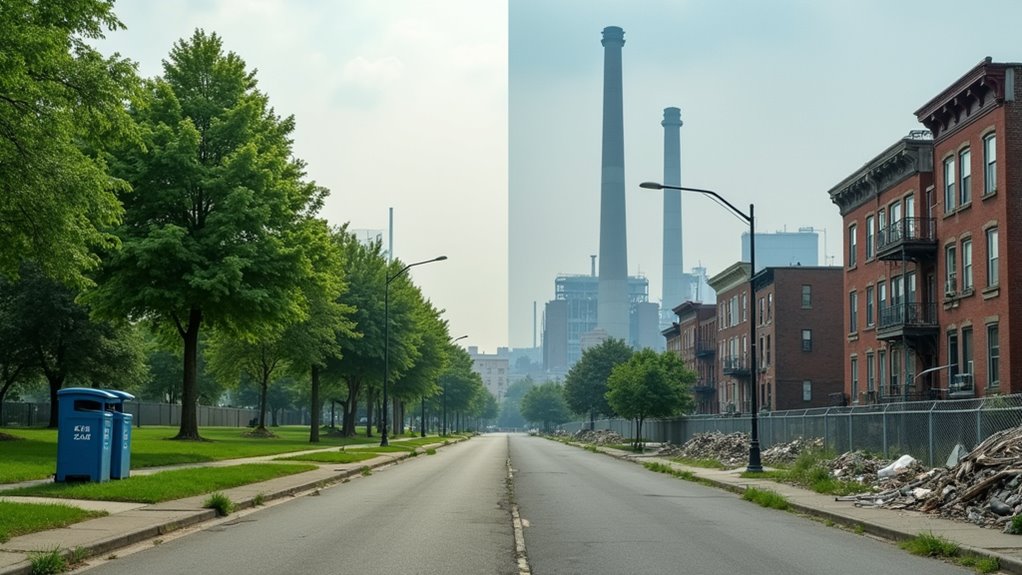
Environmental advocates are making significant impacts despite being outspent by fossil fuel interests $128.7 million to $30.5 million in federal lobbying. Grassroots petitions and digital campaigns have successfully pressured corporations like McDonald’s and Lowe’s to adopt climate commitments, while youth activism has gained global attention. The 2022 Global Standard on Responsible Climate Lobbying has increased scrutiny of corporate practices. Combined traditional and digital advocacy approaches continue transforming environmental policy and corporate behavior. The full story of lobbying’s influence runs deeper than the numbers suggest.

While environmental advocacy groups have considerably ramped up their lobbying efforts in recent years, reaching $30.5 million in federal spending for 2023, they continue to be vastly outspent by fossil fuel interests in the battle to shape climate policy. The oil and gas industry invested $128.7 million in lobbying during the same period, demonstrating the significant resource disparity between environmental advocates and industrial interests. The Nature Conservancy leads environmental spending with $2.78 million, though this represents just a fraction of fossil fuel lobbying power.
Despite being outspent, environmental groups have achieved notable victories through strategic lobbying and grassroots petition campaigns. In 2022, over 100,000 petitions successfully urged the Biden administration to prioritize climate investments. Corporate behavior has also shifted in response to public pressure, as evidenced by McDonald’s commitment to eliminate hormones in milk and antibiotics in chicken following concentrated petition efforts. Similarly, Lowe’s agreed to stop selling harmful neonicotinoid pesticides after a successful Friends of the Earth campaign. The failure of climate legislation like the Waxman-Markey bill has resulted in an estimated social cost of $467bn to society. Employing tools and strategies to measure the impact of education programs can further enhance environmental knowledge and behavior among the public.
The revolving door between government and lobbying firms remains a significant factor, with 40.35% of environmental lobbyists being former government employees. This phenomenon extends across sectors, with 459 former officials now working as lobbyists for the plastics and related industries. The Nature Conservancy’s team has expanded significantly to enhance their advocacy capabilities. Such connections have historically impacted legislation, as demonstrated by the 13% increased likelihood of the Waxman-Markey climate bill’s failure in 2010 due to intensive lobbying.
However, a new wave of responsible climate lobbying is emerging. The Global Standard on Responsible Climate Lobbying, launched in March 2022, has prompted increased scrutiny of corporate advocacy practices. Some companies have begun reviewing their trade association memberships, with several firms leaving organizations whose climate positions conflict with stated corporate goals. More than 150 CEOs collectively lobbied the EU to accelerate its green shift in 2022, signaling a potential shift in corporate climate advocacy. Coordinated action through climate strikes and marches has also played a crucial role in driving the climate justice agenda forward. Renewable energy is another area where significant strides are being made, with solar energy costs having dropped 82% in a decade, making clean energy more accessible and affordable.
Youth activism has also emerged as a powerful force, exemplified by the 16 young people who filed a UN human rights complaint regarding climate change in 2019. Online platforms like Change.org and Care2 have democratized environmental advocacy, enabling widespread participation in campaigns targeting issues from plastic pollution to rainforest protection. Global protests have united voices for stronger climate action, amplifying the call for urgent policy changes.
These digital tools have proven particularly effective when combined with traditional lobbying efforts, creating multi-pronged approaches to environmental advocacy.
The landscape of environmental lobbying continues to evolve, with increased transparency through organizations like InfluenceMap and the Center for Responsive Politics tracking spending and influence. While the financial disparity between environmental advocates and industrial interests persists, strategic combination of professional lobbying, grassroots petitions, and corporate engagement has demonstrated the potential to achieve meaningful environmental policy changes.
Frequently Asked Questions
How Long Does It Typically Take to See Results From Environmental Lobbying?
Environmental lobbying results emerge across varying timeframes, from rapid wins to multi-decade efforts. Immediate impacts can occur within months, like Earth Day 1970 spurring EPA creation.
Medium-term changes typically take 2-5 years, exemplified by Rachel Carson’s work leading to the DDT ban. Long-term shifts often require 5-10 years, while fundamental transformations like the Wilderness Act’s expansion unfold over decades.
Success depends on issue urgency, public support, and political climate.
What Percentage of Environmental Petitions Actually Lead to Policy Changes?
While exact success rates aren’t directly tracked in the background data, several indicators suggest environmental petition effectiveness.
The dramatic 38-fold increase in environmental laws since 1972 correlates with public activism. However, with only 14% of voters signing petitions despite 51% willing to do so, there’s untapped potential.
When combined with legal action, petitions show more impact – as demonstrated by Earthjustice’s 85% success rate in environmental lawsuits.
How Much Money Is Needed to Start an Effective Environmental Lobbying Campaign?
Based on industry data, launching an effective environmental lobbying campaign requires a minimum budget of $1,000-$5,000, though more substantial efforts typically need $10,000-$50,000.
Key expenses include legal compliance ($5,000-$15,000), office space ($1,000-$5,000 monthly), and marketing ($3,000-$10,000).
However, startups can reduce costs through strategic partnerships, virtual networking, and focusing on specific policy goals.
Grant funding and coalitions with established organizations can help maximize impact on limited budgets.
Which Countries Have the Most Successful Track Record With Environmental Petitions?
Based on the evidence provided, the Netherlands, France, and Lithuania have demonstrated the strongest success with environmental petitions.
The Netherlands’ Urgenda campaign achieved landmark legal victories, while France’s “L’Affaire du Siècle” mobilized over 2 million citizens.
Lithuania’s environmental democracy laws have created an effective framework for public participation.
The UK has also shown notable success, particularly in university-based divestment campaigns that’ve sparked institutional change across the education sector.
Can Individual Citizens Effectively Lobby Without Belonging to an Environmental Organization?
Yes, individual citizens can effectively lobby without organizational backing.
Key success factors include building direct relationships with legislative staff, leveraging voting power, and focusing on specific issues they’re knowledgeable about.
Understanding the lawmaking process and developing clear messaging helps citizens maximize their impact.
While organizations provide resources, individual constituents often have unique influence since they represent actual votes in a legislator’s district.