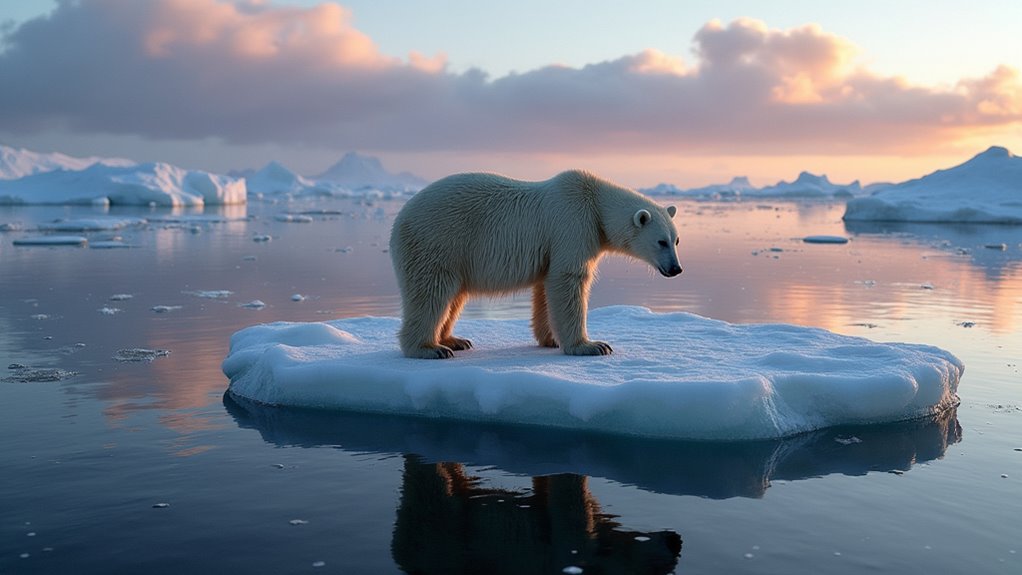

Climate change has become an existential threat to Earth’s biodiversity, with global temperatures rising 1.1°C since pre-industrial times. Species face unprecedented challanges as ecosystems unravel – from coral reefs vanishing to Arctic warming three times faster than average. While 37% of species risk extinction by 2050, nature shows remarkable resiliance when given a chance. Understanding these impacts helps target conservation efforts that protect vulnerable species and preserve the delicate balance of life. The story of biodiversity’s future continues to unfold.
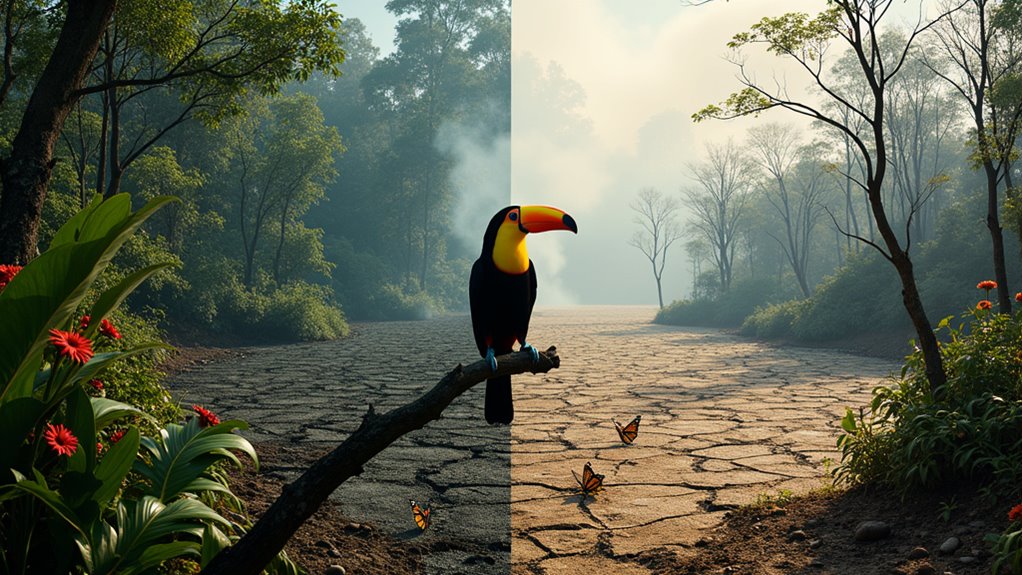
As the Earth’s climate continues to shift at an unprecedented rate, the delicate web of life that makes up our planet’s biodiversity faces mounting pressures from every direction. The evidence is stark and undeniable: global temperatures have risen 1.1°C since pre-industrial times, with the past decade marking the warmest period on record. This rapid warming is forcing countless species to migrate poleward or to higher elevations in a desperate bid for survival, while others face local extinction when they run out of places to go. Current projections indicate that species extinction rates could affect 15-37% of Earth’s species by 2050 under moderate warming scenarios.
The cascading effects of climate change ripple through ecosystems in complex and often devastating ways. Changing precipitation patterns have thrown carefully balanced natural rhythms into disarray, with some regions experiencing severe droughts while others face catastrophic flooding. The timing of seasonal rains has shifted, disrupting the life cycles of countless species that have evolved over millennia to depend on predictable weather patterns. The browning of vegetation across 59% of Earth’s vegetated areas since the 1990s highlights the severe impact on plant life. Extreme weather events, such as hurricanes and wildfires, have become more frequent and intense, underscoring the human and economic toll of climate change. Communities are increasingly focusing on proactive planning to build resilience against these challenges.
Climate disruption shatters nature’s delicate balance, forcing species to adapt as weather patterns become increasingly erratic and unpredictable.
In the oceans, the situation is equally dire – they’ve absorbed up to 30% of human-generated CO2 emissions, leading to acidification that threatens marine ecosystems foundations. The impact on coastal ecosystems has been particularly severe, with sea levels rising at an accelerating rate of 3.6 millimeters per year. This seemingly small increase has enormous consequences for coastal habitats like mangroves and salt marshes, which are being squeezed between rising seas and human development.
Meanwhile, extreme weather events have become more frequent and intense, with the 2019-2020 Australian bushfires alone affecting an estimated 3 billion animals through death or displacement. Perhaps most concerning are the subtle yet profound changes in species’ behavioral patterns and interactions. Earlier spring events and longer growing seasons have created dangerous mismatches between interdependent species, such as plants and their pollinators.
These phenological shifts are restructuring entire communities, leading to novel ecosystems with no historical precedents. The loss of coral reefs – with half the world’s reefs vanishing in just three decades – serves as a stark warning of how quickly these changes can transform entire ecosystems. The Arctic tells an especially troubling story, warming at 2-3 times the global average rate.
This rapid change is triggering biome shifts, as tundra gives way to boreal forest and permafrost melts, releasing additional greenhouse gases in a dangerous feedback loop. Yet, amid these sobering realities, there’s still time for meaningful action. By understanding these impacts and their interconnections, we can better target conservation efforts and implement solutions that protect vulnerable species and ecosystems.
The challenge is immense, but the resilience of nature, coupled with human innovation and determination, offers hope for preserving Earth’s irreplaceable biodiversity for future generations.
Frequently Asked Questions
How Can Individual Actions Help Protect Endangered Species From Climate Change?
Individuals can make meaningful contributions to protecting endangered species through simple yet effective actions.
Reducing carbon footprints by choosing public transit, installing energy-efficient appliances, and eating less meat directly impacts habitat preservation.
Creating wildlife-friendly spaces with native plants and avoiding pesticides provides essential refuge.
Supporting conservation organizations through donations or volunteering amplifies protection efforts.
Small personal choices add up to significant positive change for vulnerable species.
What Role Do Indigenous Communities Play in Biodiversity Conservation Efforts?
Indigenous communities play an essential role in biodiversity conservation through centuries of accumulated ecological knowledge and sustainable resource management practices.
Managing roughly 22% of Earth’s land surface, these communities maintain 80% of global biodiversity through traditional techniques like controlled burning and customary harvesting laws.
Their holistic understanding of ecosystems, combined with cultural values that promote conservation, makes Indigenous peoples crucial partners in protecting species and habitats worldwide.
How Do Urban Areas Affect Biodiversity Adaptation to Climate Change?
Urban areas greatly impact how species adapt to climate change through multiple mechanisms.
The urban heat island effect creates localized temperature increases of 1-6°C, forcing species to adjust or relocate. Habitat fragmentation limits movement between green spaces, reducing genetic diversity and adaptation potential.
However, strategic urban planning with green infrastructure like corridors and native plantings helps species cope. Urban forests and parks serve as vital climate refugia, supporting over 100 animal species in cities.
Which Species Are Most Likely to Survive Major Climate Shifts?
Species with adaptable traits and flexible behaviors are best positioned to survive major climate shifts. Generalist species with varied diets, high genetic diversity, and ability to thrive across different habitats show particular resilience.
Fast-breeding animals with short generation times can evolve more quickly. Mobile species capable of migration, along with those having physiological advantages like temperature regulation and dormancy capabilities, also demonstrate higher survival potential.
Habitat specialists in stable environments may persist if their refuges remain intact.
Can Artificial Habitats Effectively Replace Natural Ecosystems Lost to Climate Change?
Artificial habitats can serve as valuable supplements but cannot fully replace natural ecosystems lost to climate change.
While artificial structures like constructed wetlands and green roofs provide essential refuge for some species, they lack the complex ecological relationships developed over millennia in natural systems.
These engineered environments work best as “stepping stones” between remaining natural areas and temporary solutions while damaged ecosystems recover, rather than permanent replacements.


