

Rising global temperatures are dramatically amplifying extreme weather patterns worldwide, with clear warning signals emerging. A single degree Celsius increase correlates with 7% more intense rainfall, while 2023 saw 28 billion-dollar weather disasters in the U.S. alone. The economic toll is staggering – $1.5 trillion in global losses from 2010-2019. Communities face mounting challenges from hurricanes, floods, and heatwaves, yet solutions through international cooperation and improved infrastructure offer paths forward.
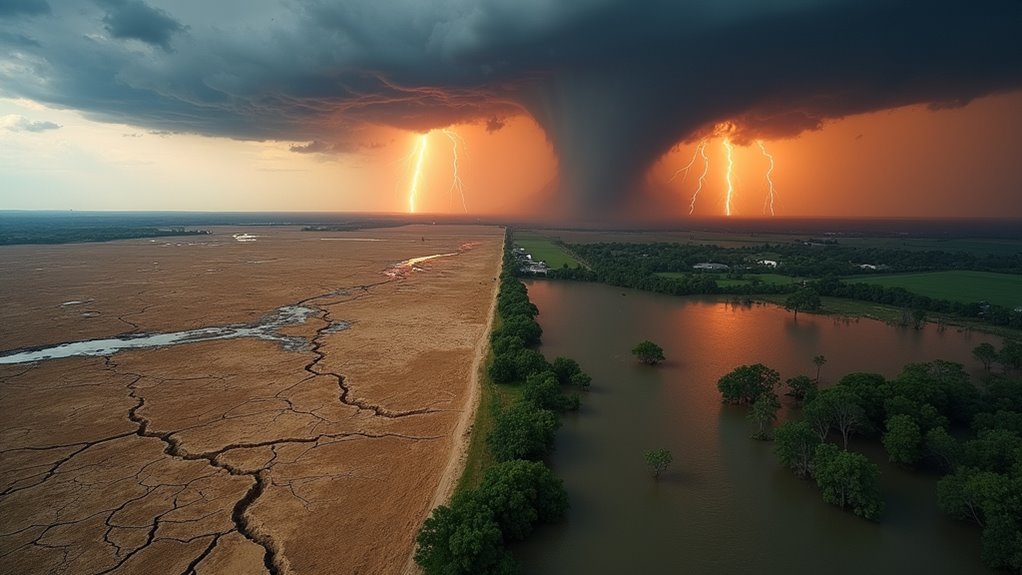
As the global thermostat continues to rise, extreme weather events are becoming increasingly frequent and severe, reshaping communities and economies worldwide. The evidence is stark: with just 1°C of global temperature rise, communities are experiencing more intense heatwaves, devastating floods, and destructive storms. In 2023 alone, the United States faced an unprecedented 28 separate billion-dollar weather disasters, shattering previous records and inflicting $92.9 billion in damages.
The scientific consensus is clear – human-induced climate change is amplifying these extreme events. Studies show that 68% of analyzed extreme weather events have been made more likely or severe due to climate change, with extreme rainfall increasing by 7% for every degree of warming. This connection is particularly evident in heatwaves, which account for 43% of all weather events attributed to climate change. The World Weather Attribution initiative, established in 2014, has been instrumental in rapidly evaluating these extreme events and providing crucial data for disaster response. Experts also highlight the link between climate change and vector-borne diseases, emphasizing the need for stronger healthcare systems to address escalating health risks. Greenhouse gases like CO₂ from various sectors play a significant role in driving these climatic changes.
Climate change’s fingerprints are unmistakable, with over two-thirds of extreme weather events showing direct links to human-induced global warming.
The economic toll is mounting rapidly. Between 2010 and 2019, extreme weather events caused global economic losses of $1.5 trillion, with projections suggesting that 1°C of warming could reduce global GDP by 12%. Insurance premiums are skyrocketing in vulnerable areas, while agricultural yields, energy systems, and supply chains face increasing disruptions from unpredictable weather patterns. Recent disasters like Hurricane Harvey caused an estimated $125 billion in losses alone.
Regional variations paint a concerning picture. Southern and coastal U.S. states are bearing the brunt of these changes, with intensifying hurricane seasons along the Atlantic and Gulf coasts. In Europe, devastating heatwaves in 2003 and 2010 were responsible for 80% of weather-related deaths. Meanwhile, Africa faces particular vulnerability to drought, which accounts for 95% of disaster-related deaths on the continent.
Looking ahead, climate scientists project further increases in both frequency and intensity of extreme weather events. The difference between limiting warming to 1.5°C versus 2°C is substantial regarding population exposure to extreme conditions. More regions will experience temperatures exceeding 40°C, while the risk of compound events – such as simultaneous droughts and heatwaves – continues to grow.
These challenges demand robust response strategies. Governments and businesses are increasingly investing in climate resilience, recognizing the need for both mitigation efforts to limit warming and adaptation measures to protect communities. This includes upgrading infrastructure, improving early warning systems, and enhancing disaster preparedness.
However, the costs of these measures must be balanced against the potentially catastrophic expenses of inaction. The path forward requires a delicate balance between addressing immediate challenges and implementing long-term solutions. While lower-income countries and communities face disproportionate impacts, the global nature of climate change necessitates coordinated international action.
Frequently Asked Questions
How Do Individual Actions Impact the Frequency of Extreme Weather Events?
Individual actions collectively influence extreme weather patterns through their cumulative effect on greenhouse gas emissions.
When people reduce energy use, drive less, and make climate-conscious choices, they help decrease the atmospheric heat-trapping that intensifies storms, droughts, and floods.
While no single person’s actions directly cause or prevent specific weather events, the combined impact of millions making sustainable choices helps stabilize global climate systems over time.
Can Extreme Weather Patterns Be Accurately Predicted Decades in Advance?
While scientists can project general climate trends over decades, precise extreme weather predictions that far ahead remain beyond current capabilities.
The atmosphere’s chaotic nature and complex interactions limit long-range forecasting. However, advances in technology, including AI and improved climate models, are expanding predictive abilities.
Currently, reliable weather forecasts extend 7-10 days, while seasonal outlooks can indicate broad patterns 3-6 months ahead with moderate accuracy.
What Role Do Oceans Play in Moderating Extreme Weather Events?
Oceans serve as Earth’s natural weather moderators, absorbing and distributing vast amounts of heat energy across the globe.
Through complex current systems like the Gulf Stream, they transport warm and cold water between regions, preventing temperature extremes.
The oceans’ ability to store and release heat affects storm intensity, rainfall patterns, and atmospheric moisture levels.
Their massive thermal capacity helps buffer against sudden climate fluctuations, fundamentally acting as the planet’s thermostat.
How Do Urban Areas Specifically Contribute to Extreme Weather Intensity?
Urban areas intensify extreme weather through several key mechanisms.
The urban heat island effect creates temperature differentials of 1-7°F above surrounding areas, while concrete and asphalt surfaces prevent natural water absorption.
Cities experience 5-10% more rainfall than rural areas, leading to increased flash flooding risks.
Dense building clusters alter wind patterns and trap air pollutants, creating unique microclimates.
These factors combine to amplify the severity of heat waves, storms, and air quality events.
Are There Natural Cycles That Could Explain Recent Extreme Weather Patterns?
While natural climate cycles like El Niño and solar variations do influence weather patterns, they cannot fully explain recent extreme weather trends.
The observed changes are happening much faster than natural cycles typically operate – about 10 times faster than historical rates.
Modern weather extremes align more closely with human-caused climate changes, as natural cycles would produce more gradual shifts over longer periods.
Additionally, some natural factors like solar activity have actually decreased while extreme weather intensifies.


