

Sea levels have risen 8-9 inches since 1880, with the current rate accelerating 2.5 times faster than last century’s average. This surge, driven by ocean warming and melting ice sheets, intensifies coastal erosion and threatens vulnerable shorelines worldwide. Communities are responding through various adaptation strategies, from traditional seawalls to innovative living shorelines and managed retreat programs. While challenges mount, solutions combining engineering with nature-based approaches offer promising pathways to coastal resilience. The journey to protect our coastlines continues to evolve.
How does a few millimeters of sea level rise each year transform into one of Earth’s most pressing environmental challenges? The answer lies in the cumulative impact of seemingly minor changes that compound over time, reshaping our coastlines and threatening communities worldwide. Since 1880, global sea levels have risen by 8-9 inches, with the pace accelerating to 2.5 times faster in recent decades compared to the 20th century average.
The forces driving this relentless rise are complex and interconnected. As our oceans warm, seawater undergoes thermal expansion, literally taking up more space. Meanwhile, melting glaciers and ice sheets contribute additional water volume, while groundwater extraction and changes in ocean circulation patterns further complicate the picture. Natural climate variability, such as El Niño events, adds yet another layer of intricacy to this already dynamic system. Earth’s rising temperature of 0.7° Celsius since 1950 has significantly contributed to this acceleration. The link between climate change and extreme weather is evident as rising temperatures intensify these contributing factors. Communities around the world are adapting their infrastructure, agriculture and disaster response systems to manage these changes effectively.
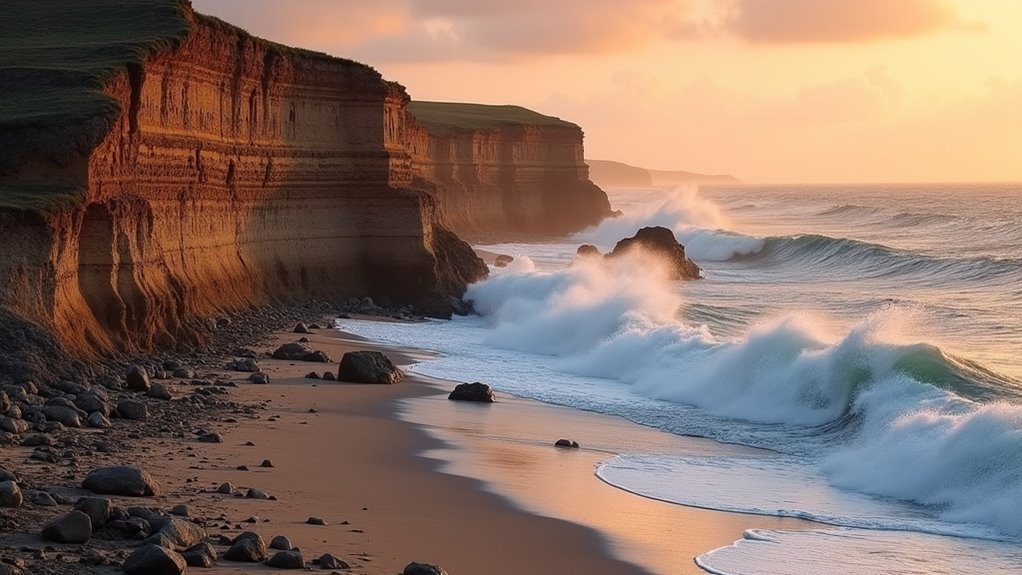
These rising waters are dramatically reshaping our coastlines through coastal erosion, a process that’s becoming increasingly aggressive. Waves and longshore currents constantly sculpt shorelines, but now they’re working with higher water levels, making their impact more severe. Storm surges reach further inland, and extreme weather events pack an extra punch. The result? Accelerated erosion that’s eating away at beaches, cliffs, and coastal infrastructure at an alarming rate. This erosion causes over 80,000 acres of vital coastal wetlands to disappear annually.
Some regions are particularly vulnerable to these changes. Low-lying islands, river deltas, and barrier islands find themselves on the front lines, while coastal wetlands and heavily developed urban coastlines face mounting challenges. In many areas, saltwater is already intruding into freshwater aquifers, threatening drinking water supplies and agricultural resources. Coastal habitats, which serve as natural buffers against storms and nurture diverse ecosystems, are increasingly squeezed between rising seas and human development.
Scientists track these changes using an impressive array of tools, from traditional tide gauges to sophisticated satellite altimetry. Beach profiling, LiDAR scanning, and sediment analysis help create a thorough picture of how our coastlines are evolving. This data is essential for developing effective responses to the challenge.
Communities aren’t sitting idle in the face of these changes. From beach nourishment projects to innovative living shorelines, adaptation strategies are being implemented worldwide. Some areas are building traditional defenses like seawalls and revetments, while others are embracing nature-based solutions or implementing managed retreat programs to relocate vulnerable infrastructure.
These efforts demonstrate that while the challenges are significant, solutions exist and are being refined through experience and innovation. The key to success lies in combining these various approaches while maintaining a clear-eyed view of the challenges ahead.
With projections showing at least another foot of sea level rise by 2100, coastal communities must continue to adapt and evolve their strategies. Through careful planning, innovative solutions, and sustained commitment, we can work to protect our coastal areas while building resilience for future generations.
Frequently Asked Questions
How Do Underwater Volcanoes Affect Coastal Erosion Patterns?
Underwater volcanoes considerably shape coastal erosion through multiple mechanisms. They release heat and gases that alter ocean chemistry and currents, while volcanic materials contribute to sediment budgets.
Submarine eruptions modify seafloor topography, affecting wave patterns and energy distribution along coastlines. Additionally, volcanic activity can trigger landslides and tsunamis, intensifying erosion.
The formation of new volcanic islands and seamounts impacts regional ocean circulation, further influencing long-term coastal erosion patterns.
Can Artificial Reefs Help Protect Coastlines From Erosion?
Artificial reefs effectively protect coastlines by dissipating wave energy up to 97% before waves reach the shore.
These engineered structures, made from materials like concrete modules and geotextile containers, create natural barriers that break waves offshore and slow erosion-causing currents.
While installation costs range from $456 to $188,817 per meter, these reefs provide multiple benefits beyond erosion control, including enhanced marine biodiversity and improved water quality.
What Role Do Marine Organisms Play in Preventing Beach Erosion?
Marine organisms form nature’s coastal defense system.
Coral reefs act as powerful breakwaters, absorbing up to 97% of wave energy.
Mangroves’ dense roots trap sediments and reduce erosion by up to 50%.
Seagrass meadows stabilize the seafloor and cut wave energy by 40%.
Oyster reefs create natural barriers, decreasing wave impact by up to 93%.
Together, these living engineers maintain beach stability and protect shorelines from the relentless forces of the ocean.
How Do Seasonal Weather Patterns Influence the Rate of Coastal Erosion?
Seasonal weather patterns create distinct erosion cycles throughout the year.
Winter storms generate powerful waves and storm surges that cause intense erosion, accounting for up to 70% of annual coastal loss.
Summer brings calmer conditions allowing beaches to rebuild through sand accretion.
Spring runoff increases river discharge and sediment movement, while fall marks a change period with growing storm activity.
These natural cycles greatly shape coastline evolution and erosion rates.
Does Ocean Acidification Accelerate or Slow Down Coastal Erosion Processes?
Ocean acidification considerably accelerates coastal erosion through multiple mechanisms.
As seawater becomes more acidic, it actively dissolves calcium carbonate structures like coral reefs and shellfish that naturally protect coastlines. This weakening of protective barriers leaves shores more vulnerable to wave action.
Additionally, acidification increases bioerosion rates in marine organisms, further compromising coastal defenses. The process creates a feedback loop where weakened coastal ecosystems become increasingly susceptible to erosion forces.


