

Climate change adaptation measures encompass essential strategies protecting communities and ecosystems from environmental threats. These include drought-resistant agriculture, coastal defense systems, and urban infrastructure improvements. Communities worldwide are implementing both engineered solutions and nature-based approaches, from seawalls to restored wetlands. While funding and technical challenges persist, innovative financing and international cooperation are emerging to support these significant efforts. Understanding these measures reveals pathways to a more resilient future.
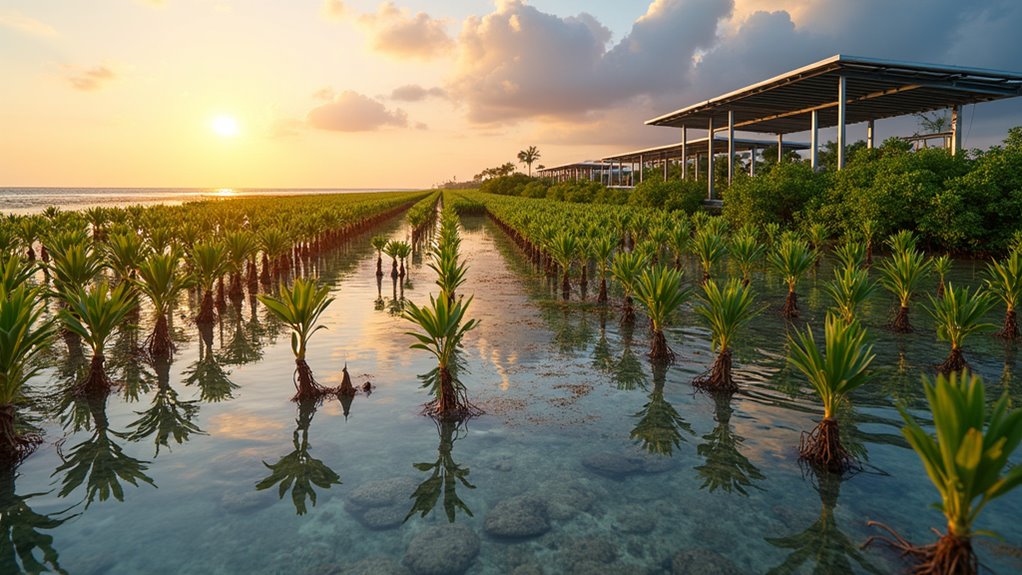
As communities worldwide grapple with the intensifying effects of climate change, adaptation measures have emerged as vital tools for building resilience and protecting vulnerable populations. From infrastructural defenses to ecosystem-based solutions, these measures encompass a diverse range of strategies designed to help society cope with and thrive despite changing climate conditions.
Climate adaptation measures serve as crucial defenses, protecting communities and helping societies thrive amid environmental challenges.
The implementation of adaptation measures spans multiple sectors, with agriculture and water resources management at the forefront. The creation and sharing of vital information through knowledge building initiatives helps communities develop more effective adaptation strategies. Recent studies show that cost-efficient adaptations deliver at least 1.5 times more benefits than their implementation costs. Farmers are increasingly adopting drought-resistant crops and adjusting their traditional practices, while coastal communities are investing in seawalls and natural barriers to protect against rising seas. Urban planners are reimagining cities with green infrastructure and improved drainage systems, demonstrating how adaptation can be integrated into everyday development decisions. Innovative farming practices, such as soil conservation efforts and technological solutions, are helping to ensure a stable food supply despite shifting rainfall patterns and rising temperatures.
The benefits of these adaptation measures extend far beyond mere climate protection. Communities that invest in adaptation often experience enhanced economic stability, improved public health outcomes, and strengthened social cohesion. For instance, wetland restoration projects not only buffer against floods but also create new habitats for wildlife and opportunities for eco-tourism. Similarly, early warning systems for extreme weather events protect lives while creating new jobs in technology and emergency response sectors. Navigating water scarcity due to changing climate patterns is crucial, as shifting rainfall and droughts can lead to resource conflicts.
Despite these advantages, implementing adaptation measures faces significant hurdles. Limited funding remains a persistent challenge, particularly in developing regions where climate impacts are often most severe. Technical expertise and access to reliable climate data can be scarce, while political inertia and competing priorities sometimes delay essential adaptation projects. However, innovative financing mechanisms and growing international cooperation are helping to bridge these gaps.
Governments play a pivotal role in driving adaptation efforts through policy frameworks and resource allocation. Many countries have developed extensive national adaptation plans that coordinate actions across different sectors and governance levels. These plans increasingly recognize the importance of community-based approaches, which leverage local knowledge and guarantee that adaptation measures are culturally appropriate and sustainable.
The success of adaptation measures relies heavily on robust monitoring and evaluation systems. Regular assessments help identify what works and what doesn’t, enabling communities to adjust their strategies as climate conditions evolve. This adaptive management approach, combined with knowledge sharing between regions, accelerates learning and improves outcomes over time.
Looking ahead, the integration of various adaptation approaches – from hard infrastructure to nature-based solutions – offers the most promising path forward. By combining technological innovations with traditional knowledge, and infrastructure improvements with behavioral changes, communities can build extensive resilience to climate impacts.
While the challenges ahead are significant, the growing momentum behind adaptation efforts and the demonstrable benefits they provide offer hope for a more resilient future.
Frequently Asked Questions
How Much Will Climate Change Adaptation Measures Cost Individual Households?
Individual households face significant adaptation costs ranging from essential upgrades to indirect expenses.
Direct costs include $1,500-$15,000 for home energy efficiency, $2,400-$34,700 for flood-proofing, and $3,000-$7,000 for heat adaptation.
Indirect costs manifest through higher prices: food (3-84% increase), energy bills (10-20% rise), and insurance premiums (20-178% jump).
However, potential savings from these measures can offset costs through reduced utility bills and disaster recovery expenses.
Can Small Communities Effectively Implement Adaptation Strategies Without Government Support?
While small communities can initiate some adaptation efforts through grassroots organizing and local partnerships, government support remains essential for thorough climate resilience.
Communities can leverage volunteer efforts, citizen science, and regional collaborations to offset limited resources. However, technical expertise, funding for major infrastructure projects, and access to detailed climate data typically require state or federal assistance.
The most effective approach combines local initiative with government backing.
What Skills Are Needed to Work in Climate Change Adaptation?
Working in climate change adaptation requires a diverse skillset combining technical expertise with soft skills.
Professionals need strong scientific knowledge in climate science, ecology, and environmental systems. Technical abilities like climate modeling, GIS, and data analysis are essential. Policy understanding and project management skills help implement solutions.
Equally important are communication, stakeholder engagement, and problem-solving abilities to work across disciplines and cultures. Adaptability and resilience are vital in this dynamic field.
How Long Does It Take to See Results From Adaptation Measures?
Results from adaptation measures emerge across different timelines. Emergency preparedness and early warning systems show immediate benefits within months.
Urban greening and water conservation measures demonstrate impact in 1-5 years. Larger infrastructure projects like coastal protection take 5-20 years to prove effective.
The most fundamental changes, including ecosystem adaptation and cultural shifts, require 20+ years to fully materialize. Each timeframe plays an essential role in extensive climate resilience.
Which Countries Have the Most Successful Climate Change Adaptation Programs?
Denmark and Sweden stand out as leaders in climate adaptation, with Denmark’s ambitious Energy Islands project and Sweden’s thorough Framework showing measurable results.
Both countries have clear targets, accountability measures, and innovative approaches like Sweden’s shift to wooden construction.
While Chile’s new Framework Law shows promise, and the US has extensive plans, the Nordic countries’ programs demonstrate the most concrete progress through binding commitments and trackable outcomes.


