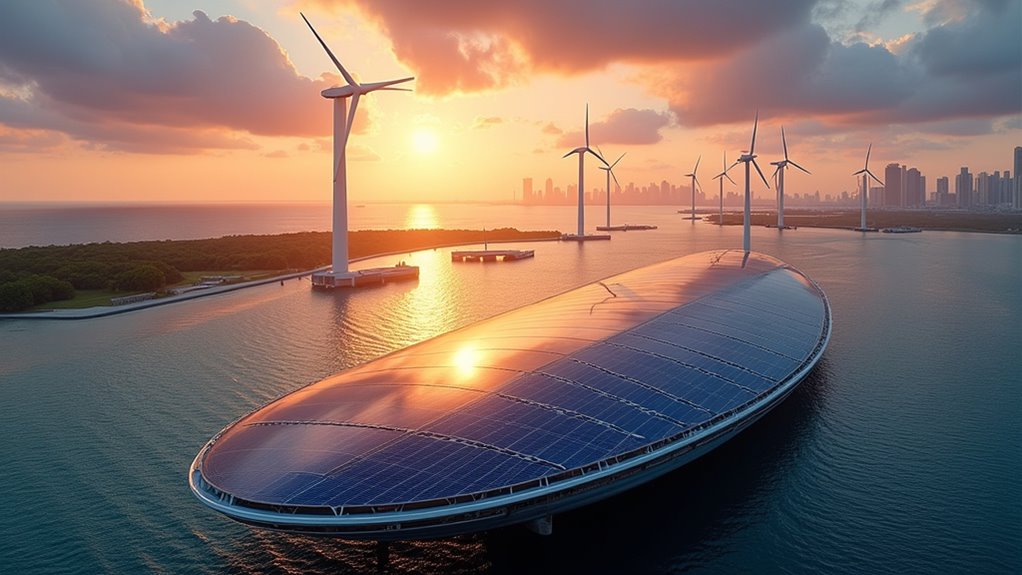
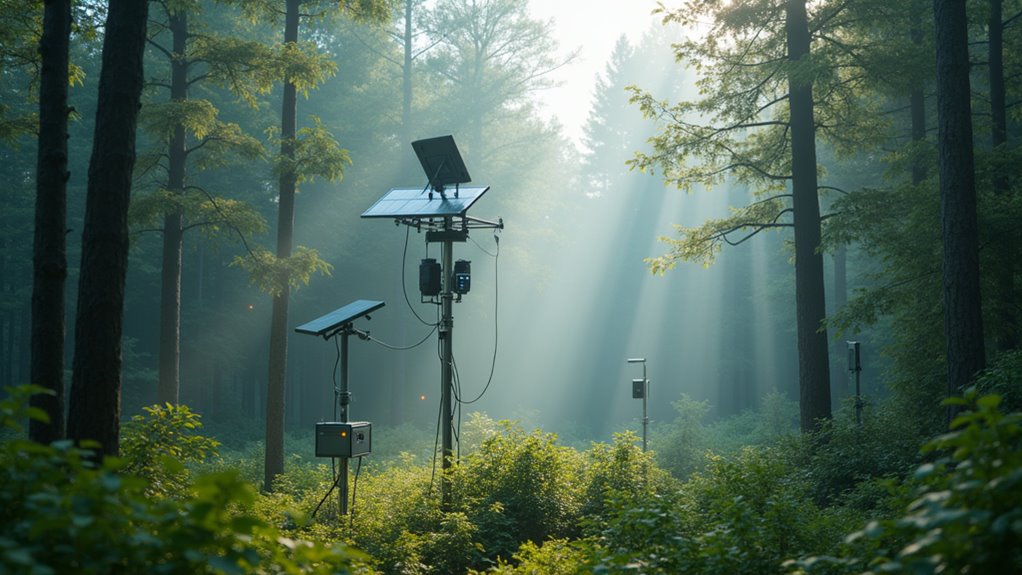
Modern environmental sensors combine cutting-edge technology to monitor both pollution and wildlife with remarkable precision. Advanced sensor networks collect real-time data on air quality, water contamination, and animal movements using GPS collars, camera traps, and sophisticated air quality monitors. AI-powered systems analyze this data to detect environmental changes, track migration patterns, and measure pollutants like CO2 and particulate matter. These integrated technologies create a thorough picture of ecosystem health that reveals deeper insights about our changing planet.
While environmental challenges continue to mount globally, a new generation of sophisticated sensors is revolutionizing how we monitor and protect our natural world. These cutting-edge devices form an interconnected web of surveillance, providing real-time data on everything from air quality to wildlife movements. Environmental sensors equipped with AI-driven systems continuously measure pollutants like particulate matter, CO2, and volatile organic compounds, enabling authorities to predict smog levels and respond swiftly to protect public health. Edge computing processes data near the source to enable faster decision-making in remote monitoring locations.
Advanced sensor networks are transforming environmental monitoring, creating an interconnected system that helps us better protect and preserve our natural world.
In our water bodies, specialized sensors work tirelessly to detect contaminants and measure vital parameters such as pH levels, dissolved oxygen, and turbidity. This constant monitoring helps identify pollution events early, supporting both immediate interventions and long-term conservation of aquatic ecosystems. The data collected proves invaluable for water resource management decisions and environmental protection strategies. Aerial drones with sensors assist in mapping bodies of water, providing additional insights into environmental changes. Protecting freshwater ecosystems is crucial not only for biodiversity but also for maintaining clean water and climate stability.
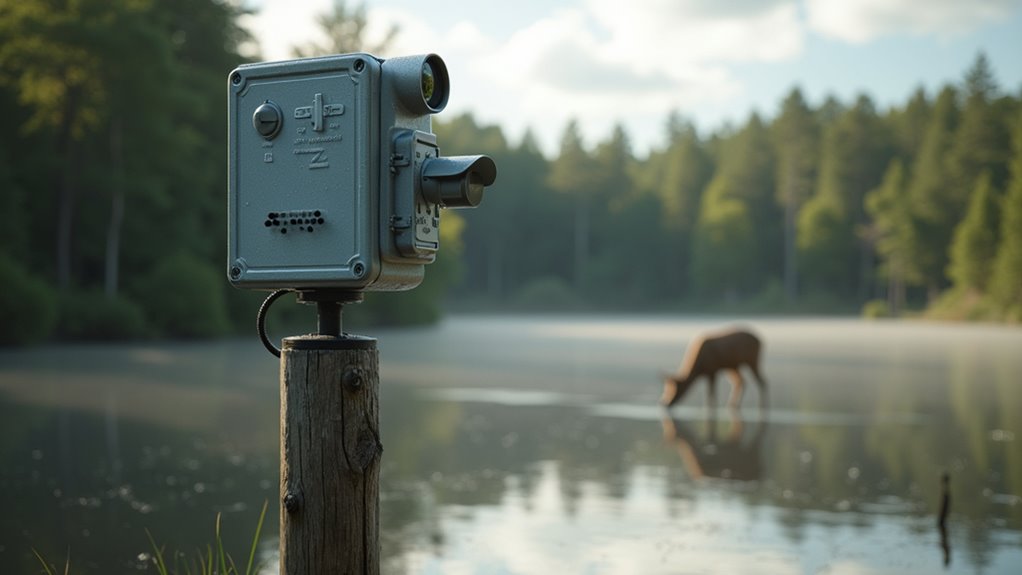
Wildlife tracking has entered a new era with GPS-enabled collars, camera traps, and acoustic sensors. These tools provide unprecedented insights into animal behavior, migration patterns, and habitat use. RFID tags help identify individual animals, while sophisticated camera systems capture footage of elusive nocturnal species. Elephant seals now provide crucial data about Antarctic ice depth and ocean salinity. Combined with remote sensing technologies, these systems create a thorough picture of wildlife populations and their interactions with their environment. Drones, AI, and tracking tools also aid scientists and rangers in monitoring endangered species and gathering critical habitat data.
Satellite imagery, analyzed by powerful AI algorithms, has become an essential tool in environmental monitoring. These systems can detect subtle changes in land cover, track deforestation, and monitor wildlife populations across vast areas. The data collected helps conservation experts make informed decisions about resource allocation and protection strategies, while also providing early warning signs of environmental degradation. The Arctic is warming at a rate 2-3 times the global average, necessitating the use of these technologies to track rapid changes in biomes and ecosystems.
The soil beneath our feet hasn’t been forgotten either. Advanced sensors measure soil moisture, temperature, and composition, helping to optimize agricultural practices and detect contamination. These devices support precision farming techniques, enabling more sustainable land use while maximizing crop yields. Integrated with noise and vibration sensors, they create a complete picture of both above-ground and below-ground environmental conditions.
Perhaps most impressive is how these various sensor technologies work together in integrated networks. By combining multiple sensor types, scientists and environmental managers can monitor numerous parameters simultaneously, enabling rapid response to threats and supporting long-term environmental stewardship. This thorough approach to environmental monitoring represents a significant leap forward in our ability to understand and protect natural systems.
The deployment of these sophisticated sensor networks marks a turning point in environmental protection. While challenges remain in implementing and maintaining these systems, their potential to transform conservation efforts cannot be understated. As technology continues to evolve, these tools will become increasingly powerful allies in the fight to preserve our planet’s natural heritage and secure a sustainable future for generations to come.
Frequently Asked Questions
How Much Do Environmental Sensors Typically Cost to Install and Maintain?
Environmental sensor costs vary considerably based on type and application. Basic sensors start at a few hundred dollars, while advanced systems run several thousand.
Installation typically adds 30-50% to hardware costs. Wireless options can reduce installation expenses by 30%.
Annual maintenance ranges from 10-20% of initial costs. Multi-functional sensors offer better long-term value despite higher upfront investment.
Regular calibration and occasional replacement factor into ongoing expenses.
Can Environmental Sensors Work Effectively in Extreme Weather Conditions?
Modern environmental sensors are specifically engineered to withstand extreme conditions. Through features like dual heating circuits, seawater-resistant materials, and self-draining systems, these devices maintain accuracy in harsh weather.
They operate reliably in extreme cold, high humidity, and severe storms. Advanced technologies like ultrasonic wind sensors and laser-based systems guarantee consistent data collection, while smart self-heating mechanisms prevent ice buildup and maintain functionality year-round.
What Is the Average Lifespan of Wildlife Tracking Sensors?
Wildlife tracking sensor lifespans vary notably based on technology type and usage patterns. VHF transmitters typically last 1-3 years, while GPS collars generally operate for 6 months to 2 years.
Satellite tags can function for 1-5 years, depending on size and power requirements. Modern advancements like LoRaWAN and improved energy harvesting are pushing these boundaries further.
Battery life depends heavily on transmission frequency, environmental conditions, and whether solar recharging is possible.
How Accurate Are Pollution Sensors Compared to Traditional Laboratory Testing Methods?
The accuracy of pollution sensors varies considerably when compared to lab testing methods, with R² correlation values ranging from 0.14 to 0.97.
While traditional laboratory equipment remains more precise, modern low-cost sensors can provide reliable data when properly calibrated and maintained.
Environmental factors like temperature and humidity affect sensor performance.
Field testing shows these devices typically remain accurate for 1-2 years before requiring replacement, though regular calibration helps maintain reliability.
Can These Sensors Be Integrated With Existing Environmental Monitoring Systems?
Modern environmental sensors seamlessly integrate with existing monitoring systems through standardized protocols like BACnet, Modbus, and SNMP.
These sensors can connect to Building Management Systems (BMS) and IoT platforms, enabling real-time data aggregation and analysis.
The integration supports thousands of monitoring points and features cloud connectivity for remote access.
Custom dashboards and automated alerts enhance operational efficiency, while APIs allow third-party applications to leverage the sensor data.