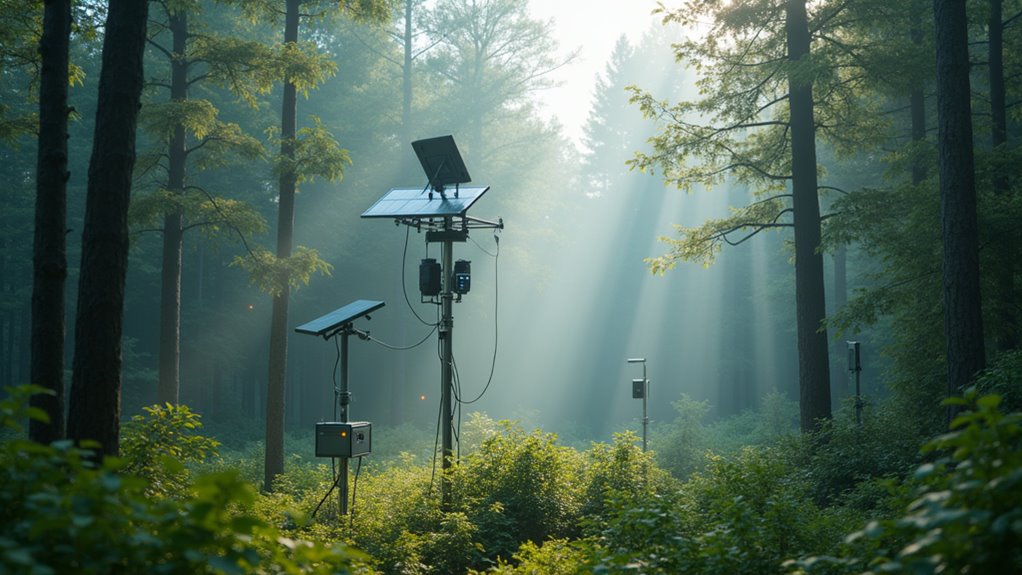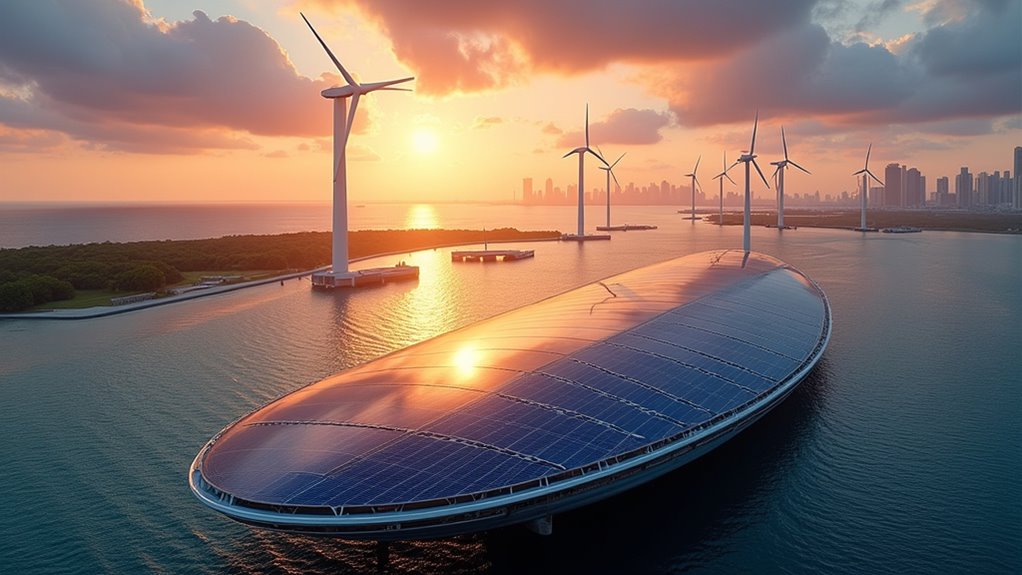

Renewable energy technologies are revolutionizing global power systems through remarkable innovations. Solar cells now exceed 30% efficiency, while offshore wind farms harness stronger ocean winds with advanced floating turbines. Geothermal systems tap Earth’s heat more effectively than ever, and sophisticated battery storage guarantees reliable grid integration. With investments surpassing $300 billion in 2023 and creating 11 million jobs worldwide, the renewable energy sector demonstrates how innovation drives sustainable transformation. The future of clean power holds even more promising breakthroughs.
The renewable energy landscape is undergoing a remarkable transformation, driven by breakthrough innovations across multiple sectors. Solar technology has made extraordinary leaps, with perovskite cells now achieving efficiencies exceeding 25%, while revolutionary tandem cells combining perovskite and silicon layers push the boundaries even further, surpassing 30% efficiency.
The integration of solar capabilities into everyday surfaces through solar paints and transparent window cells is revolutionizing how we think about energy generation in urban environments. Global investments have reached 300 billion dollars in renewable energy projects during 2023, marking unprecedented growth in the sector. Industry leaders like Vice Chair Keefe are driving strategic decisions in utility generation and renewable energy deployment. Renewable energy sectors have created 11 million jobs globally, highlighting the economic benefits and job opportunities associated with the industry’s growth.
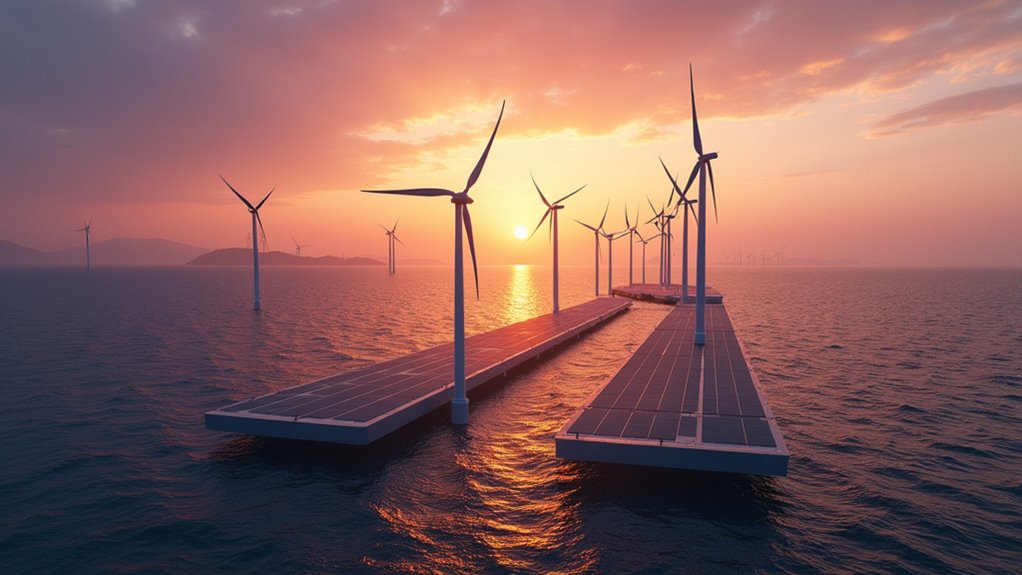
Wind power continues to evolve with groundbreaking advancements in offshore technology. Floating turbines are now capable of harvesting energy in deeper waters, while innovative blade designs utilizing carbon fiber materials enhance both durability and performance. The offshore wind capacity is expected to reach 260 GW by 2030, showcasing the sector’s rapid advancement. Offshore wind farms are capitalizing on stronger and more consistent winds, which significantly boosts energy yields.
Offshore wind technology reaches new frontiers with floating turbines and advanced carbon fiber blades, revolutionizing deep-water energy harvesting.
Urban environments are benefitting from vertical axis wind turbines, while high-altitude kite systems explore untapped wind resources in the upper atmosphere. Government support mechanisms, such as Renewable Portfolio Standards, are crucial in accelerating the adoption of these technologies by mandating clean energy generation targets for utilities.
The geothermal sector is experiencing unprecedented growth, with Enhanced Geothermal Systems expanding access to Earth’s heat beyond traditional volcanic regions. This reliable energy source is projected to expand 30-fold by 2050, while geothermal heat pumps are increasingly providing efficient temperature control for buildings across diverse geographic locations.
Energy storage solutions are proving essential for renewable integration, with Battery Energy Storage Systems ensuring grid reliability. Lithium Iron Phosphate cells have emerged as the preferred choice for both grid storage and electric vehicles, while long-duration storage installations are set to double by 2025.
These advancements are vital for managing the intermittent nature of renewable energy sources.
The hydrogen and bioenergy sectors are witnessing remarkable progress, with green hydrogen production scaling up considerably, supported by substantial tax credits. Bioenergy with Carbon Capture and Storage is demonstrating promising potential for atmospheric CO2 removal, while algae-based biofuels offer sustainable alternatives to conventional fossil fuels.
Artificial intelligence is revolutionizing grid management and renewable energy deployment. Smart meters incorporating AI technology enhance grid stability, while blockchain enables innovative peer-to-peer energy trading.
Virtual power plants are emerging as powerful tools for managing distributed energy resources, and AI-powered robots are streamlining large-scale solar installations.
Market trends indicate a notable shift towards clean energy, with investments in renewable technologies poised to surpass upstream oil and gas spending by 2025. Solar photovoltaics are expected to dominate cleantech investments, while permitting reforms are accelerating project approvals.
The growing demand from data centers is driving substantial increases in renewable energy deployment, while government support for Carbon Capture and Storage continues to expand globally.
These developments collectively signal a transformative period in the energy sector, marking a decisive shift towards a more sustainable and resilient future.
Frequently Asked Questions
How Much Does It Cost to Install Solar Panels for a Typical Home?
A typical home solar installation costs between $15,000-$25,000 for a standard 7.2 kW system, averaging $3.03 per watt nationwide.
However, the 30% federal tax credit reduces the final cost to around $15,271 for most homeowners.
Installation expenses vary based on factors like location, roof condition, and panel type chosen.
While upfront costs seem high, homeowners typically save $48,000 over 25 years through reduced electricity bills.
Can Renewable Energy Completely Replace Fossil Fuels in the Transportation Sector?
While renewable energy can markedly reduce fossil fuel use in transportation, complete replacement faces several technical hurdles.
Battery limitations affect long-distance travel and heavy vehicles, while infrastructure needs massive expansion.
However, a mix of electric vehicles, sustainable biofuels, and green hydrogen shows promise.
With continued technological advances and policy support, experts predict renewables could power 70-90% of transport by 2050, though some specialized uses may still require alternatives.
What Happens to Renewable Energy Equipment After It Reaches End-Of-Life?
Renewable energy equipment undergoes various recycling processes at end-of-life.
Solar panels are dismantled to recover glass, aluminum, and precious metals, though polymer layers pose challenges.
Wind turbine blades, made of composite materials, can be ground for cement production or repurposed for construction.
Lithium-ion batteries from energy storage systems are recycled through chemical processes to extract valuable metals, with some finding second lives in stationary applications.
However, recycling infrastructure remains limited in many regions.
How Do Weather Conditions Affect the Reliability of Wind Power?
Weather greatly impacts wind power reliability through several key mechanisms.
Wind speeds must fall within specific ranges (6-55 mph) for ideal turbine operation – too slow means no power, too fast requires shutdown. Seasonal patterns affect output, with spring typically being most productive and summer least.
Extreme conditions like hurricanes, icing, and heat waves can damage equipment or reduce efficiency.
However, technological adaptations like de-icing systems and weather forecasting help manage these challenges.
Which Countries Currently Lead the World in Renewable Energy Technology Development?
China leads global renewable technology development, commanding 80% of solar manufacturing capacity and deploying more solar installations than all other nations combined.
The United States follows, pioneering advanced geothermal systems and implementing major policy support through the Inflation Reduction Act.
The European Union, particularly Denmark and Germany, excels in wind power innovation.
India is emerging as a significant player, with ambitious targets and growing manufacturing capabilities.