

Sustainable seafood practices offer proven solutions to combat overfishing while maintaining food security. Through methods like purse seine fishing without FADs and pole-and-line techniques, bycatch rates drop below 1%, protecting non-target species. Success stories demonstrate results – 47 fish stocks have recovered in US waters since 2000, while science-based quotas and marine protected areas boost ocean resilience. Consumer choices supporting certified sustainable seafood drive industry change, potentially yielding an additional 16 million tonnes annually. The science and solutions await those seeking deeper understanding.
As global fish populations face mounting pressure from commercial fishing operations, the push for sustainable seafood practices has become increasingly urgent for both environmental and food security reasons. With 33.1% of commercial species already compromised by intensive fishing and 821 million people living in hunger globally, the need to balance human consumption with ocean conservation has never been more vital. Since 1950, 6 billion tons of fish and invertebrates have been extracted from the world’s oceans. Wild-caught seafood plays a critical role in maintaining the delicate balance of marine ecosystems.
The good news is that sustainable fishing methods are proving effective when properly implemented. Techniques like purse seine fishing without FADs achieve remarkably low bycatch rates of less than 1%, while pole and line fishing demonstrates how selective harvesting can minimize impact on non-target species. These approaches stand in stark contrast to conventional methods, where over 80% of fish are caught using nets that often lead to overfishing and unnecessary bycatch. Sustainable fisheries management involves a holistic approach to balancing the needs of human consumption and the health of marine ecosystems. Protecting coral reefs is integral to maintaining biodiversity as they provide habitat for numerous marine species and are essential for ocean health.
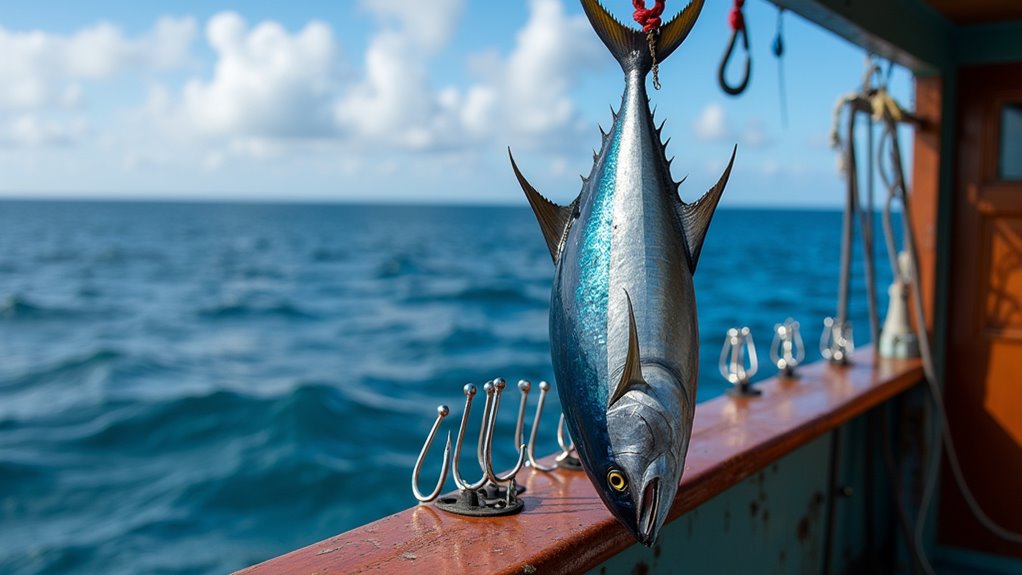
Sustainable fishing techniques like purse seine and pole-and-line methods demonstrate effective alternatives to conventional nets, significantly reducing harmful bycatch rates.
Success stories from recent years show that recovery is possible through smart management. Since 2000, 47 fish stocks have been rebuilt in US waters, and the West Coast groundfish fishery has made an impressive comeback through catch shares programs. The North Atlantic swordfish population achieved its rebuilding target ahead of schedule by 2009, demonstrating how science-based quotas and international cooperation can effectively restore marine populations. Marine protected areas serve as conservation zones that help maintain biodiversity and increase ocean resilience.
Consumers play a significant role in driving sustainable practices. By choosing seafood certified by the Marine Stewardship Council and avoiding overfished species, shoppers can influence industry practices. Sustainable seafood offers substantial benefits beyond conservation – it provides a healthy, low-carbon protein source that could produce an additional 16 million tonnes annually if managed properly. Additionally, the industry supports 120 million jobs worldwide in capture fisheries.
Current regulations like the Magnuson-Stevens Act, which enforces 10 national standards of sustainability, and the establishment of marine protected areas covering 26% of US marine waterways, provide a framework for responsible management. However, the challenges remain significant – one-third of shark species face extinction due to overfishing, and 90% of blue sharks are caught accidentally as bycatch each year.
The path forward requires a combination of expanded protective measures, improved fishing techniques, and informed consumer choices. Rights-based fishery management tools and catch-share programs are proving effective at balancing economic needs with conservation goals.
Success stories like the sea scallop fishery, which recovered through rotating area closures, show that sustainable practices can benefit both marine ecosystems and fishing communities. With 80% of monitored US fish stocks now at healthy sizes, there’s clear evidence that sustainable seafood practices can effectively prevent overfishing while ensuring food security for future generations.
Frequently Asked Questions
How Can Consumers Verify if Their Local Restaurants Serve Sustainable Seafood?
Consumers can verify sustainable seafood practices through several reliable methods.
Checking for certifications like MSC’s blue fish label and Ocean Wise provides immediate confirmation. Diners should ask staff about sourcing practices and fishing methods.
Mobile apps like Seafood Watch and Fish2Fork offer quick, location-based sustainability checks. Restaurant websites often detail their commitments, while transparency efforts like educational materials and detailed menu information signal dedication to sustainable practices.
What Role Do Fishing Quotas Play in Maintaining Sustainable Fish Populations?
Fishing quotas serve as a critical management tool for maintaining healthy fish populations by setting science-based limits on commercial catches.
These quotas, known as Total Allowable Catches (TACs), help prevent overfishing by restricting how much can be harvested annually.
When properly enforced, the system allows depleted stocks to rebuild while enabling sustainable fishing to continue.
Evidence shows quotas work – 47 U.S. fish stocks have recovered since 2000, and 90% stayed within catch limits in 2020.
Which Seafood Certification Programs Are Most Reliable for Conscious Consumers?
The Marine Stewardship Council (MSC) and Aquaculture Stewardship Council (ASC) stand out as the most credible seafood certification programs. Both use rigorous third-party audits and are recognized by the Global Sustainable Seafood Initiative.
The Monterey Bay Aquarium Seafood Watch provides trustworthy ratings and consumer guidance, while Best Aquaculture Practices (BAP) offers extensive certification across the aquaculture supply chain.
These programs help shoppers make informed, sustainable choices at the seafood counter.
How Does Farmed Fish Compare Nutritionally to Wild-Caught Sustainable Seafood?
Farmed and wild-caught fish each offer distinct nutritional benefits.
While farmed salmon contains slightly more protein and omega-3s due to controlled feed, wild fish typically have higher levels of minerals and vitamin D from their natural diet.
Farmed fish tend to have more fat content, while wild-caught may accumulate more environmental contaminants over their longer lifespans.
Both options remain excellent sources of essential nutrients when properly sourced and prepared.
Can Sustainable Fishing Practices Help Restore Already Depleted Fish Populations?
Sustainable fishing practices have demonstrated significant potential in helping depleted fish populations recover. When properly implemented, measures like catch limits, marine protected areas, and seasonal fishing restrictions allow fish stocks to rebuild their numbers naturally.
Success stories include the recovery of North Atlantic swordfish and Pacific halibut populations. However, restoration requires long-term commitment, as severely depleted species may need decades to return to healthy levels.


