

Oil spill response combines proven techniques with emerging technologies to protect ocean ecosystems. Floating booms contain spills while skimmer vessels collect surface oil. Certified response teams deploy sorbent materials and high-pressure washing for shoreline cleanup. Modern prevention relies on double-hulled vessels, advanced navigation systems, and strict regulatory compliance. Chemical dispersants and oil-eating bacteria aid natural degradation, though environmental impacts remain a concern. Exploring the latest innovations reveals increasingly sophisticated approaches to maritime safety.
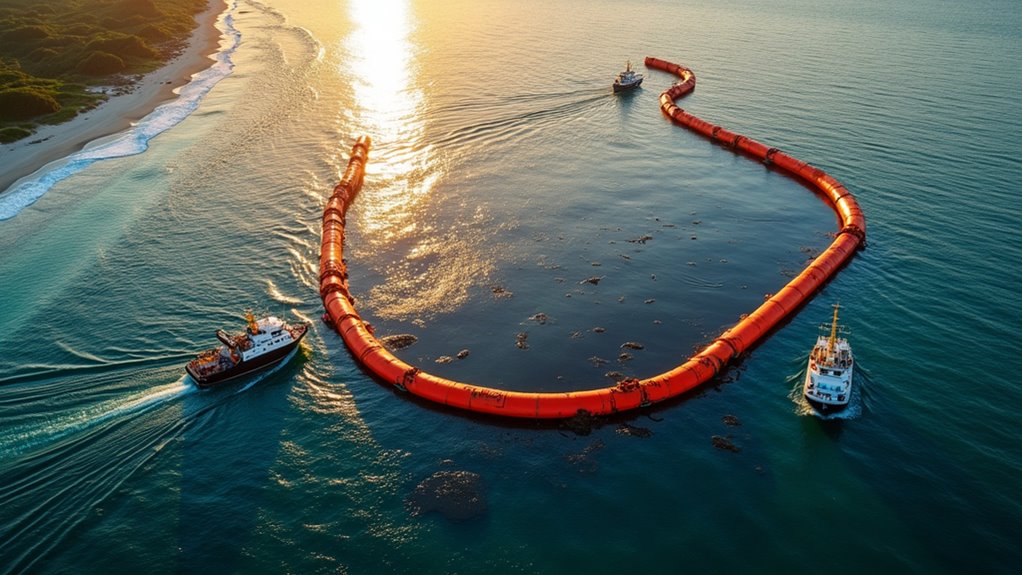
While devastating oil spills continue to threaten marine ecosystems worldwide, a robust arsenal of response techniques and prevention strategies has evolved to combat these environmental emergencies. The first line of defense typically involves containment using floating booms that corral the oil and prevent its spread into sensitive coastal areas. These barriers work in conjunction with specialized skimmer vessels that vacuum or collect oil from the water’s surface, transferring it into collection tanks for proper disposal. Certified OSRO teams are essential for managing effective cleanup operations and ensuring compliance with federal regulations. Regular inspections and worker training programs are fundamental components of preventing spills before they occur.
When immediate action is required, responders may employ in-situ burning, which can eliminate up to 98% of surface oil quickly, though this method requires careful monitoring of air quality. Sorbent materials, ranging from natural substances like peat moss to synthetic products, are also deployed to absorb oil from both water and shorelines. In cases where oil threatens to reach beaches, teams conduct high-pressure washing operations and manual removal using basic tools like rakes and shovels. Climate change adaptation measures, such as coastal defense systems, can also play a role in mitigating the impact of oil spills on vulnerable areas. Rising sea levels and warming waters exacerbate these challenges by altering marine habitats and increasing the vulnerability of coastal regions. Freshwater ecosystem protection is equally critical as it supports biodiversity and clean water, which are essential for climate stability. Global campaigns and local projects are instrumental in preserving coral reefs and ensuring the health of marine ecosystems.
Chemical dispersants represent another vital tool, breaking oil into tiny droplets that can be more easily broken down by natural processes. However, their use must be carefully considered due to potential toxicity. Bioremediation offers a more environmentally friendly approach, utilizing specialized microorganisms to degrade oil components. Emerging technologies like oil-eating bacteria and nanotechnology-based materials are showing promise in enhancing these biological cleanup methods.
While chemical dispersants offer quick solutions, nature-based approaches like bioremediation may provide safer, more sustainable methods for cleaning oil spills.
Prevention remains the most effective strategy in protecting marine environments. Modern vessels are required to have double hulls, and facilities must implement extensive Spill Prevention, Control and Countermeasure plans. Advanced navigation systems and improved vessel traffic management have greatly reduced collision risks, while regular inspections and maintenance help prevent equipment failures that could lead to spills.
The regulatory framework governing oil spill response has evolved greatly since major disasters like the Exxon Valdez. The Oil Pollution Act of 1990 established strict requirements for prevention and response planning, while international agreements like MARPOL set global standards for maritime pollution prevention. These regulations are backed by liability and compensation regimes that guarantee responsible parties bear the costs of cleanup and damages.
Despite these advances, the environmental impacts of oil spills can be severe and long-lasting. Marine life suffers from both physical coating and chemical exposure, while sensitive ecosystems may take decades to recover. The economic consequences for fishing and tourism industries can be devastating, highlighting the importance of continued innovation in spill prevention and response technologies.
Satellite monitoring, autonomous underwater vehicles, and sophisticated modeling software are now being employed to detect and track spills more effectively, offering hope for quicker response times and better outcomes in future incidents.
Frequently Asked Questions
How Long Does Oil Remain Toxic in Ocean Water After a Spill?
Oil toxicity duration in ocean waters varies markedly based on multiple factors.
Light oils like gasoline dissipate within days, while medium-weight crude oils typically persist for 2-3 months.
Heavy crude oils pose the greatest challenge, remaining toxic for years or even decades, especially in cold waters or when buried in oxygen-poor sediments.
The Exxon Valdez spill demonstrates this persistence – its oil remained detectable more than 25 years later.
What Psychological Impacts Do Oil Spills Have on Coastal Communities?
Oil spills inflict severe psychological trauma on coastal communities, with both immediate and lasting effects. Residents commonly experience anxiety, depression, and PTSD symptoms following spills.
The disruption of livelihoods, especially in fishing and tourism sectors, creates financial stress that compounds mental health challenges. Studies show elevated depression rates persist years after exposure.
However, communities often demonstrate resilience through support networks and mental health services, helping residents cope and rebuild their lives.
Can Marine Animals Develop Immunity to Oil Pollution Over Time?
Research shows marine animals cannot develop immunity to oil pollution over time.
Unlike adaptation to some environmental stressors, exposure to oil consistently causes severe damage to marine life’s immune systems, reproductive capacity, and overall health.
Studies of dolphins after the Deepwater Horizon spill reveal long-lasting immunotoxic effects rather than resistance.
Instead of developing tolerance, repeated exposure typically leads to population declines and multi-generational health impacts that can persist for decades.
How Do Oil Spills Affect Ocean Temperature and Climate Patterns?
Oil spills greatly disrupt ocean temperature and climate patterns in multiple ways. The dark oil slicks absorb more solar radiation, warming surface waters by 1-3°C.
They also create an insulating barrier that reduces heat exchange between the ocean and atmosphere, affecting local weather patterns. These slicks disrupt essential ocean mixing processes, limiting nutrient exchange and CO2 uptake.
Over time, large spills can impact regional precipitation, fog patterns, and even contribute to broader climate system changes.
What Percentage of Ocean Oil Spills Go Undetected by Monitoring Systems?
Based on available data, an estimated 40-50% of ocean oil spills likely go undetected by current monitoring systems.
Limitations in satellite coverage, weather interference, and technology constraints make it difficult to spot smaller spills under 1 barrel. Additionally, illegal dumping and natural seeps complicate detection rates.
While advanced technologies like SAR and multispectral imaging are improving detection capabilities, significant gaps remain in monitoring global waters thoroughly.


