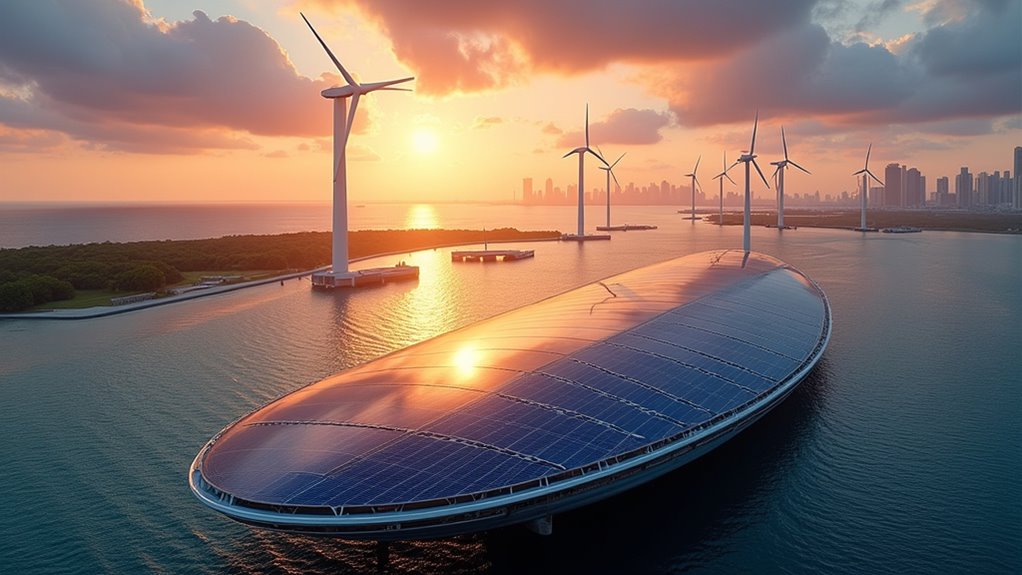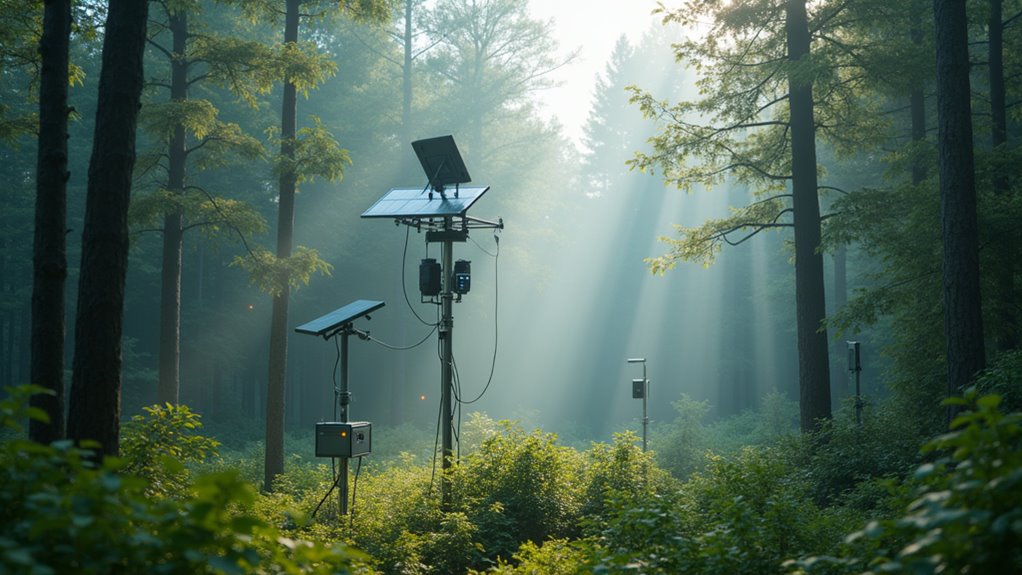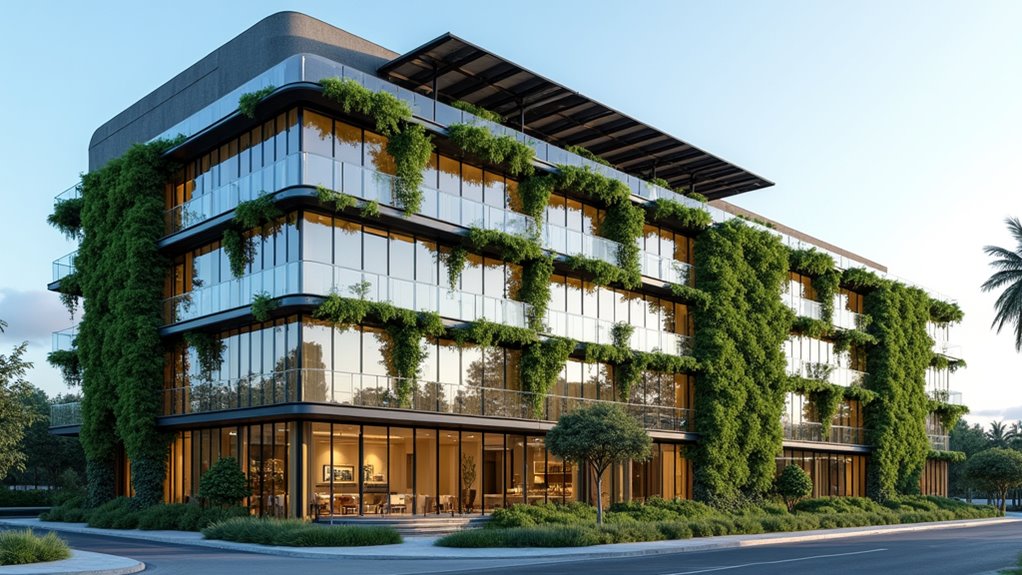

Modern green buildings combine multiple technologies to maximize both efficiency and comfort. High-performance building envelopes with advanced insulation and smart windows regulate temperature, while IoT sensors and AI analytics continuously optimize energy systems. Sustainable features like solar panels, geothermal heating, and greywater recycling reduce resource consumption by up to 35%. Variable refrigerant flow HVAC systems and radiant floors provide precise climate control. These integrated solutions point toward an exciting future of sustainable architecture.
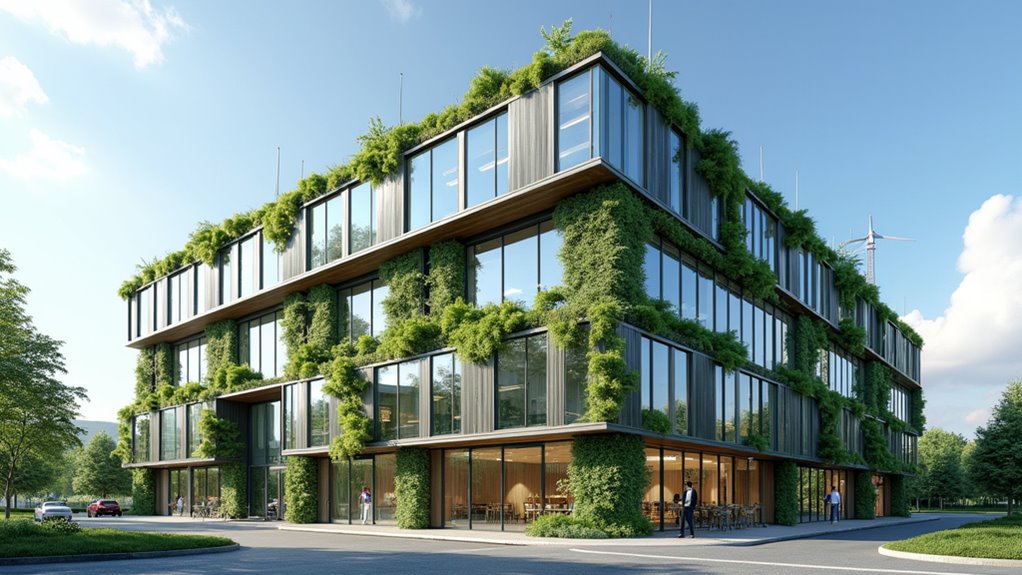
As the construction industry evolves to meet growing environmental challenges, green building technologies are revolutionizing how structures interact with their surroundings and consume resources. Modern buildings are becoming sophisticated systems that seamlessly integrate multiple sustainable technologies to maximize efficiency while enhancing occupant comfort and wellbeing. Some of these buildings aim to become net zero energy buildings, meaning they generate as much energy as they consume through renewable systems and smart design.
At the core of green building design is the high-performance building envelope, which acts like a protective skin that regulates heat transfer and air flow. Triple-pane windows and advanced insulation materials work together with meticulous air sealing to create an airtight barrier that considerably reduces energy waste. Cool roofs reflect sunlight away from buildings, while thermal mass materials cleverly store and release heat to maintain stable indoor temperatures. With urbanization trends indicating 70% of people will live in cities by 2050, these envelope technologies are becoming increasingly crucial. Advances in smart building technologies such as IoT and sensors further enhance the efficiency of these systems by providing real-time data and automation capabilities. Real-world examples of sustainable design showcase how these principles are applied effectively in practice.
The latest HVAC innovations are transforming how buildings manage climate control. Variable refrigerant flow systems provide precise temperature zones, while heat recovery ventilators guarantee fresh air without wasting energy. Geothermal heat pumps tap into the earth’s constant temperatures, and radiant floor heating delivers warmth exactly where it’s needed. Smart thermostats continuously optimize these systems based on occupancy patterns and weather conditions. Eco-friendly architecture improves indoor air quality, leading to healthier living and working environments.
Modern HVAC systems unite smart controls with energy-efficient technologies to revolutionize building climate management while minimizing environmental impact.
Renewable energy systems are increasingly becoming standard features in green buildings. Rooftop solar panels generate clean electricity, while solar thermal systems handle water heating needs. Some structures even incorporate small wind turbines and battery storage systems, enabling them to operate independently when needed. These technologies are often managed through sophisticated microgrids that balance power generation and consumption.
Water conservation has evolved beyond simple low-flow fixtures. Advanced greywater recycling systems capture and treat wastewater for reuse, while rainwater harvesting systems collect precipitation for non-potable applications. Smart irrigation controls adjust watering schedules based on real-time weather data, and drought-resistant landscaping reduces outdoor water demands.
The intelligence of green buildings continues to advance through smart management systems. Networks of IoT sensors monitor everything from energy use to indoor air quality, while AI-powered analytics optimize building performance in real-time. These sustainable structures reduce energy consumption by 25% to 35% compared to conventional buildings. Energy dashboards provide transparent consumption data, and predictive maintenance alerts help prevent equipment failures before they occur.
Sustainable materials and biophilic design elements complete the green building ecosystem. Mass timber construction and recycled materials reduce environmental impact, while living walls and indoor plants naturally purify air and regulate humidity. Large windows and thoughtful daylighting strategies maximize natural light, creating spaces that feel connected to nature while minimizing artificial lighting needs.
These technologies work together to create buildings that aren’t just more sustainable, but also healthier and more enjoyable to occupy. As these systems continue to evolve and become more affordable, they’re transforming our built environment into one that works in harmony with nature rather than against it.
Frequently Asked Questions
How Long Does It Take to See a Return on Green Building Investments?
Most green building investments show returns within 2-7 years, though timelines vary based on project scope.
Energy efficiency upgrades typically pay back fastest (2-3 years), while larger systems like solar may take 5-10 years.
LEED-certified buildings average 3-5 year payback periods and can see ROI up to 40% over their lifetime.
Local energy costs, incentives, and occupancy rates greatly impact how quickly investments pay off.
Can Green Building Technologies Be Installed in Existing Older Buildings?
Absolutely – older buildings can be successfully retrofitted with modern green technologies.
With 75% of 2050’s buildings already standing today, retrofitting is essential and achievable.
Smart HVAC systems, LED lighting, building automation controls, and renewable energy solutions can be integrated into existing structures while preserving their historical character.
These upgrades can reduce energy intensity by nearly 40% while improving comfort and property values.
Custom solutions help overcome preservation challenges.
What Government Incentives Exist for Implementing Green Building Technologies?
Numerous government incentives make green building technologies more financially viable.
The federal government offers tax credits up to $3,200 annually for home efficiency improvements and 30% credits for clean energy installations through 2032.
State and local programs provide additional property tax rebates, expedited permitting, and density bonuses.
Commercial buildings can qualify for deductions up to $5 per square foot, while utility companies often provide rebates for energy-efficient systems.
Do Green Buildings Require More Maintenance Than Conventional Structures?
Green buildings actually require less maintenance than conventional structures.
Research shows they reduce operating expenses by 14-19% and maintenance costs by approximately 12%. Their sustainable materials and systems are more durable, requiring less frequent servicing.
Over a 20-year period, green homes save about $8.47 per square foot in maintenance. Advanced features like energy-efficient lighting, sustainable HVAC systems, and improved building controls help minimize wear and optimize operations while reducing upkeep requirements.
How Do Green Building Materials Affect Indoor Air Quality?
Green building materials considerably enhance indoor air quality through multiple mechanisms.
Low-VOC paints, adhesives, and formaldehyde-free products minimize harmful chemical emissions. Natural materials like wool and cork actively absorb pollutants while regulating humidity.
PVC-free flooring and certified low-emission products reduce occupant exposure to toxins.
These materials, combined with proper ventilation, create healthier indoor environments that improve occupant wellbeing and productivity, leading to fewer respiratory symptoms and better cognitive function.