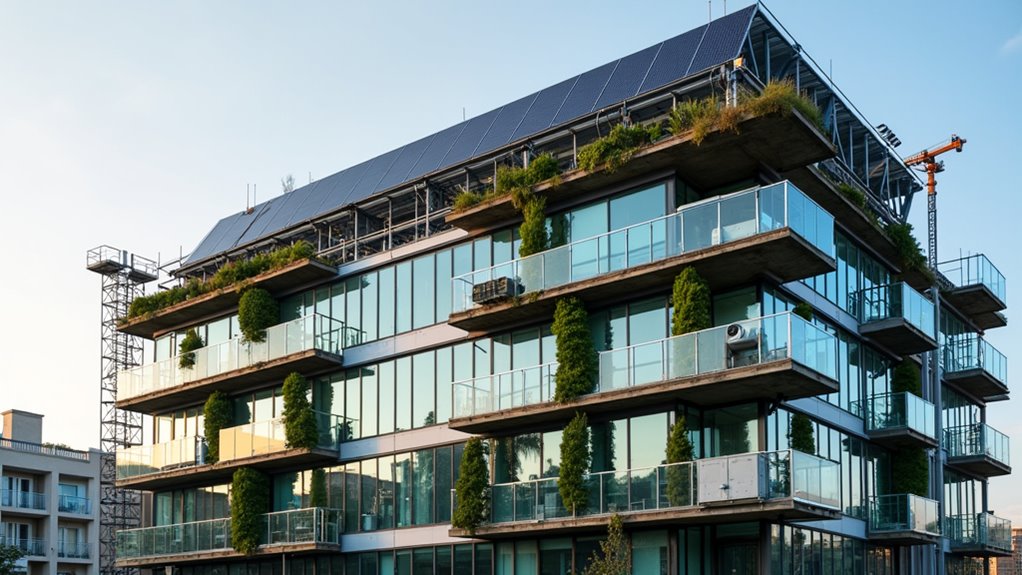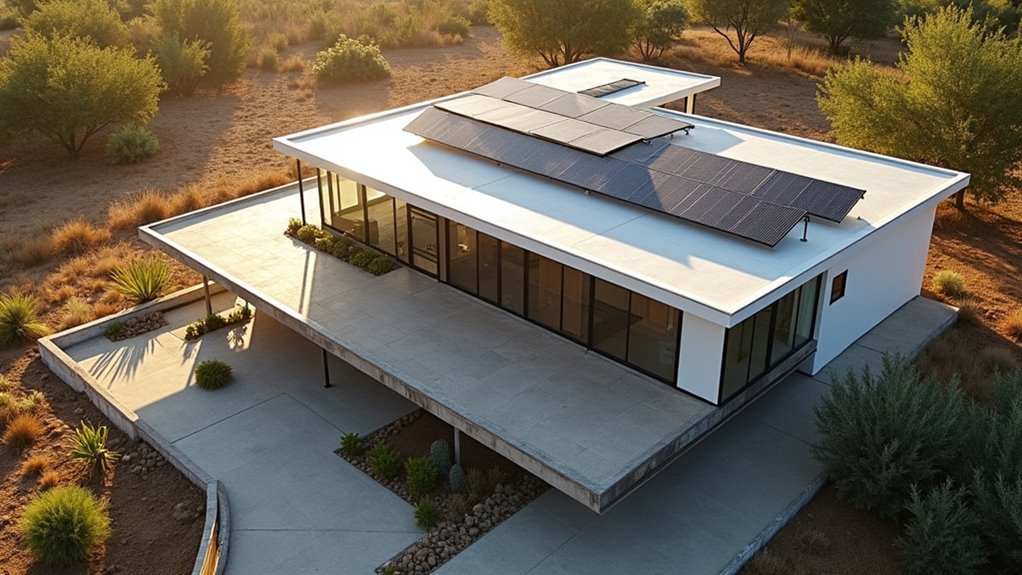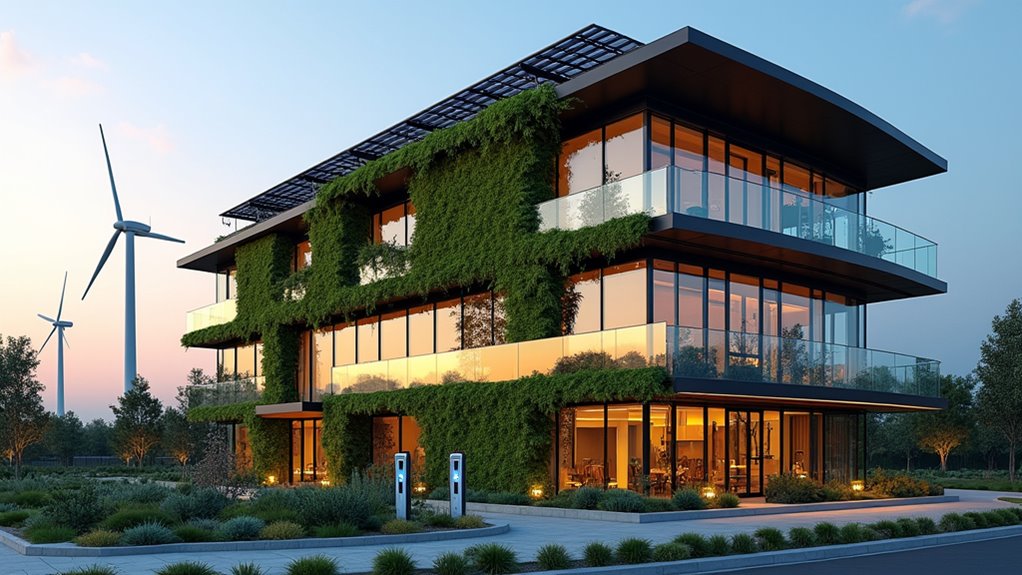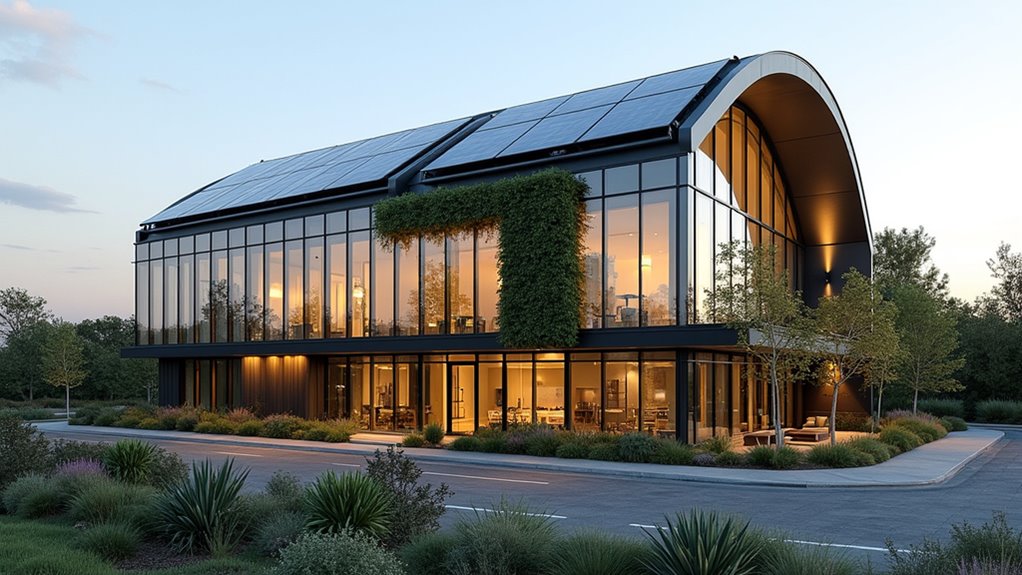

Net zero energy buildings achieve true sustainability through an extensive design approach that integrates multiple elements. Highly-insulated building envelopes, advanced HVAC systems, and high-performance windows create an ultra-efficient structure. On-site renewable technologies like solar panels and geothermal systems generate clean power, while smart technologies optimize energy use. These buildings reduce greenhouse gas emissions by 90% while delivering significant cost savings of $142,000 annually. The journey toward genuine sustainability reveals fascinating innovations in modern architecture.

As the global construction industry pivots toward sustainable solutions, net zero energy buildings have emerged as a groundbreaking approach to combat climate change while revolutionizing how structures interact with their environment. These innovative buildings achieve a delicate balance between energy consumption and production, generating as much energy as they use over the course of a year through a combination of cutting-edge efficiency measures and on-site renewable energy generation.
The foundation of a truly sustainable net zero building lies in its sophisticated design elements. With highly insulated building envelopes featuring R-24 to R-30 walls and high-performance windows with R-5 ratings, these structures minimize heat transfer and reduce energy waste. Smart design principles like passive solar orientation and natural ventilation work alongside advanced HVAC systems and LED lighting with occupancy sensors to slash energy demands by an impressive 70% or more. Energy modeling software is essential for optimizing these complex design decisions. Careful attention to building orientation relative to sun positions is essential for maximizing energy efficiency. Adopting eco-friendly architecture principles further enhances the sustainability of net zero buildings by improving indoor air quality and reducing the environmental footprint. The expansion of urban public transit systems can complement net zero building initiatives by reducing overall transportation emissions and enhancing community sustainability. Electric vehicles are 3-4 times more efficient than gas-powered cars, which aligns with the overall energy efficiency goals of sustainable urban planning.
On-site renewable energy technologies form the backbone of these buildings’ energy independence. Solar photovoltaic panels installed on roofs and parking areas work in concert with geothermal systems and sometimes wind turbines to generate clean power. Energy storage systems and smart grid integration guarantee reliable performance, even when the sun isn’t shining or the wind isn’t blowing. The decarbonization potential of renewable energy can significantly contribute to achieving net zero energy goals.
The environmental benefits of net zero buildings are substantial. By reducing greenhouse gas emissions by 90% or more, these structures play an essential role in fighting climate change and improving local air quality. Their minimal reliance on fossil fuels and grid electricity demonstrates how modern architecture can exist in harmony with the natural environment, rather than depleting it.
The economic case for net zero buildings is equally compelling. While initial construction costs may be higher, the long-term savings are remarkable – approximately $142,000 annually in energy costs alone. Over a 20-year period, these savings can accumulate to around $3.5 million, making these buildings increasingly attractive to forward-thinking developers and property owners. The protection against future energy price volatility adds another layer of financial security.
Various certification frameworks help guarantee these buildings meet rigorous sustainability standards. Programs like LEED, Energy Star, and the Living Building Challenge provide thorough guidelines for achieving true net zero status. Government incentives and tax breaks further support the adoption of these innovative building practices.
The journey toward widespread adoption of net zero energy buildings represents more than just a trend – it’s a fundamental shift in how we conceive of sustainable architecture. By combining aggressive energy efficiency strategies with renewable energy generation, these buildings prove that environmental responsibility and economic viability can coexist. As climate challenges intensify, net zero energy buildings offer a practical blueprint for construction that meets present needs while preserving resources for future generations.
Frequently Asked Questions
How Much More Expensive Is a Net-Zero Building Compared to Conventional Construction?
Net-zero buildings typically cost 5-27% more than conventional construction, with most projects averaging around 15% in additional expenses.
The premium varies based on building type, size, and location. Major cost drivers include renewable energy systems, high-performance envelopes, and advanced HVAC.
However, these upfront costs are often offset by long-term energy savings, increased property values, and available tax incentives that can deliver up to 30% return on investment.
Can Existing Buildings Be Retrofitted to Achieve Net-Zero Energy Status?
Yes, existing buildings can be successfully retrofitted to achieve net-zero energy status, though it requires a thorough approach.
Key strategies include upgrading building envelopes with superior insulation, installing high-performance windows, modernizing HVAC systems, and integrating renewable energy solutions.
While current retrofitting rates hover around 1%, experts indicate that reaching a 2% annual deep renovation rate is necessary for meeting climate goals.
Despite higher upfront costs, retrofits can reduce building emissions by up to 51%.
What Happens to Net-Zero Buildings During Extended Periods of Bad Weather?
Net-zero buildings maintain functionality during extended bad weather through multiple resilience strategies.
Energy storage systems like Powerwall batteries store excess power for cloudy days. Smart panels prioritize critical loads when needed.
Passive design features help regulate temperature naturally, while diverse energy sources (solar, geothermal, etc.) guarantee continued operation.
Grid connection provides backup power, while building management systems continuously optimize energy use based on weather conditions.
How Long Does It Take to Recover the Initial Investment in Net-Zero Features?
The payback period for net-zero building investments typically ranges from 5-30 years, depending on several key factors.
Commercial buildings usually recover costs in 8-15 years, while schools may take 10-25 years.
The timeline varies based on building type, climate zone, utility rates, and available incentives.
Beyond initial cost recovery, net-zero buildings deliver significant long-term benefits, including higher occupancy rates, increased property values, and improved employee productivity.
Are There Special Maintenance Requirements for Net-Zero Energy Building Systems?
Net-zero buildings require specialized maintenance beyond conventional structures.
Regular monitoring of energy systems through smart Building Management Systems is vital.
Solar panels need consistent cleaning and inspection, while advanced HVAC systems demand professional servicing.
Staff training is critical for operating sophisticated controls.
Seasonal adjustments and annual recommissioning guarantee peak performance.
Regular engagement with occupants helps maintain energy-efficient behaviors and maximize system effectiveness.