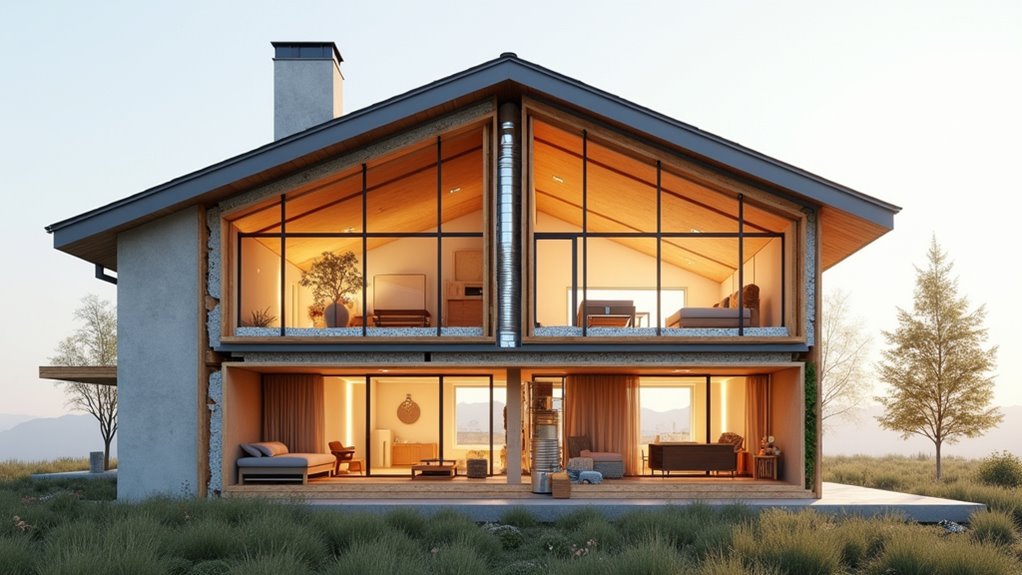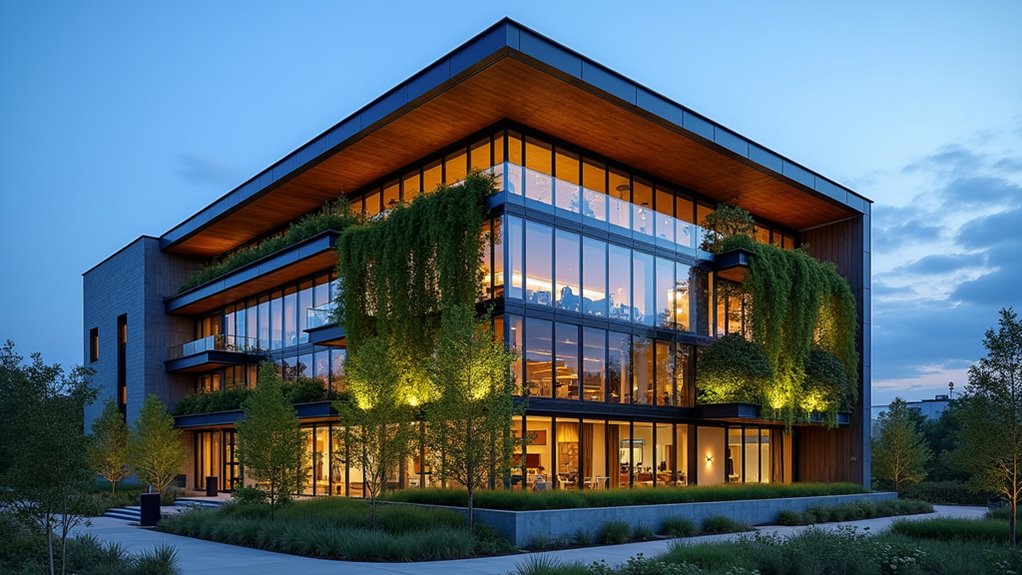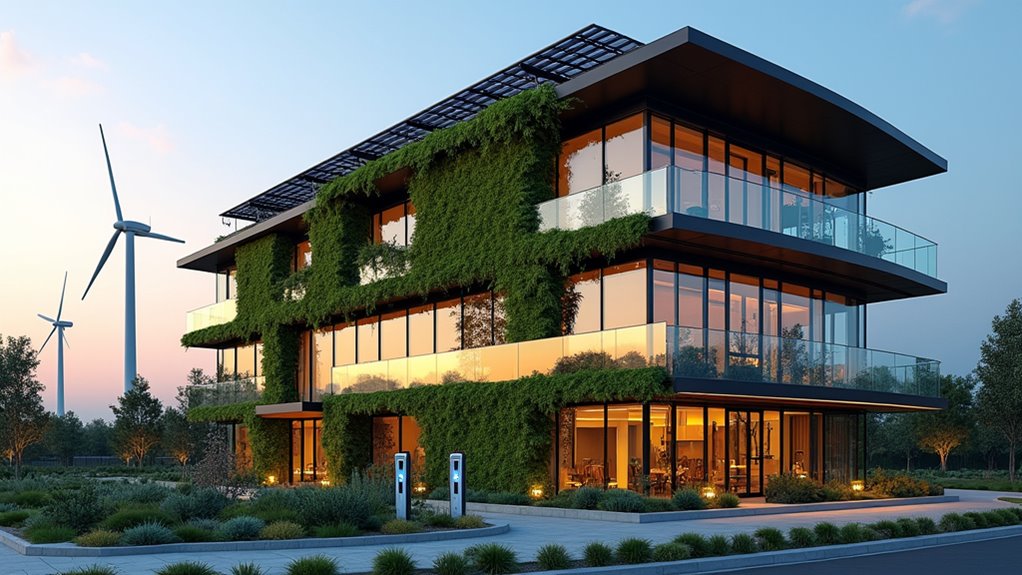

LEED certification measures a building’s environmental performance through a points-based system managed by the U.S. Green Building Council. Projects earn credits across categories like energy efficiency, water conservation, and material selection to achieve Certified, Silver, Gold, or Platinum status. The process involves registering with USGBC, implementing sustainable features, documenting achievements, and submitting for review. Certification requires renewal every two years to maintain standards. Understanding the framework reveals valuable benefits like reduced operating costs and enhanced property values.
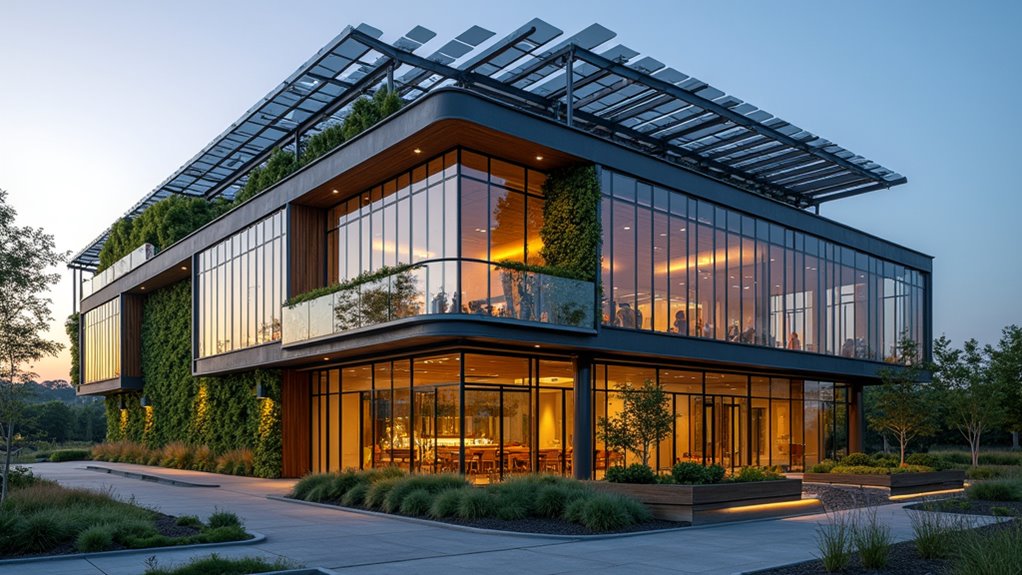
While green building practices have gained momentum over the past decades, LEED certification remains the gold standard for measuring and validating environmental performance in construction projects worldwide. Developed by the U.S. Green Building Council (USGBC), this extensive rating system evaluates everything from sustainable site development to water savings, energy efficiency, material selection, and indoor environmental quality. The initiative has reached remarkable global adoption, with projects in 180 different countries. Sustainable urban planning, as a key component of building better cities, aligns closely with LEED’s objectives to create walkable, resilient, low-impact environments.
The certification process follows a straightforward point-based system with four achievement levels: Certified (40-49 points), Silver (50-59 points), Gold (60-79 points), and Platinum (80+ points). Project teams must first register with USGBC, select the appropriate rating system for their project type, and determine which credits they’ll pursue to reach their target certification level. The documentation is submitted through LEED Online, where the Green Business Certification Inc. (GBCI) reviews and validates the application. Maintaining certification requires renewal every two years to ensure ongoing compliance with sustainability standards. LEED certification can play a significant role in energy security by promoting energy-efficient building practices that reduce reliance on non-renewable resources.
LEED encompasses several rating systems tailored to different project types, including Building Design and Construction, Interior Design and Construction, and Operations and Maintenance. Each system focuses on key environmental impact categories: Sustainable Sites, Water Efficiency, Energy and Atmosphere, Materials and Resources, Indoor Environmental Quality, Innovation in Design, and Regional Priority. This flexibility allows LEED to accommodate various building types and project scopes. Innovative systems such as rainwater reuse and greywater systems are often incorporated into projects to enhance water efficiency and conservation.
LEED’s versatile rating systems and comprehensive environmental categories create a flexible framework that adapts to any construction project’s unique requirements.
The benefits of pursuing LEED certification extend far beyond environmental stewardship. Buildings that achieve certification typically see reduced operating costs through enhanced energy and water efficiency. They also benefit from improved indoor air quality, which positively impacts occupant health and productivity. Additionally, LEED-certified buildings often command higher lease rates and property values, while potentially qualifying for tax incentives and special zoning allowances in certain jurisdictions. The government support mechanisms for renewable energy also contribute to the financial feasibility of pursuing LEED certification, as they can provide additional incentives for energy-efficient practices.
Success in achieving LEED certification requires careful planning and execution. Project teams should integrate LEED goals early in the planning phase and include experienced LEED Accredited Professionals who understand the system’s nuances. A thorough feasibility study helps determine the achievable certification level and identifies potential challenges. Teams must also budget appropriately for certification fees and any additional construction costs associated with sustainable features.
The implementation of LEED has transformed the building industry, creating a common language for sustainable construction and operations. As climate change concerns intensify, LEED certification provides a proven framework for reducing environmental impact while delivering tangible benefits to building owners and occupants.
The system continues to evolve, incorporating new technologies and best practices to address emerging sustainability challenges. For organizations committed to environmental responsibility, LEED certification represents not just an achievement but a practical pathway to creating better, more efficient, and healthier built environments.
Frequently Asked Questions
How Long Does LEED Certification Typically Take From Start to Finish?
LEED certification typically takes 1-2 years from initial registration to final certification.
The process includes two main review phases – design and construction – each requiring 20-25 business days.
Project complexity, team experience, and chosen rating system greatly impact timeline.
Larger projects or those with inexperienced teams may take longer.
Fast-tracking is possible through early planning, prompt documentation submittal, and quick responses to reviewer feedback.
What Happens if a Building Fails to Meet LEED Requirements After Certification?
Buildings that fail to maintain LEED requirements post-certification risk having their certification revoked by GBCI.
Common triggers include not reporting energy data, demolishing certified areas, or greatly altering the building’s design.
Decertification can lead to serious consequences like lost tax incentives, breached loan agreements, and reduced property value.
To avoid this, buildings should regularly monitor compliance, maintain proper documentation, and consider periodic recertification every 3-5 years.
Can Residential Homes Qualify for LEED Certification?
Yes, residential homes can absolutely qualify for LEED certification through the specific LEED for Homes program.
This rating system applies to single-family houses and multi-family buildings up to 8 stories tall. To qualify, homes must have at least 300 square feet of living space, be permanently located, and comply with environmental regulations.
The program evaluates factors like energy efficiency, water conservation, and indoor air quality before awarding certification levels from Certified to Platinum.
How Often Must LEED Certified Buildings Renew Their Certification?
LEED certification renewal requirements vary by rating system.
For LEED O+M (Operations and Maintenance), buildings must recertify within 5 years of their previous certification, though they can choose to do so as frequently as every 12 months.
However, buildings certified under BD+C (Building Design and Construction) or ID+C (Interior Design and Construction) don’t require renewal – their certifications don’t expire, though recertification is encouraged for maintaining performance standards.
What Are the Typical Cost Premiums Associated With LEED Certification?
LEED certification costs vary by level, with total project premiums typically ranging from 0.7% to 12%.
Basic Certified level adds 0.7-2% to costs. Silver certification increases expenses by 1.9-3%. Gold level adds 2.2-5%, and Platinum certification commands the highest premium at 6.8-12%.
These costs include both hard expenses like green materials and soft costs such as documentation fees, energy modeling, and commissioning services.