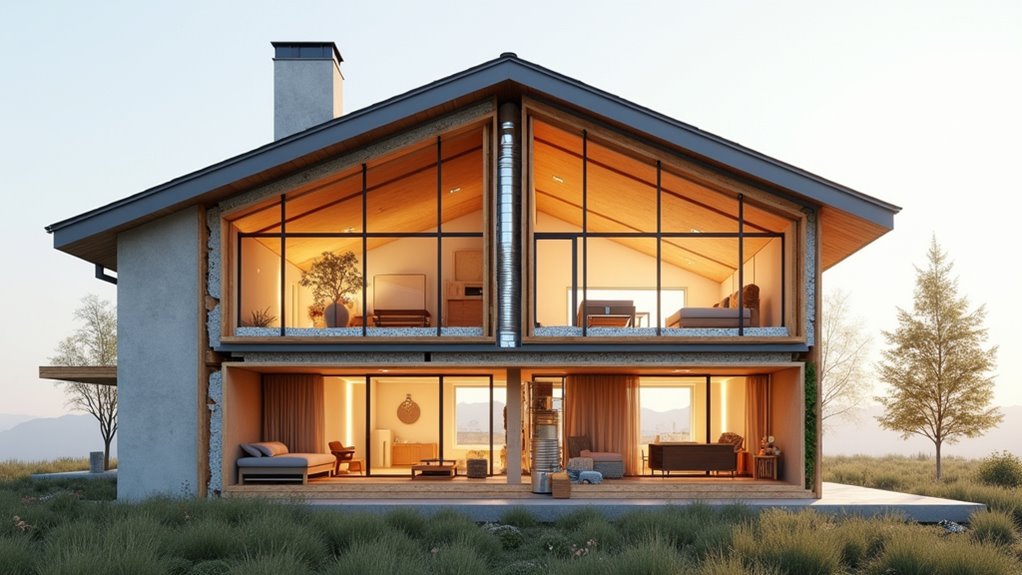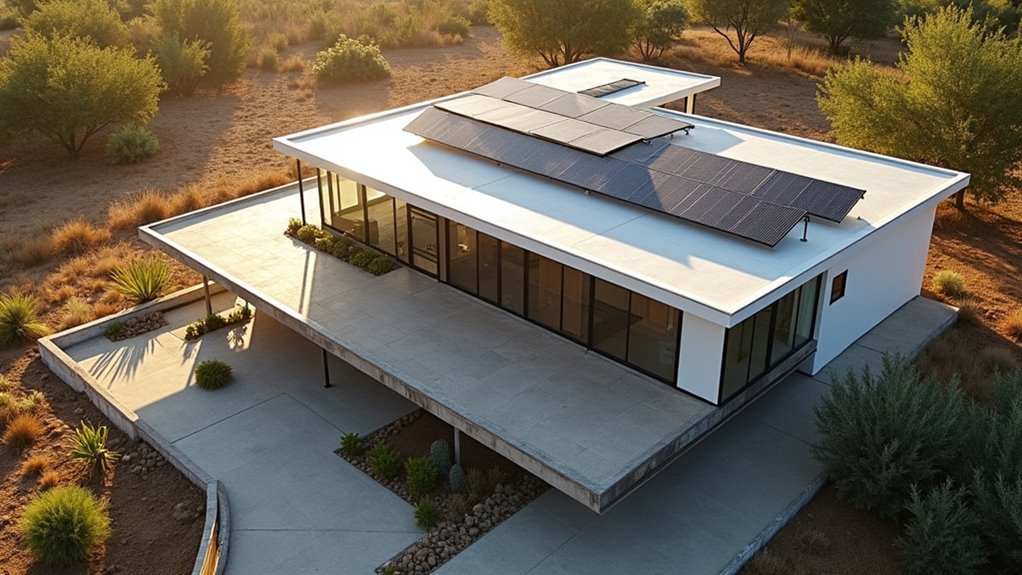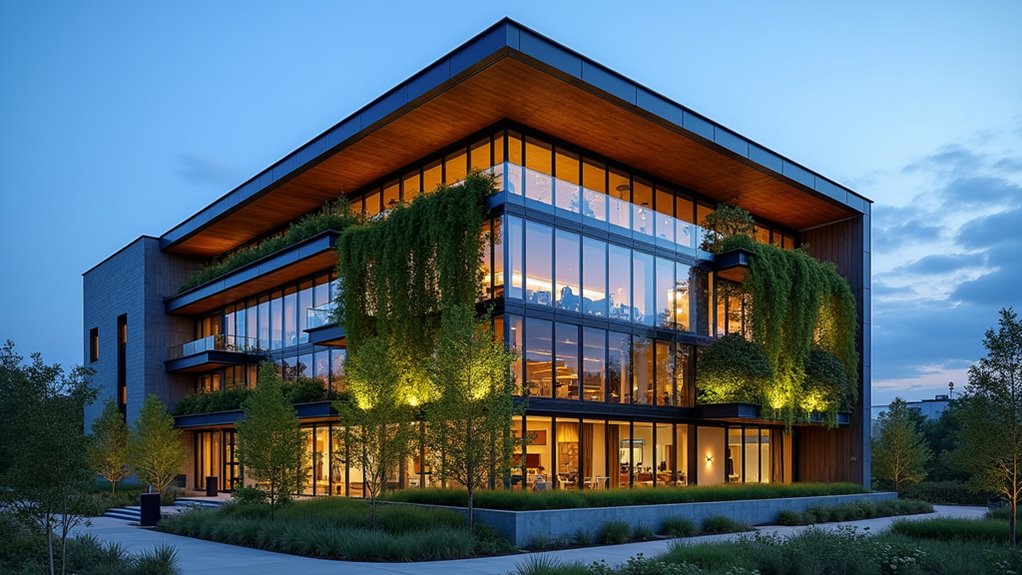
Several key green building certifications shape modern sustainable construction. LEED leads globally with over 100,000 certified projects, while BREEAM’s all-encompassing approach has certified 590,000 developments worldwide. The WELL Building Standard focuses on occupant health, and the Living Building Challenge sets ambitious net-positive energy goals. Other notable certifications include Green Globes, ENERGY STAR, and Passive House – each offering distinct frameworks for measuring environmental performance. Understanding these certifications reveals the future of sustainable architecture.

The maze of green building certifications can seem intimidating at first glance, but these environmental rating systems have become vital tools in the construction industry’s push toward sustainability. Among the most widely recognized certifications, LEED stands as a global leader, having certified over 100,000 projects across 180 countries. Developed by the U.S. Green Building Council, LEED offers four certification levels – from Certified to Platinum – and evaluates everything from energy efficiency to indoor environmental quality. Projects must achieve a minimum of 40 points for basic certification. LEED certification measures various aspects of green building performance, including sustainable site development, water savings, and materials selection, ensuring a comprehensive assessment of a building’s environmental impact.
Green building certifications guide the construction industry toward a sustainable future, providing clear standards and measurable goals for environmental performance.
BREEAM, which originated in the United Kingdom, has an even more impressive reach with 590,000 certified developments worldwide. Its extensive approach examines ten key categories, including pollution, transport, and innovation, while offering five certification levels ranging from Pass to Outstanding. The system’s reliance on third-party assessors guarantees credible evaluations and maintains high standards across different markets. As green building practices advance, the integration of eco-friendly architecture becomes crucial in enhancing the sustainability and performance of certified developments. Smart building technologies, such as IoT and sensors, further optimize building performance by enabling real-time monitoring and adjustments. Incorporating energy-efficient HVAC systems can significantly reduce emissions while maintaining optimal indoor climate control.
The WELL Building Standard takes a uniquely human-centric approach, focusing on occupant health and wellness. It’s the first certification to require on-site performance testing and demands recertification every three years to maintain standards. The system evaluates ten concepts, including less commonly addressed factors like nourishment and movement, making it particularly relevant for commercial and institutional buildings. While larger institutions can readily pursue these certifications, smaller entities face challenges with the extensive documentation requirements and substantial costs involved.
For those seeking the highest level of environmental performance, the Living Building Challenge sets an extraordinary bar. With only 31 fully certified projects as of 2021, its requirements for net-positive energy and water use represent the pinnacle of sustainable construction. The program’s seven performance categories extend beyond typical environmental metrics to include beauty and equity, creating truly holistic sustainable buildings.
Green Globes and ENERGY STAR offer more accessible paths to certification, particularly for existing buildings. Green Globes provides a practical online assessment tool and adapts to local conditions, while ENERGY STAR’s focused approach on energy efficiency has led to over 36,000 certified buildings. Both systems provide annual recertification options to guarantee continued performance.
The Passive House (Passivhaus) standard has gained significant traction internationally, with more than 40,000 certified buildings worldwide. Its rigorous focus on building envelope performance and ventilation systems has proven to achieve remarkable energy savings, typically reducing heating and cooling energy use by 90% compared to conventional buildings. While initially developed for residential construction in Germany, the standard has successfully expanded to commercial projects and diverse climate zones, demonstrating the versatility of its core principles.
These certification systems have evolved beyond simple environmental checklists to become extensive frameworks for creating better buildings. Whether pursuing the prestigious LEED Platinum status or the transformative Living Building Challenge, each certification offers a unique path toward reducing environmental impact while improving occupant wellbeing and operational efficiency.
As the construction industry continues to adapt to climate challenges, these certifications provide vital guidance for building a more sustainable future.
Frequently Asked Questions
How Much Do Green Building Certifications Typically Cost?
Green building certification costs vary considerably based on project size and certification type.
Initial registration fees typically range from $349 (EDGE) to $10,000 (WELL/BREEAM).
Certification fees run between $2,850-$90,000, while additional expenses like consultants ($10,000-$30,000), testing, and equipment upgrades must be considered.
Total certification costs usually represent about 2% of the overall construction budget.
Early planning can help optimize expenses and maximize long-term benefits.
Can Existing Buildings Apply for Green Certifications?
Yes, existing buildings can absolutely pursue green certifications through several established programs.
LEED Operations and Maintenance (O+M), Green Globes, BREEAM In-Use, Energy Star, and WELL Performance Rating all offer pathways for existing structures.
The certification process typically involves evaluating current performance, implementing sustainability improvements, and documenting compliance.
While retrofitting may require initial investment, benefits include reduced operating costs, improved occupant wellbeing, and increased property value.
How Long Does the Certification Process Usually Take?
The certification process typically takes 2-6 months, though timelines vary considerably based on the certification type and project scope.
LEED reviews take around 20-25 business days, while BREEAM requires 6-8 weeks for design review.
The process can be expedited through careful planning, thorough documentation, and prompt responses to reviewer queries.
Project complexity, certification level, and documentation completeness are key factors affecting duration.
Early planning is essential for faster results.
What Happens if a Building Fails to Maintain Certification Standards?
Failing to maintain certification standards carries serious consequences across multiple fronts.
Buildings face financial impacts like increased operating costs, loss of tax benefits, and reduced property value.
Legal ramifications may include regulatory violations and potential lawsuits.
The building’s reputation suffers, making it harder to attract quality tenants and maintain premium rental rates.
Remediation requires costly retrofitting and professional expertise, while recertification isn’t guaranteed even after improvements’re made.
Are Green-Certified Buildings More Expensive to Maintain Than Conventional Ones?
Actually, green-certified buildings are less expensive to maintain than conventional ones.
Data shows they have 12% lower maintenance costs on average. The use of high-performance materials means less frequent replacements are needed, while efficient systems reduce operational expenses.
Automated building management systems help optimize performance and cut costs. While upfront costs may be higher, the long-term savings in maintenance and operations make green buildings more economical.