Green building represents a fundamental shift in urban development, delivering both environmental and economic benefits. Modern sustainable buildings reduce CO2 emissions by up to 40% while cutting water usage by 35%. Despite slightly higher upfront costs, green-certified structures command premium resale values and lower operating expenses. Through smart technologies, biophilic design, and circular economy principles, these innovations are creating resilient urban spaces that will define tomorrow’s cities. The transformation of our urban landscape is just beginning.
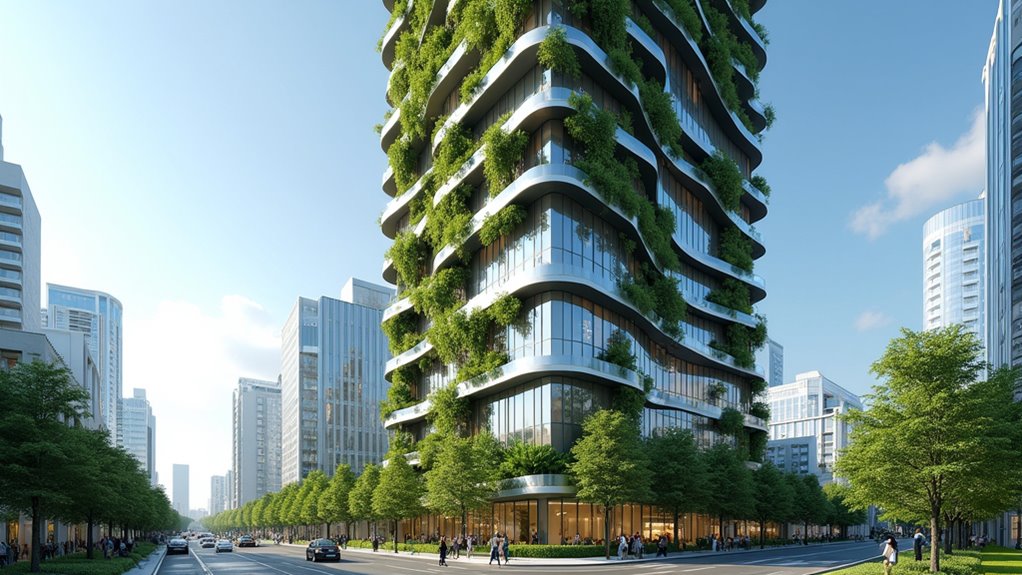
As cities worldwide grapple with the mounting challenges of climate change and resource depletion, green building technologies are emerging as a cornerstone of sustainable urban development. These innovative approaches to construction and design are revolutionizing how we think about urban spaces, offering practical solutions that benefit both the environment and the economy. The definition of green building extends far beyond simply adding solar panels or using recycled materials – it encompasses a holistic approach to creating structures that minimize environmental impact throughout their entire lifecycle. The integration of mycelium composites into modern construction is shifting the industry away from traditional concrete, demonstrating how natural materials can provide sustainable alternatives. Copenhagen demonstrates remarkable progress in this field, with mandatory green roofs now required for all new buildings as part of their sustainability initiatives.
The numbers tell a compelling story about the impact of sustainable construction. Green buildings can slash energy-related CO2 emissions by up to 40% and reduce water consumption by as much as 35%. While initial construction costs may run slightly higher – typically 0-4% more than traditional buildings – the long-term savings are substantial, with operation and maintenance costs averaging 14% lower than conventional structures. Property values also benefit, with green-certified buildings commanding premium resale values of up to 31% for LEED certification. The economic impact on consumers from integrating renewable energy into the grid is minimal, demonstrating that sustainable practices can be both environmentally and economically viable. A key example of these sustainable practices is the development of net zero energy buildings that generate as much energy as they consume through renewable systems and smart design. Urban design prioritizing walkability can reduce driving by up to 40%, contributing to sustainable urban living.
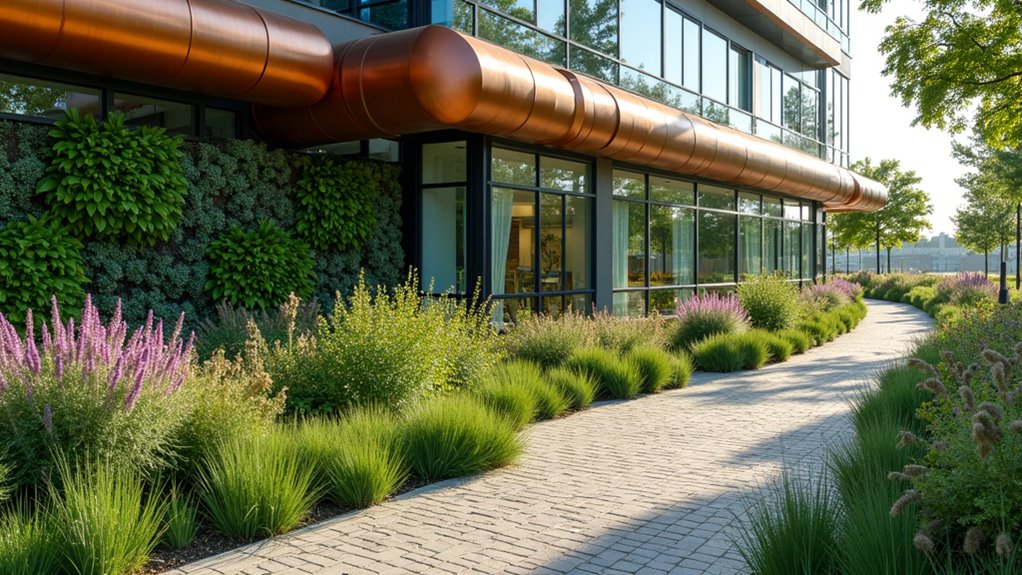
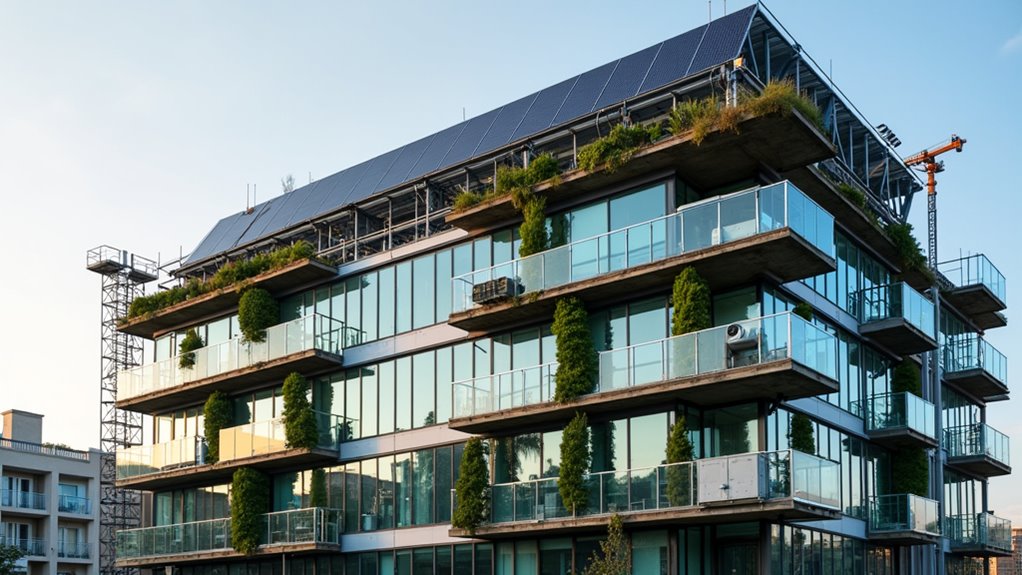
Modern green building technologies are transforming urban landscapes in remarkable ways. Smart building management systems optimize energy use in real-time, while advanced insulation and efficient HVAC systems dramatically reduce energy consumption. Innovative features like greywater recycling systems and green roofs serve multiple purposes, providing urban agriculture opportunities while managing stormwater runoff and reducing the urban heat island effect. Real-world examples of sustainable design, like those showcased in case studies, demonstrate the tangible benefits of incorporating these features into urban planning.
Governments worldwide are taking notice and taking action. The U.S.’s $1.2 trillion infrastructure bill includes significant funding for sustainable development, while cities across the globe are implementing stricter building codes and mandatory green certifications for new construction. These initiatives are creating a robust market for sustainable building practices and driving innovation in the sector.
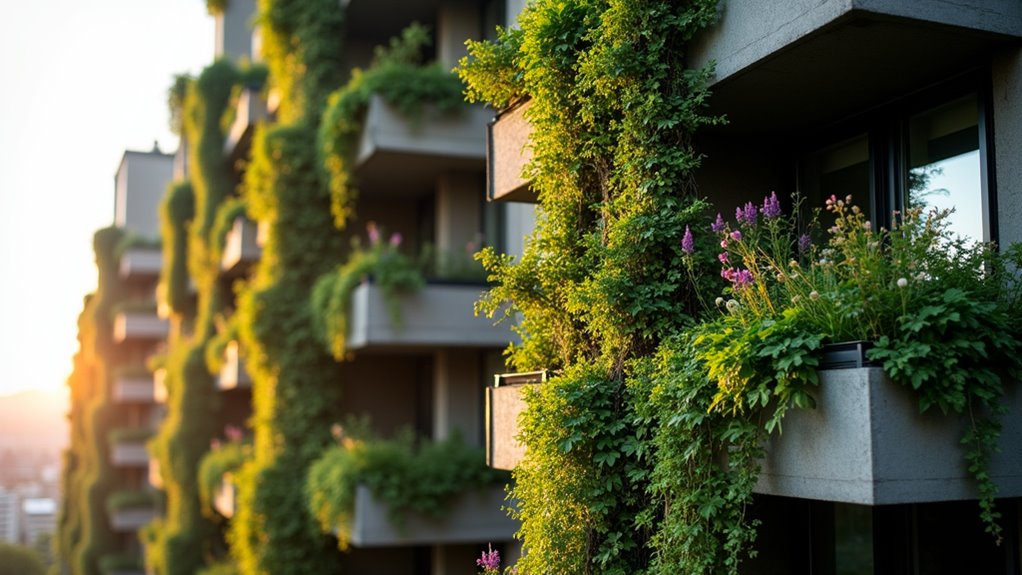
The future of urban development is increasingly focused on achieving net-zero energy buildings and integrating green infrastructure into city planning. Biophilic design principles are gaining traction, bringing nature into urban spaces through vertical gardens and green corridors. The emphasis on circular economy principles means buildings are increasingly designed with their entire lifecycle in mind, from construction through eventual demolition or repurposing.
This transformation isn’t just about environmental benefits – it’s creating new economic opportunities in the green technology sector. As cities aim for carbon neutrality by 2030-2050, the demand for sustainable building expertise and technologies continues to grow. Certification systems like LEED, BREEAM, and the Living Building Challenge are raising the bar for what constitutes truly sustainable construction, pushing the industry toward ever-more innovative solutions.
The evolution of green building represents a fundamental shift in how we conceive and construct urban environments. By embracing these technologies and principles, cities aren’t just reducing their environmental impact – they’re creating more resilient, livable spaces that will serve as models for sustainable development in the decades to come.
Frequently Asked Questions
How Much More Expensive Is Green Building Compared to Traditional Construction Methods?
Green building typically costs 2-5% more upfront than conventional construction, with several contributing factors.
LEED certification adds 1-2% to total costs, while sustainable materials increase expenses by 3-8%.
Design fees run about 32% higher, and specialized labor adds 5-10% to costs.
However, these initial investments are offset by long-term savings, including 25-35% lower energy usage and reduced maintenance costs of up to 20% over time.
What Incentives Do Governments Offer for Implementing Green Building Practices?
Governments offer robust financial, regulatory, and technical incentives to encourage green building adoption.
Financial perks include tax credits up to $5,000, property tax breaks, and cash rebates covering 30% of upgrade costs. Builders can access expedited permits, density bonuses, and increased floor-area ratios.
Free technical support, energy audits, and marketing assistance are also available. These incentives make sustainable construction more financially viable while streamlining the development process.
Can Existing Buildings Be Retrofitted to Meet Green Building Standards?
Existing buildings can absolutely be retrofitted to meet modern green standards through strategic upgrades.
Common retrofitting strategies include improving insulation, installing efficient HVAC systems, upgrading to triple-glazed windows, and adding renewable energy systems.
While retrofits can be more complex than new construction, they typically reduce energy use by 25-35% and increase property values by 6-10%.
Various certification programs like LEED and BREEAM now offer specific pathways for existing building renovations.
How Long Does It Take to Recover Costs From Green Building Investments?
Most green building investments recover their costs within 5-10 years through various savings streams.
Energy and water efficiency measures typically pay back fastest, with 50% of projects breaking even within 5 years just from utility savings.
When factoring in health and productivity benefits, 90% achieve payback in under 5 years.
The speed of cost recovery depends on specific features implemented, but energy-focused upgrades generally show the quickest returns of 3-7 years.
Which Countries Currently Lead the World in Green Building Adoption?
The United States dominates global green building adoption with over 124,000 LEED-certified buildings, far surpassing China’s 5,678 structures.
European nations like the Netherlands, France, Germany, and the UK are also frontrunners, collectively representing 39% of global green building revenue.
Sweden stands out for reaching its renewable energy targets early, while Singapore leads in Asia by requiring green certification for all new construction and major renovations.