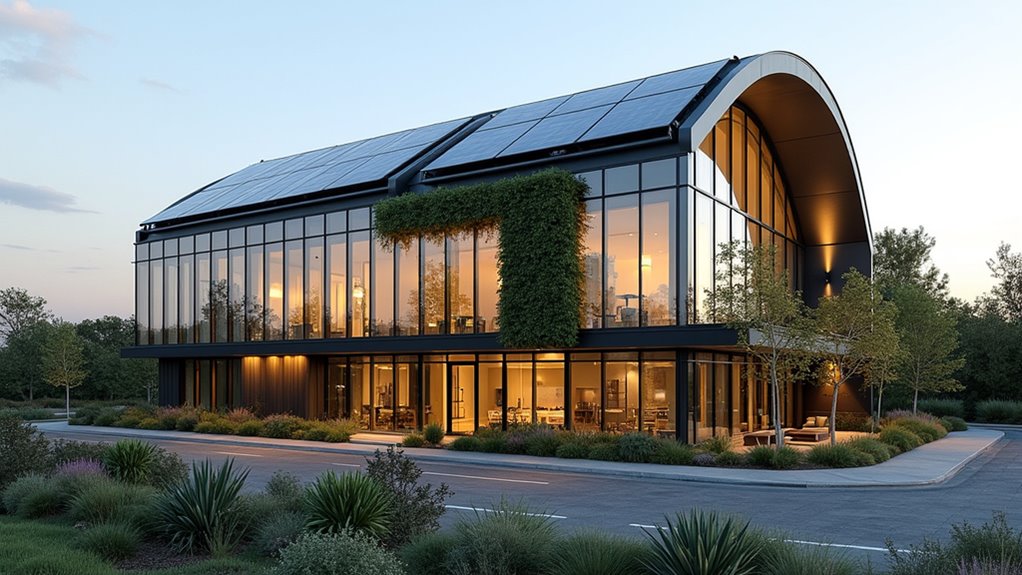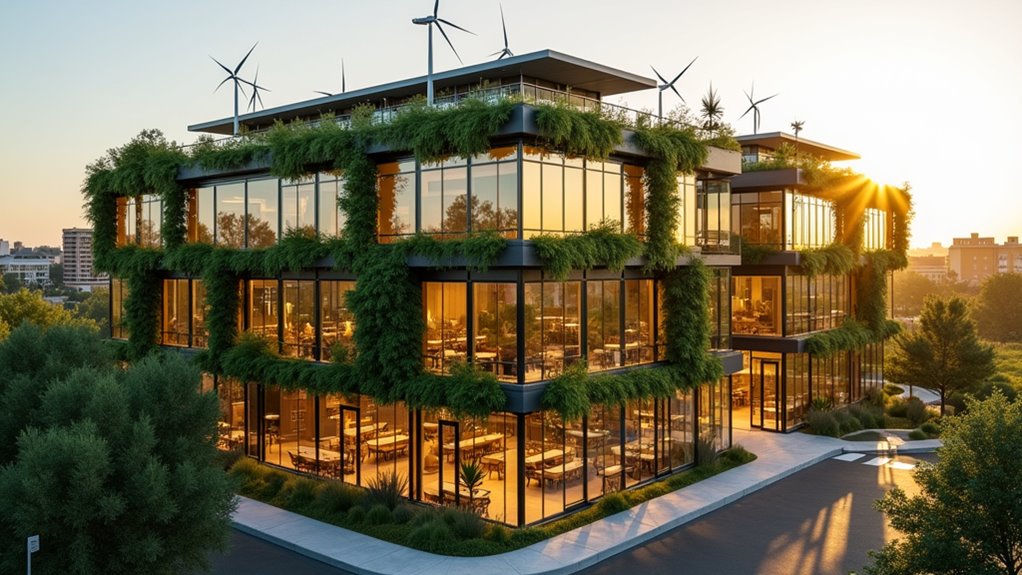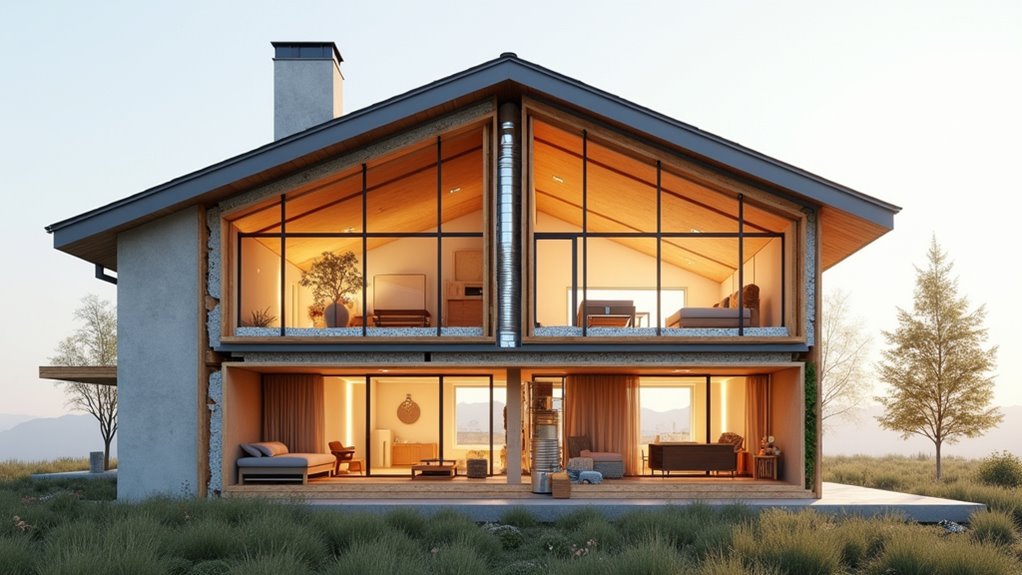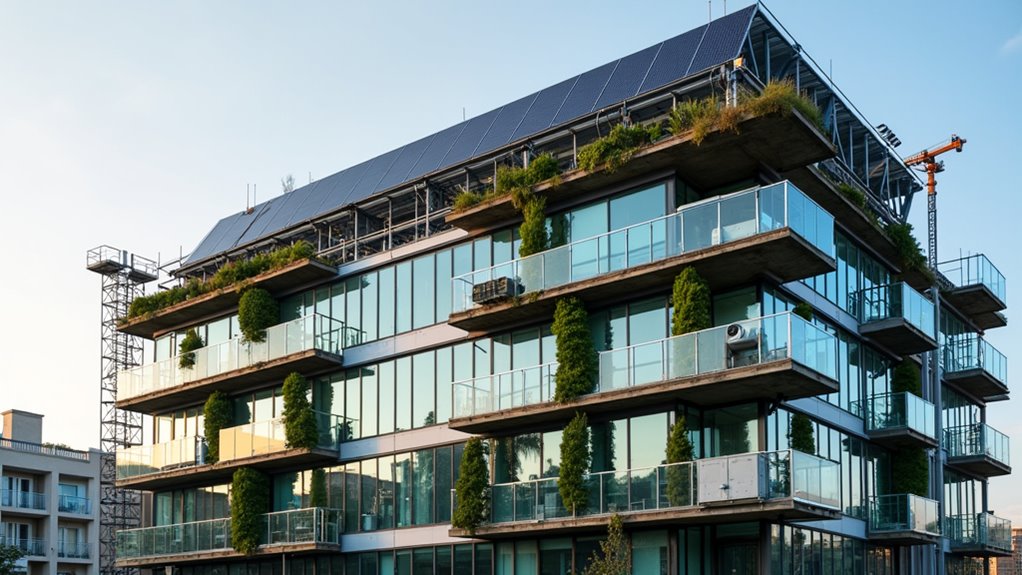
Building retrofitting stands as a critical solution for sustainable development, with existing structures accounting for most of the 2050 building stock. Strategic upgrades can slash energy consumption by up to 80% while preserving valuable embodied carbon. Beyond environmental benefits, retrofits boost property values, improve occupant wellbeing through better air quality and thermal comfort, and revitalize urban spaces while maintaining historical character. The extensive advantages of building modernization reveal an essential path toward a more sustainable future.
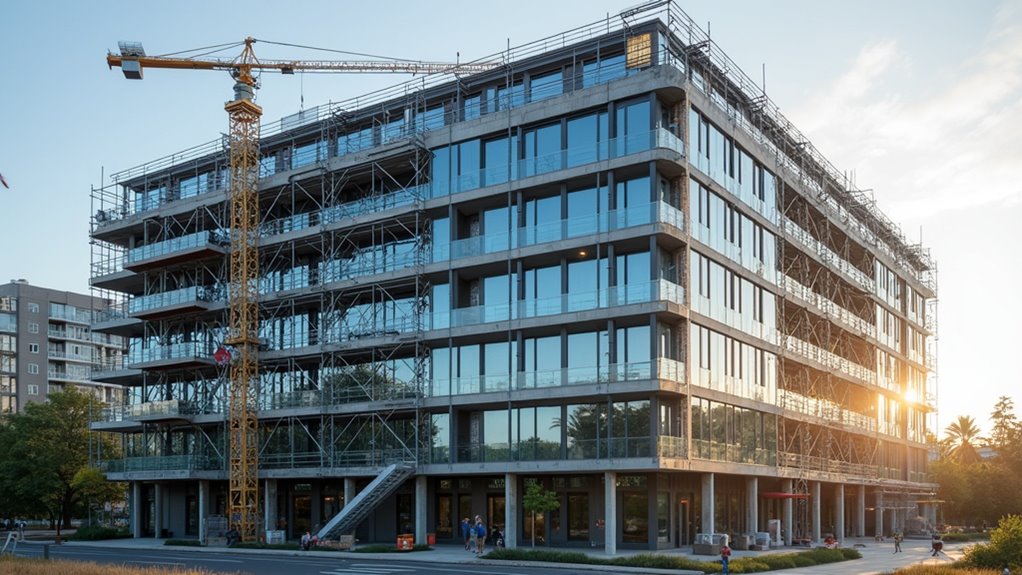
Nearly three-quarters of today’s buildings will still be standing in 2050, making the widespread adoption of sustainable retrofitting vital for meeting global climate goals. The building sector currently accounts for a considerable portion of global carbon emissions, but through thorough retrofitting measures, these emissions can be slashed by up to 40%. This remarkable reduction comes from preserving the embodied carbon in existing structures while simultaneously upgrading their performance to meet modern environmental standards. Energy audits help identify key areas for improvement in existing buildings. The economic case for retrofitting is compelling, with buildings achieving up to 80% reductions in energy consumption through strategic improvements to insulation, windows, and HVAC systems. These upgrades translate directly into lower operational costs and increased property values, while creating valuable jobs in the green construction sector. Building owners who invest in retrofits often see better returns compared to new construction, particularly when taking advantage of government incentives and tax benefits. Since heating and cooling costs represent 32% of building energy usage, addressing these systems offers significant savings potential.
Beyond the immediate environmental and economic benefits, retrofitting greatly enhances building longevity and resilience. By addressing structural issues and implementing modern building standards, these improvements extend the useful life of existing structures while making them more resistant to climate change impacts. The integration of smart building management systems and IoT devices enables real-time monitoring and enhancement of energy usage, creating buildings that are not just sustainable, but intelligent. By adopting net zero energy building practices, retrofitted structures can generate as much energy as they consume, significantly enhancing their sustainability. The addition of green steel and new cement formulations in retrofitting efforts can significantly reduce the carbon footprint of the building sector over time. Smart airflow design in retrofitted buildings can further ensure clean indoor air quality, contributing to occupant health. Green building principles emphasize the importance of eco-friendly architecture, which improves sustainability, health, and performance.
The impact on occupant health and wellbeing cannot be overstated. Retrofitted buildings provide superior indoor air quality through enhanced ventilation systems, maximize natural lighting, and maintain consistent thermal comfort. These improvements create healthier environments that boost productivity and reduce health-related issues caused by poor building conditions. The addition of better insulation also reduces noise pollution, contributing to more comfortable living and working spaces.
Retrofitting plays a vital role in urban development and heritage preservation. By revitalizing existing buildings, communities can maintain their historical character while reducing the need for urban sprawl and greenfield development. This approach supports sustainable urban planning initiatives and improves the overall aesthetics of aging building stock, contributing to more vibrant and resilient cities. The technological aspects of modern retrofitting are equally impressive. Advanced materials and smart systems are revolutionizing how buildings operate and perform. Data-driven decision making allows for precise control of energy usage, while ongoing monitoring guarantees peak performance over time. These technological integrations make it easier for buildings to achieve green building certifications and maintain high performance standards.
Through thorough retrofitting strategies, we can transform our existing building stock into high-performing, sustainable assets that benefit both the environment and occupants. The combination of reduced carbon emissions, improved energy efficiency, enhanced occupant wellbeing, and preserved cultural heritage makes retrofitting a vital tool in creating a more sustainable built environment for future generations.
Frequently Asked Questions
How Long Does a Typical Building Retrofit Project Take to Complete?
Building retrofit timelines vary greatly based on project scope and complexity.
Residential retrofits typically take 4-8 weeks, while commercial projects range from 2-6 months.
Small-scale upgrades might finish in 2-4 weeks, but thorough retrofits of large buildings can extend beyond a year.
The duration depends on factors like building size, work scope, resource availability, and whether the building remains occupied during construction.
Proper planning and experienced contractors can help optimize timelines.
What Percentage of Energy Costs Can Be Saved Through Retrofitting?
Building retrofits can achieve significant energy savings ranging from 20% to over 50%, depending on the depth of renovations.
Standard retrofits typically reduce costs by 20-30%, while deep retrofits can slash energy consumption by half or more.
Specific systems show impressive results: lighting upgrades save 10-20% of electricity costs, premium motors cut energy use by up to 85%, and high-efficiency HVAC systems reduce cooling expenses by 25%.
Are There Government Incentives Available for Retrofitting Commercial Buildings?
Yes, substantial government incentives exist for commercial building retrofits.
The federal 179D tax deduction offers $0.50-$5.00 per square foot for energy-efficient upgrades, while state and local programs provide revolving loans and tax abatements.
Utility companies offer free energy assessments, rebates, and on-bill financing options.
The Department of Energy’s programs, including ENERGY STAR, provide technical assistance and tools to help building owners maximize available incentives and achieve energy savings.
How Does Retrofitting Impact the Market Value of a Property?
Retrofitting greatly boosts property market value, typically adding 15-20% to the overall worth.
Energy-efficient buildings command higher rents and capital values, particularly in markets like London where low-carbon spaces are in high demand.
About 70% of potential buyers consider energy efficiency when evaluating properties, making retrofitted buildings more attractive investments.
The improved sustainability credentials and reduced operating costs make these properties increasingly desirable in today’s environmentally conscious market.
What Are the Minimum Building Age Requirements for Retrofit Eligibility?
Most retrofit programs target buildings constructed before 1980, though specific requirements vary by location and building type.
San Francisco mandates retrofits for pre-1978 wood-frame buildings, while Berkeley focuses on pre-1997 structures with 3+ stories.
Oakland addresses soft-story buildings built before 1991.
However, certain factors like structural vulnerabilities, location on steep slopes, or presence of unreinforced masonry can make buildings eligible regardless of age.