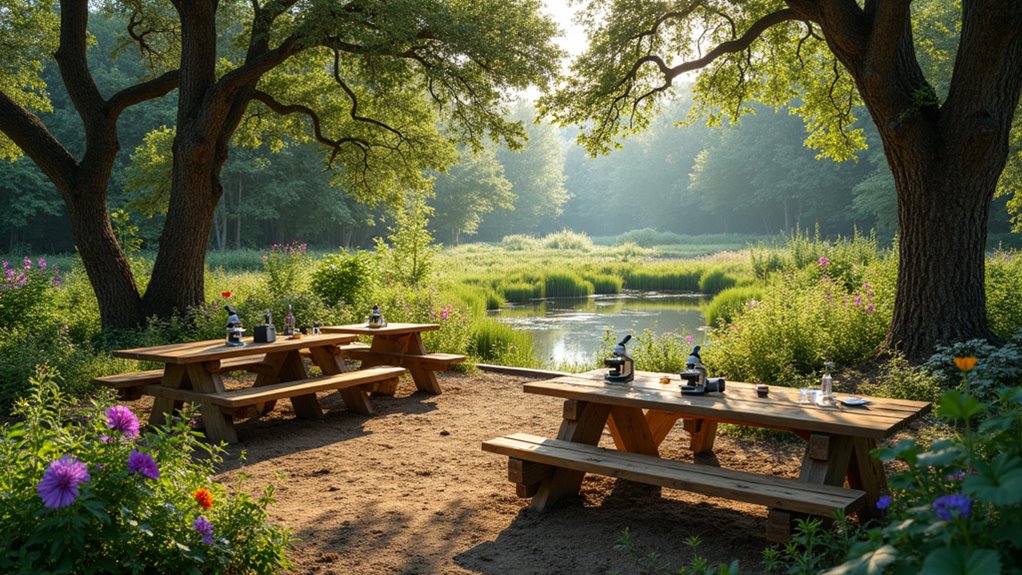

Museums worldwide are revolutionizing environmental education through immersive exhibits, hands-on experiences, and community conservation programs. They’ve transformed into sustainability hubs featuring interactive climate displays, citizen science projects, and eco-friendly operations that serve as real-world examples. Through teacher workshops, youth climate groups, and partnerships with environmental NGOs, museums create lasting impact beyond their walls. Their digital resources and virtual programs guarantee environmental learning remains accessible to all. The expanding role of these institutions reveals fascinating developments in ecological awareness.
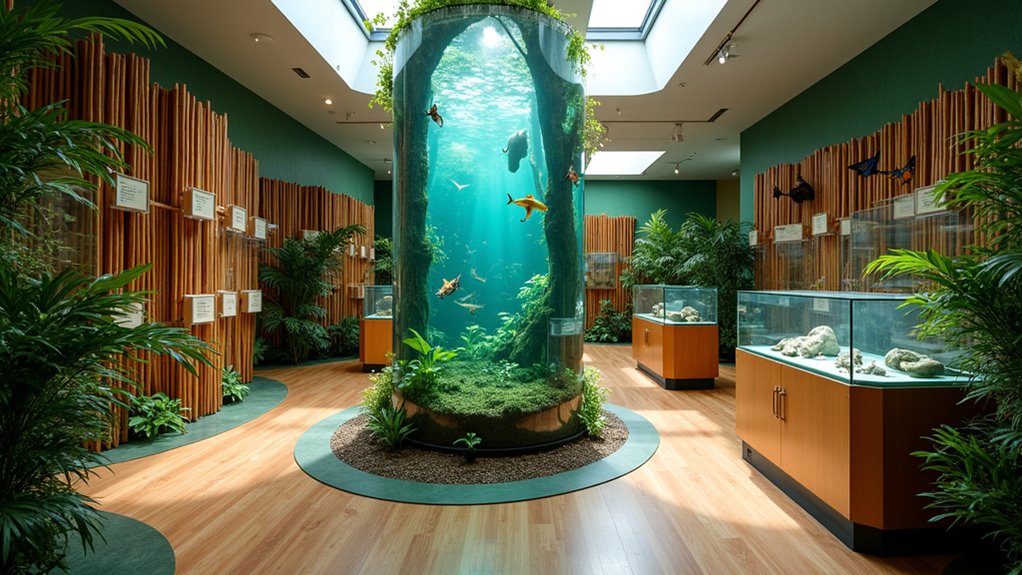
While climate education has traditionally taken place in classrooms, museums across the globe are stepping up to become powerful centers for environmental learning and action. These institutions are transforming themselves into dynamic hubs that combine interactive exhibits, hands-on learning experiences, and community engagement to foster environmental awareness and stewardship.
Museums are revolutionizing their approach to environmental education through immersive experiences that bring nature directly to visitors. Field trips to local ecosystems allow participants to explore wildlife habitats firsthand, while classroom kits equipped with specimens and lesson plans help extend the learning beyond museum walls. Virtual programs and digital resources guarantee that environmental education remains accessible, even for remote learners who can’t physically visit the facilities. Many museums collaborate with environmental NGOs in education to develop comprehensive resources and programs for eco-literacy. Museums are incorporating zero-waste events with sustainable materials to demonstrate environmental responsibility in action. These efforts are part of a broader trend in empowering citizens through environmental education, which emphasizes the role of individuals in addressing ecological challenges.
Climate change has become a central focus of museum programming, with interactive displays that break down complex climate science into digestible information. Many institutions are leading by example, implementing sustainable building practices and showcasing these efforts through “green museum” initiatives. Youth climate action groups and artist collaborations further engage visitors in climate solutions, while helping them understand their own environmental impact. Following the We Are Still In movement, museums have joined thousands of leaders committed to climate action despite political setbacks. Museums are also highlighting the importance of natural carbon capture through forest conservation exhibits, emphasizing how forests absorb billions of tonnes of CO2 annually.
Museums now tackle climate change head-on, transforming complex science into accessible knowledge while modeling sustainable practices for visitors to follow.
Conservation efforts have evolved beyond static displays, with museums now actively involving their communities in citizen science projects and habitat restoration work. Regular lectures and workshops connect visitors with researchers and environmental experts, while exhibits highlight ongoing conservation success stories. These programs demonstrate that environmental protection is an active, participatory process rather than just a theoretical concept. Nature-based learning experiences are also being incorporated into museum programs, connecting students directly with the natural environment to deepen their ecological understanding.
Behind the scenes, museums are implementing thorough sustainability measures in their operations. From energy-efficient lighting systems to water conservation practices and sustainable landscaping, these institutions are reducing their environmental footprint while serving as models for other organizations. Staff members undergo regular training to guarantee best practices are maintained throughout all aspects of museum operations.
Community engagement has become increasingly important, with museums hosting environmental film screenings, nature walks, and workshops on eco-friendly lifestyle choices. Partnerships with local environmental groups strengthen these initiatives, while community science projects like bioblitzes help create valuable data about local ecosystems. These programs create a sense of shared responsibility for environmental stewardship.
Professional development for educators represents another vital component of museums’ environmental mission. Through teacher workshops, curriculum resources, and mentoring programs, museums are helping educators develop effective strategies for teaching environmental concepts. This multiplier effect guarantees that environmental education reaches far beyond museum walls, creating lasting impact in schools and communities.
Through these diverse initiatives, museums are establishing themselves as essential partners in environmental education and conservation. By combining scientific expertise with engaging programming and community outreach, they’re helping create more environmentally literate and active citizens who understand both the challenges and solutions in protecting our natural world.
Frequently Asked Questions
How Do Museums Measure the Impact of Their Environmental Education Programs?
Museums employ both quantitative and qualitative methods to measure their environmental education impact. They track visitor knowledge through pre/post surveys, monitor behavior changes, and measure program participation rates.
Focus groups, feedback analysis, and observation of exhibit interactions provide qualitative insights. Long-term evaluation includes longitudinal studies of visitor behaviors and community impact assessment.
Partnerships with researchers help design rigorous impact studies and track learning outcomes.
What Percentage of Museums Worldwide Have Dedicated Environmental Education Exhibits?
While no extensive global data exists on the exact percentage of museums with dedicated environmental exhibits, research indicates a growing trend.
Natural history museums lead with an estimated 80-90% featuring environmental content, while science centers and children’s museums follow at roughly 60-70%.
Art museums show increasing adoption, with approximately 30-40% incorporating environmental themes.
These figures represent informed estimates based on museum association surveys and industry reports.
Do Virtual Museum Tours Reduce the Carbon Footprint of Cultural Institutions?
Virtual museum tours greatly reduce cultural institutions’ carbon footprint through multiple pathways.
Research shows they cut transportation-related emissions by 20-50% by eliminating the need for physical visits. Digital exhibitions also decrease energy consumption from lighting, climate control, and facility operations.
While servers hosting virtual content do consume energy, their environmental impact is considerably lower than maintaining physical spaces and supporting in-person visitors’ travel-related emissions.
How Do Museums Partner With Schools to Create Environmental Awareness Curricula?
Museums and schools form dynamic partnerships to develop environmental curricula through multi-layered approaches.
They collaborate on hands-on learning programs, where museum educators work directly with teachers to create lesson plans aligned with state standards.
Students engage in citizen science projects, participate in live animal demonstrations, and conduct field research alongside museum scientists.
“Discovery boxes” containing museum artifacts bring environmental learning into classrooms, while virtual field trips extend the reach of these educational partnerships.
What Funding Sources Support Museums’ Environmental Education Initiatives and Programs?
Museums leverage diverse funding streams to support environmental education programs.
Government agencies like EPA and NEH provide substantial grants, while corporate sponsorships from energy and tech companies fund green initiatives.
Private and community foundations contribute markedly through targeted grants.
Individual donors play a vital role through major gifts, planned giving, and eco-themed membership programs.
This multi-source funding approach enables museums to develop and sustain impactful environmental programming.