

Green building ventilation systems leverage both smart technology and natural design to transform indoor air quality. These systems combine automated CO2 sensors, strategic window placement, and passive airflow techniques like solar chimneys to reduce energy use by up to 50% while eliminating pollutants. The improved air circulation leads to measurable benefits, including enhanced cognitive function, increased workplace productivity, and reduced sick building syndrome. Understanding the technical aspects reveals even more remarkable advantages.
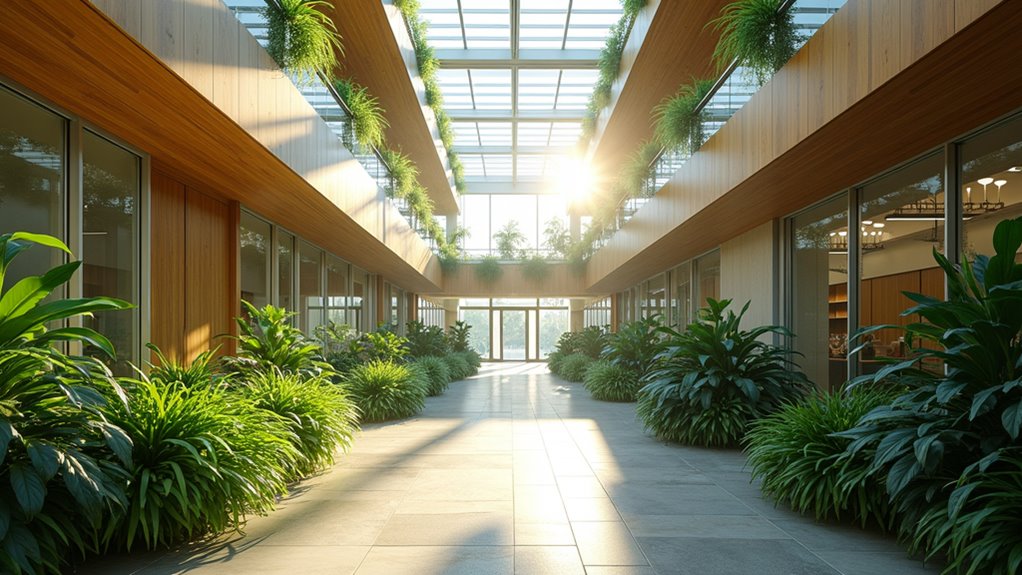
Modern green building ventilation stands at the forefront of sustainable architecture, revolutionizing how we think about indoor air quality and energy efficiency. By leveraging natural airflow patterns and smart technologies, these innovative ventilation systems deliver substantial benefits for both building occupants and the environment. The integration of passive ventilation techniques, such as cross ventilation and stack effect, works seamlessly with advanced monitoring systems to create healthier indoor spaces while reducing energy consumption by up to 50%. Clerestory windows enhance natural airflow pathways and maximize ventilation efficiency in modern building designs. The global pandemic has highlighted the critical importance of proper ventilation in preventing disease transmission in indoor spaces. Additionally, incorporating natural filters like houseplants can further improve indoor air quality by absorbing pollutants and releasing oxygen.
The impact of green ventilation extends far beyond mere energy savings. These systems effectively remove indoor pollutants, stale air, and harmful volatile organic compounds (VOCs) through strategic window placement and carefully engineered airflow paths. Healthcare facilities increasingly adopt green ventilation strategies to withstand climate-related challenges and maintain air quality during extreme weather events. Rising temperatures can also disrupt global water resources, which may have indirect effects on building water usage and conservation efforts. Water conservation is crucial as it impacts climate change and global agricultural productivity.
Building occupants experience markedly improved air quality, leading to enhanced cognitive function and decreased instances of sick building syndrome. The careful consideration of local climate patterns and building orientation guarantees ideal performance, while solar chimneys and atrium designs amplify natural ventilation effects. Smart technology plays an essential role in modern green ventilation systems. CO2 and humidity sensors continuously monitor air quality, triggering automated responses through building management systems. This integration enables demand-controlled ventilation, which adjusts airflow based on real-time occupancy and air quality data. The result is a dynamic system that maintains ideal indoor conditions while minimizing energy waste and extending the lifespan of mechanical HVAC components.
The benefits of green ventilation are particularly evident in workplace environments, where improved air quality correlates directly with increased productivity and reduced absenteeism. Studies show that employees in well-ventilated spaces demonstrate better decision-making capabilities and higher levels of satisfaction with their work environment. The connection to outdoor environments through natural ventilation also supports biophilic design principles, creating spaces that feel more natural and comfortable. These ventilation strategies align with rigorous industry standards and certifications. By meeting ASHRAE 62.1 ventilation requirements and contributing to LEED and WELL Building certifications, green ventilation systems help buildings achieve recognition for environmental performance. The compliance with World Health Organization air quality guidelines guarantees that these systems meet global standards for human health and safety.
The implementation of green ventilation represents a considerable step forward in sustainable building design. By combining traditional passive techniques with cutting-edge technology, these systems create healthier, more energy-efficient spaces that benefit both occupants and the environment. As buildings continue to evolve, green ventilation will remain essential in creating sustainable, healthy indoor environments that support human wellbeing while minimizing environmental impact. The future of architecture lies in these innovative approaches that balance human comfort with environmental responsibility.
Frequently Asked Questions
How Much Does Installing a Green Ventilation System Typically Cost?
Green ventilation system costs vary considerably based on building type and size.
Residential ERV systems typically run $1,500-$5,000, while commercial installations range from $5,000-$20,000+.
Natural ventilation costs $4-$6 per square foot, and mechanical systems average $15-$28 per square foot.
While upfront costs seem steep, these systems often pay for themselves within 2.5-8 years through energy savings of around $0.50 per cfm annually in cold climates.
Can Green Ventilation Systems Be Retrofitted Into Existing Older Buildings?
Yes, green ventilation systems can be effectively retrofitted into older buildings.
Most existing structures can accommodate modern ventilation upgrades through careful planning and system assessment. While structural limitations may pose challenges, options like heat recovery ventilators, demand-controlled systems, and smart automation can typically be integrated.
The process requires proper sizing and may involve modifications to building envelopes and ductwork, but the long-term benefits in energy savings and air quality improvements usually justify the investment.
Do Green Ventilation Systems Require Special Maintenance Compared to Conventional Ones?
Green ventilation systems require similar basic maintenance to conventional ones, like filter changes and duct cleaning.
However, they need additional attention for specialized components like heat exchangers, sustainable refrigerant systems, and CO2 monitors.
The main difference lies in maintaining energy efficiency features and air quality controls.
While maintenance may be more specific, it’s typically not more frequent or complex than traditional systems’ upkeep.
What’s the Average Lifespan of a Green Building Ventilation System?
Green building ventilation systems typically last 15-20 years, though high-quality systems with proper maintenance can extend up to 25-30 years.
Specific components vary in longevity – geothermal systems and ground loops can function for 25-50 years, while smart sensors may need replacement every 10-15 years.
Natural ventilation elements like operable windows often exceed 30 years of service.
This lifespan generally surpasses conventional HVAC systems by 5-10 years.
How Long Does It Take to Install a Complete Green Ventilation System?
Installation time for a complete green ventilation system typically ranges from 3-7 days for residential buildings to 4-6 weeks for large commercial projects.
The duration depends on several factors: building size, system complexity, and existing infrastructure. A standard home installation usually takes 3-5 days, while simple updates might only need 1-2 days.
Complex systems with multiple zones, smart controls, and energy recovery ventilators require additional time for proper setup and testing.


