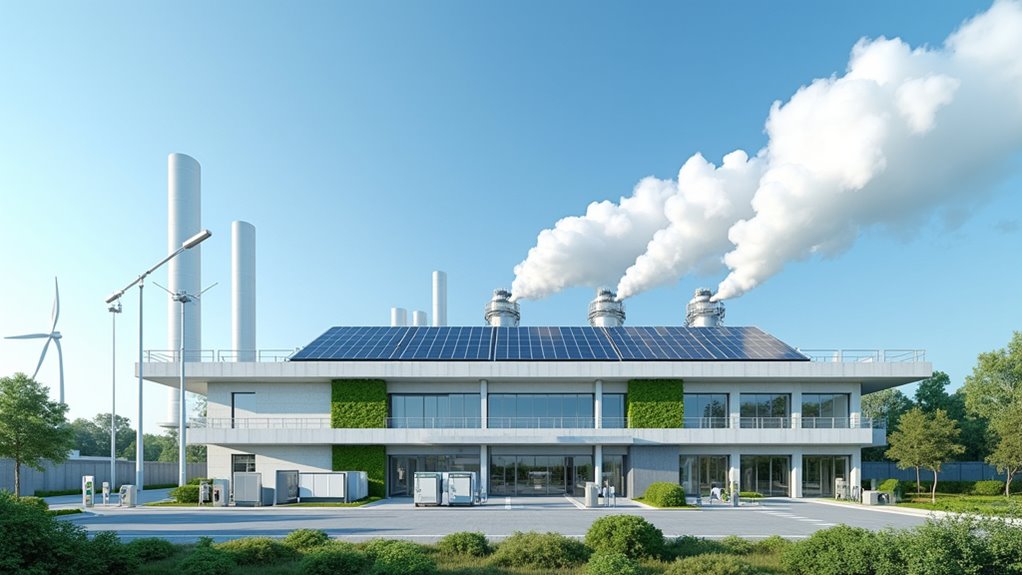
Clean cooking technologies offer a life-changing solution for rural communities battling deadly indoor air pollution. Traditional biomass cooking methods like wood and dung create toxic environments that contribute to 3.2 million premature deaths yearly, with children facing exposure equivalent to smoking seven cigarettes daily. Modern alternatives such as LPG stoves, electric appliances, and solar cookers dramatically reduce harmful emissions while saving time and fuel costs. Understanding these impacts opens doors to healthier household environments.
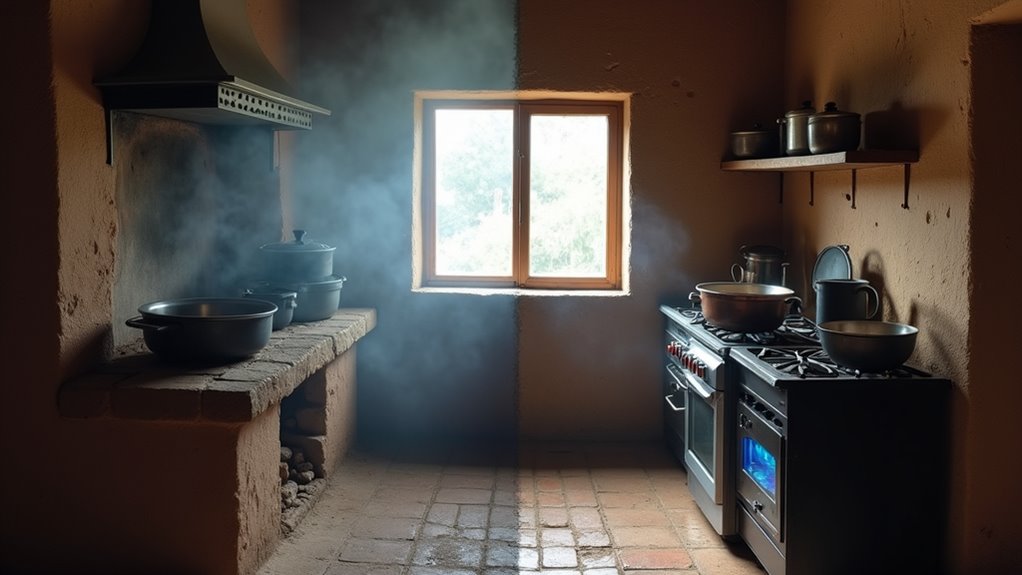
Indoor air pollution from traditional cooking methods remains one of the most pressing yet overlooked public health challenges of our time. In rural communities across the globe, millions of families rely on burning biomass fuels like wood, dung, and crop waste for their daily cooking needs. These traditional practices, combined with poorly ventilated stoves and confined spaces, create a toxic environment that claims 3.2 million lives prematurely each year.
Traditional indoor cooking kills millions yearly, as families in rural areas burn biomass fuels in poorly ventilated spaces.
The impact is particularly severe on women and children, who spend the most time near cooking areas. A staggering 44% of pneumonia deaths in children under five can be traced back to household air pollution. Studies have shown that children’s exposure to indoor air pollution is equivalent to smoking seven cigarettes daily. The deadly cocktail of particulate matter, carbon monoxide, and nitrogen oxides released during traditional cooking doesn’t just affect the lungs – it’s also linked to heart disease, stroke, and low birth weight in newborns. Proper ventilation systems like vented-to-the-outdoors hoods are crucial yet often absent in these settings. Decentralized power systems empower communities to invest in renewable solutions, making clean cooking and improved ventilation more accessible.
But there’s hope on the horizon. Clean cooking solutions, ranging from LPG stoves to electric appliances and solar cookers, are proving to be game-changers in reducing indoor air pollution. These technologies don’t just clear the air – they transform lives. Women and children save precious hours previously spent collecting firewood, while households see significant reductions in fuel costs over time. Healthcare systems in rural areas also benefit from reduced respiratory and cardiovascular illnesses.
The environmental benefits extend beyond individual homes, contributing to decreased deforestation and lower carbon emissions. However, the path to widespread adoption isn’t without its obstacles. Many rural families face significant barriers, including the high upfront costs of clean cooking technologies and limited access to clean fuels. As the importance of water conservation becomes more evident, it parallels the need for sustainable energy solutions like clean cooking to address global environmental challenges.
Cultural attachments to traditional cooking methods and lack of awareness about health impacts further complicate the shift. In some regions, unreliable supply chains make it difficult to maintain consistent access to clean fuels. Global initiatives are stepping up to address these challenges. The World Health Organization has established guidelines for indoor air quality, while the Sustainable Development Goals explicitly target clean energy access.
Organizations like the Global Alliance for Clean Cookstoves and the World Bank’s Clean Cooking Fund are working to make clean cooking solutions more accessible and affordable. The effectiveness of these programs is being carefully tracked through rigorous monitoring and evaluation. Scientists measure PM2.5 and CO levels in households, while researchers conduct health impact assessments to document improvements.
The data tells a compelling story: when communities switch to clean cooking methods, air quality improves dramatically, and health outcomes follow suit. The shift to clean cooking represents a significant opportunity to tackle both public health and environmental challenges. Advanced water monitoring systems in parallel fields can provide insights into effective resource management.
While the obstacles are real, the solutions are proven and the benefits are clear. With continued support from global initiatives and growing awareness among rural communities, clean cooking has the potential to transform millions of lives while contributing to a more sustainable future.
Frequently Asked Questions
What Is the Average Cost of Installing a Clean Cooking System?
The installation costs for clean cooking systems vary greatly.
Solar cookers are the most affordable at virtually no installation cost, while electric induction systems typically run $525-$3,200 for installation.
HomeBiogas systems average $1,500-$2,500 including setup.
Super-efficient cookstoves cost $100-$300 to install.
The final price depends heavily on existing infrastructure, local labor rates, and whether additional modifications are needed for proper ventilation and safety.
How Long Does It Take to Train Someone in Clean Cooking Methods?
Basic clean cooking training typically takes 2-5 days to learn fundamental methods, while thorough mastery requires 3-6 months of dedicated practice.
Most training programs include hands-on demonstrations, safety protocols, and fuel efficiency techniques.
Post-training support usually extends 6-12 months, with regular check-ins and refresher courses.
Online programs run 4-12 weeks, while intensive in-person courses can span 2-4 weeks, depending on the depth of content covered.
Which Countries Have Successfully Implemented Nationwide Clean Cooking Programs?
Several Asian and South American countries have effectively rolled out nationwide clean cooking initiatives.
India’s Pradhan Mantri Ujjwala Yojana provided LPG to 80 million households, while China achieved near-universal access through electric cooking promotion.
Indonesia successfully converted millions from kerosene to LPG, and Brazil reached over 95% LPG penetration across urban and rural areas.
These programs demonstrate how targeted policies, infrastructure investment, and subsidies can drive rapid adoption of clean cooking solutions.
Can Clean Cooking Solutions Work Effectively in Extreme Weather Conditions?
Clean cooking solutions demonstrate remarkable adaptability across extreme weather conditions.
Insulated stoves maintain efficiency in cold climates, while heat-resistant materials guarantee durability in hot regions.
Moisture-resistant components protect against humidity and rain, and portable designs enable quick relocation during severe weather.
Multiple fuel options increase resilience when supplies are disrupted.
Solar cookers even provide reliable cooking during power outages, though their effectiveness varies with weather conditions.
What Maintenance Is Required for Clean Cooking Equipment Over Time?
Clean cooking equipment requires regular maintenance for ideal performance and longevity.
Key tasks include daily cleaning of cooking surfaces, weekly inspection of fuel lines and connections, and monthly checkups of ignition systems.
Filters and burners need quarterly cleaning to prevent blockages.
Annual professional servicing helps identify worn parts needing replacement.
Simple routine care like wiping surfaces after each use and proper storage extends equipment life considerably.