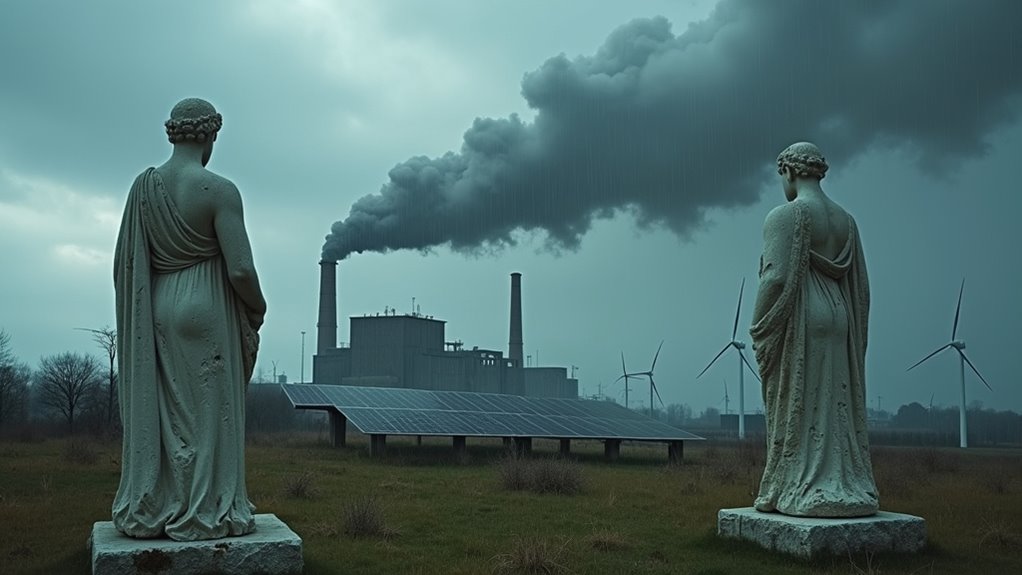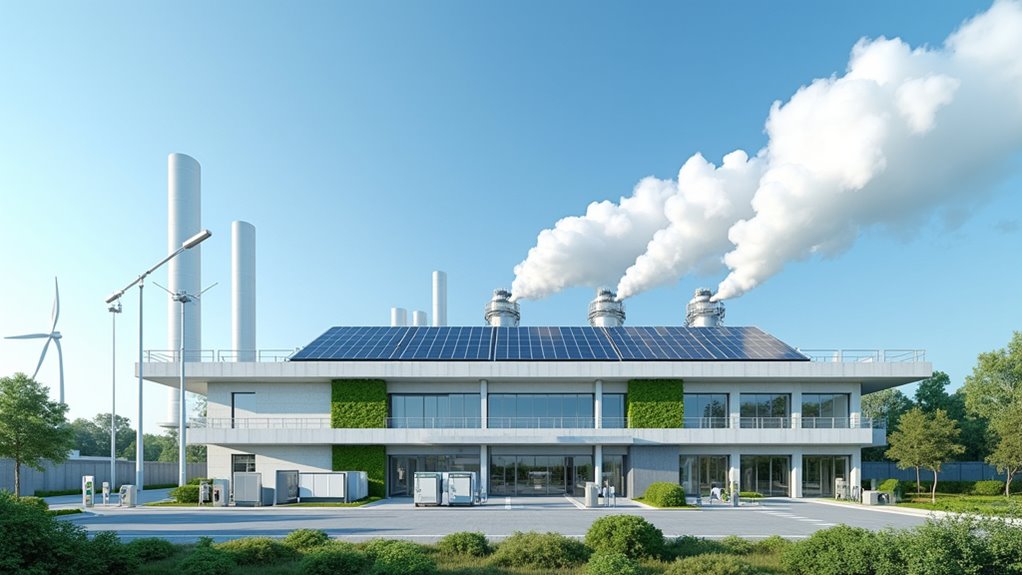

Modern industries are embracing powerful pollution-fighting innovations across multiple fronts. Advanced technologies like regenerative thermal oxidizers destroy nearly all volatile organic compounds, while smart HVAC systems and air-purifying materials tackle indoor air quality. Real-time monitoring through IoT networks and satellite tracking helps identify emission sources quickly. From catalytic converters to closed-loop manufacturing, these solutions demonstrate how technology can dramatically reduce industrial pollution. The path to cleaner air continues through innovation’s transformative potential.
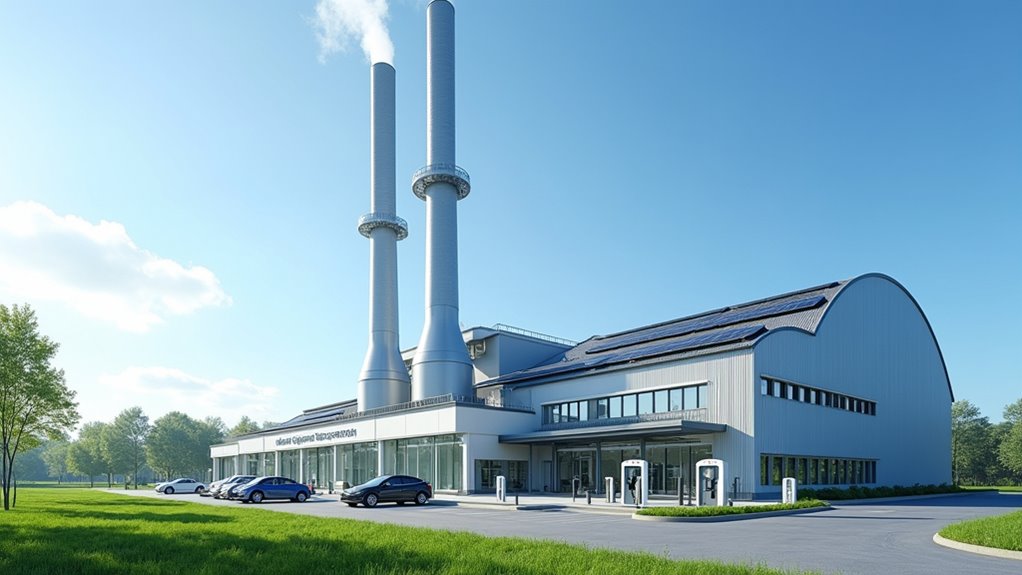
As technological innovation accelerates across industries, groundbreaking solutions are emerging to combat one of humanity’s most pressing environmental challenges: air pollution. From advanced emission control technologies to smart monitoring systems, companies are leveraging cutting-edge developments to dramatically reduce their environmental impact while often improving operational efficiency. Addressing air pollution is crucial because it is deeply interconnected with climate change, meaning that solutions for one can significantly impact the other.
The transportation sector has witnessed remarkable progress in reducing emissions through multiple innovations. Catalytic converters now eliminate up to 99% of harmful vehicle emissions, while the rise of electric vehicles promises to completely eliminate tailpipe pollution. Hydrogen fuel cell technology is emerging as another viable zero-emission solution, particularly for heavy-duty vehicles. Additionally, manufacturers are incorporating lightweight materials and advanced engine designs to boost fuel efficiency across their fleets. Efficient logistics planning helps minimize mobile source emissions during product transportation. Clearing the air is a multifaceted challenge, requiring both real solutions from innovative technologies and commitment from industry leaders to make lasting impacts.
Industrial facilities are implementing sophisticated technologies to minimize their environmental footprint. Regenerative thermal oxidizers destroy nearly all volatile organic compounds and hazardous air pollutants, while advanced scrubber systems remove up to 95% of sulfur dioxide emissions. Process optimization software and leak detection technologies help facilities identify and eliminate pollution sources, while closed-loop manufacturing systems reduce waste and emissions simultaneously. Catalytic recuperative oxidizers provide an energy-efficient solution by enabling pollutant destruction at lower operating temperatures through catalyst use.
The revolution in air quality monitoring has enabled unprecedented insight into pollution patterns and sources. Low-cost sensors and Internet of Things networks provide real-time data across vast areas, while satellite technology tracks pollution movement on a global scale. These advanced satellite tracking systems are crucial for offering comprehensive data that can inform policy and drive transformation. Fenceline monitoring helps factories identify and address fugitive emissions quickly, and personal air quality monitors empower individuals to make informed decisions about their exposure to pollutants. The increased rates of eco-anxiety and depression linked to climate change effects highlight the importance of addressing environmental issues promptly.
Indoor air quality has become a vital focus, with innovations transforming how we manage enclosed spaces. Smart HVAC systems automatically adjust based on occupancy and pollutant levels, while air-purifying building materials actively absorb contaminants. UV light disinfection systems target airborne pathogens, and advanced humidity controls prevent mold growth that can compromise air quality.
Market mechanisms and policy frameworks are accelerating the adoption of these innovations. Emissions trading systems create financial incentives for pollution reduction, while green certification programs help consumers identify environmentally responsible products. Public-private partnerships are funding the development of next-generation clean technologies, and international agreements are driving global adoption of pollution-reducing solutions.
These technological advances are complemented by improvements in renewable energy and energy storage, which reduce emissions from power generation while enabling greater integration of clean energy sources. Smart building systems optimize energy consumption, and improved industrial processes cut both emissions and operational costs.
As these innovations continue to evolve and become more widely adopted, industries are demonstrating that environmental responsibility and economic success can go hand in hand.
Frequently Asked Questions
What Are the Financial Incentives for Industries to Invest in Air Pollution Control?
Industries have multiple financial motivations to control air pollution.
Tax credits of 1-10% are available in states like Arizona and Georgia for pollution control equipment purchases.
Direct incentives include award payments, subsidies, and low-interest loans for clean technology.
Emissions trading programs let companies profit from excess reductions.
Fees and charges on emissions create costs for polluting.
Accelerated depreciation allows faster tax write-offs for control equipment investments.
How Long Does It Take to Implement New Air Pollution Reduction Technologies?
Implementation timelines for air pollution control technologies vary considerably based on facility size and complexity.
Large industrial facilities typically need 2-5 years to install new controls, while smaller businesses can adapt within 6-12 months.
Automakers require 3-7 years for vehicle redesigns, and power plants take 1-3 years for upgrades.
Government incentives and public-private partnerships can accelerate these timelines by 1-2 years, while supply chain issues may cause delays.
Which Industries Contribute the Most to Global Air Pollution Levels?
The energy sector leads global air pollution, generating 34% of greenhouse gas emissions primarily through electricity and heat production.
Manufacturing and heavy industry follow at 24%, with steel and cement production being major contributors.
Agriculture and land use account for 22%, largely from livestock and deforestation.
The transportation sector adds 15%, mainly from road vehicles.
Together, these four sectors produce 95% of human-caused air pollutants worldwide.
What Role Do Government Regulations Play in Industrial Air Pollution Control?
Government regulations serve as a vital driver of industrial air pollution control through multiple mechanisms.
The Clean Air Act establishes national standards and emissions limits, while EPA’s NAAQS provide specific air quality targets. Enforcement occurs through inspections, fines, and permit requirements.
Since 1970, these regulations have achieved significant results – including a 78% reduction in common pollutants and prevention of 230,000 premature deaths.
Technological innovation is incentivized through tax breaks and R&D funding.
How Do Weather Conditions Affect Industrial Air Pollution Levels?
Weather conditions greatly impact industrial air pollution levels through multiple mechanisms.
Wind patterns disperse or concentrate emissions, while temperature affects chemical reaction rates and pollutant formation.
Precipitation acts as a natural cleanser, removing particulates from the air.
Atmospheric pressure systems can either trap pollutants near ground level or enhance dispersion.
During temperature inversions, industrial emissions become particularly problematic as pollutants get trapped in stagnant air layers.