
Acid rain forms when sulfur dioxide and nitrogen oxides from power plants, vehicles, and industrial facilities react with atmospheric moisture. These emissions create sulfuric and nitric acids, making rainwater more acidic than normal with a pH between 4.2 and 4.4. While natural sources like volcanoes contribute, human activities remain the primary drivers. Nations are tackling this through strict regulations, mandating pollution control technologies, and promoting electric vehicles. Understanding the broader impacts reveals even more promising solutions.
While natural phenomena contribute to acid rain formation, human activities remain the primary drivers of this environmental challenge. When sulfur dioxide and nitrogen oxides are released into the atmosphere, they undergo complex chemical reactions with water, oxygen, and other compounds, forming sulfuric and nitric acids that ultimately return to Earth as acid rain. This acidic precipitation typically has a pH between 4.2 and 4.4, making it notably more acidic than normal rainwater.
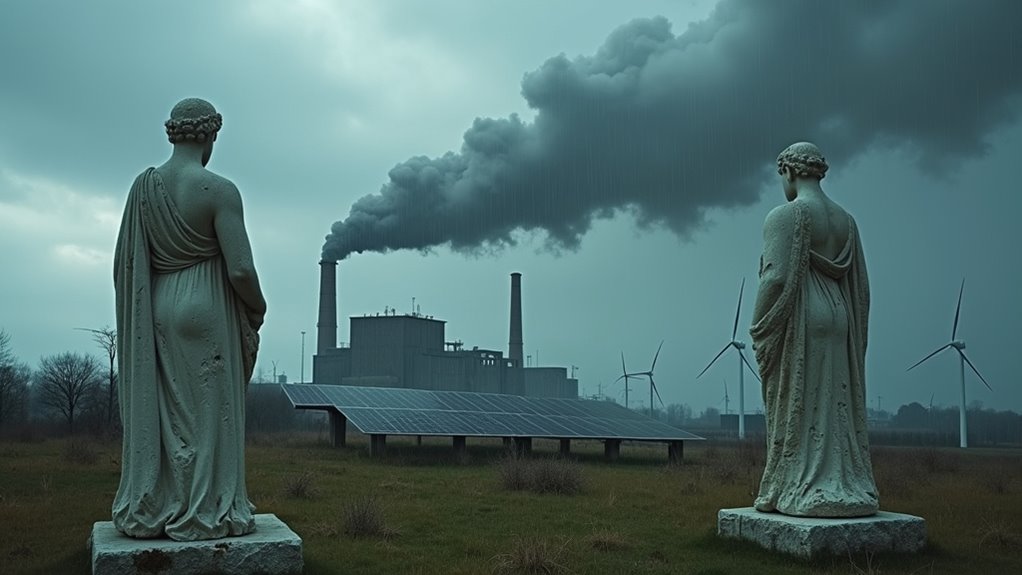
The electric power sector bears considerable responsibility for acid rain formation, with power plants accounting for approximately two-thirds of sulfur dioxide emissions through their combustion of fossil fuels, particularly coal. These facilities, along with industrial manufacturing processes, cement production, and oil refineries, release massive quantities of pollutants that contribute to the acidification of precipitation. Stagnant weather patterns can intensify the problem by trapping these pollutants near the ground. The harmful effects of these emissions are particularly evident in the deterioration of buildings and historical monuments exposed to acid rain. New cement formulations could also help reduce emissions significantly and mitigate acid rain.
Power plants and industrial facilities dominate sulfur dioxide emissions, with coal-burning operations leading the charge in acid rain formation.
Transportation represents another major source of acid rain precursors, especially nitrogen oxides. Cars, trucks, buses, and construction equipment release these pollutants through their exhaust systems. The maritime industry also plays a role, with large vessels emitting considerable amounts of sulfur dioxide. Even air travel contributes to the problem by releasing pollutants at high altitudes.
Agricultural activities, though less commonly associated with acid rain, are notable contributors through various mechanisms. Intensive livestock operations release ammonia, which participates in acid rain formation. The decomposition of organic matter and the application of fertilizers increase atmospheric nitrogen levels, while the burning of agricultural waste releases additional pollutants into the air. Increased evaporation rates also threaten water quality, exacerbating the challenges communities face in regions affected by acid rain. Rising global temperatures further contribute to these challenges by increasing evaporation and altering precipitation patterns. Extreme weather events linked to climate change can also exacerbate the impacts of acid rain by damaging ecosystems and infrastructure.
Nature itself produces some of the chemical compounds responsible for acid rain. Volcanic eruptions release substantial amounts of sulfur dioxide, while lightning strikes generate nitrogen oxides. Forest fires and microbial processes in soil also contribute to the natural emission of these compounds. However, these natural sources are dwarfed by human-generated emissions in most regions.
Efforts to address acid rain have focused on reducing emissions from major sources. Many countries have implemented strict regulations on power plants and industrial facilities, requiring the installation of scrubbers and other pollution control technologies. The transportation sector has seen improvements through better fuel efficiency standards and the gradual adoption of electric vehicles. Some nations have also established cap-and-trade programs for emissions, creating economic incentives for pollution reduction.
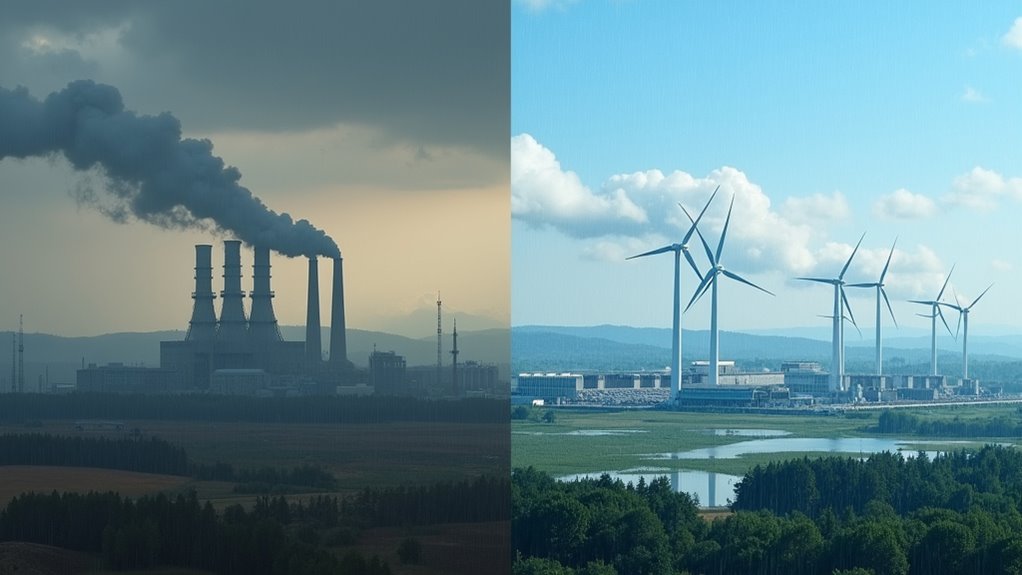
Despite these efforts, more work remains to be done. The growing industrial sectors in developing nations pose new challenges, while existing regulations in developed countries require consistent enforcement and updating. The shift to renewable energy sources, improvement of agricultural practices, and continued development of cleaner technologies offer promising pathways forward.
Through sustained commitment to emissions reduction and technological innovation, the impact of acid rain can be noticeably diminished, protecting both natural ecosystems and human health for future generations.
Frequently Asked Questions
How Long Does It Take for Acid Rain to Damage Buildings?
Acid rain damage to buildings occurs over varying timespans, with initial effects visible within months.
Marble and limestone structures show damage fastest, experiencing noticeable deterioration within 1-2 years.
Significant structural impacts typically develop over 10-20 years. The speed depends on factors like rainfall acidity (pH level), material type, and environmental conditions.
Protected surfaces with sealants and proper drainage last longer, while exposed areas degrade more quickly.
Can Acid Rain Make People Sick if They Get Caught in It?
Getting caught in acid rain won’t directly make people sick. It feels and looks just like normal rain, and skin contact isn’t dangerous.
However, the air pollutants that cause acid rain – sulfur dioxide and nitrogen oxides – can be harmful when breathed in. These form tiny particles that can irritate lungs and worsen conditions like asthma.
While walking in acid rain is safe, the bigger health concern is the air pollution creating it.
What Ph Level Is Considered Acid Rain?
Any rainfall with a pH below 5.0 is officially classified as acid rain, though normal rain typically has a pH between 5.6-5.7.
In severe cases, acid rain can reach pH levels as low as 2.0-3.0, making it as acidic as vinegar.
Since the pH scale is logarithmic, even small changes represent significant increases in acidity – each whole number drop means the rain is 10 times more acidic than before.
Does Acid Rain Affect Indoor Plants if Windows Are Left Open?
Yes, acid rain can greatly affect indoor plants when windows are left open. The acidic precipitation can directly contact plants, damaging leaf tissues and causing brown spots.
It also acidifies soil in pots, leaching essential nutrients and weakening plant health. Even acidic mist or fog can enter through windows, impacting photosynthesis.
To protect indoor plants, it’s recommended to close windows during acid rain events and use pH-balanced water for watering.
Which Countries Have the Worst Acid Rain Problems Today?
Currently, China and India face the most severe acid rain challenges globally, despite China’s 75% reduction in sulfur dioxide emissions since 2007.
Eastern European nations like Poland and Czechia continue experiencing significant issues due to aging industrial infrastructure.
Southeast Asian countries, particularly Thailand and South Korea, show concerning acidification trends.
Growing industrialization in parts of Africa, especially South Africa and Ghana, has led to emerging acid rain problems in urban areas.