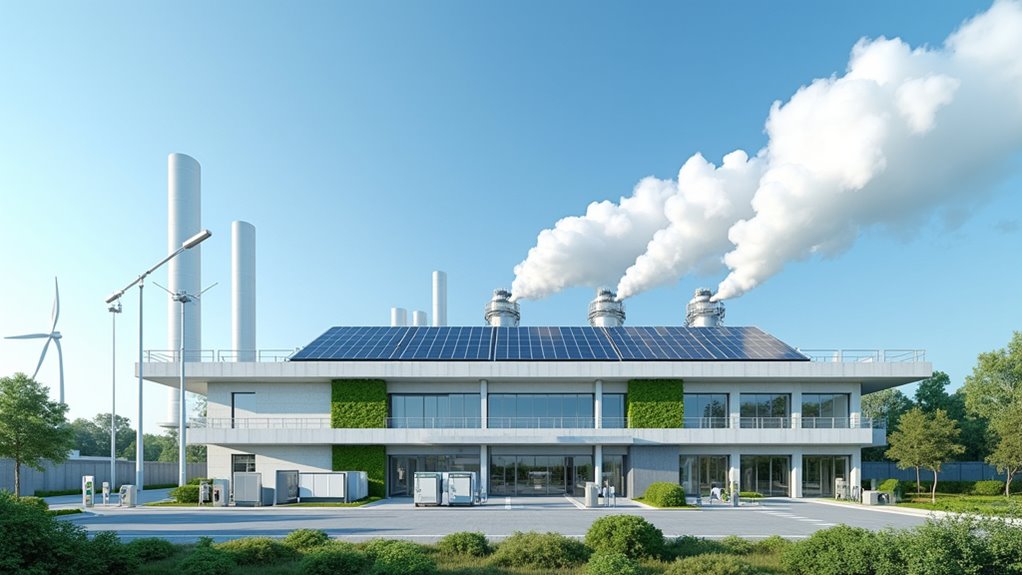
Air quality and climate change are fundamentally linked through shared chemical and physical processes. When vehicles and factories burn fossil fuels, they release both air pollutants that harm human health and greenhouse gases that warm the planet. These emissions interact in complex ways – some pollutants like sulfate aerosols actually cool the climate, while others like black carbon accelerate warming. Rising temperatures also worsen air quality by increasing ground-level ozone formation. Understanding these connections reveals promising opportunities for addressing both challenges together.
The invisible threads connecting air quality and climate change form one of today’s most vital environmental relationships. The air we breathe and the climate system that regulates our planet are inextricably linked through complex chemical and physical interactions that shape both local and global environments. Many of the same pollutants that degrade air quality also act as powerful climate forcers, with compounds like carbon dioxide, methane, and ozone playing dual roles in both issues. Air pollution poses serious health risks not just to our lungs, but also to our heart and brain. Additionally, understanding the sources of air pollution is crucial for devising effective solutions to mitigate its impacts on both health and climate.
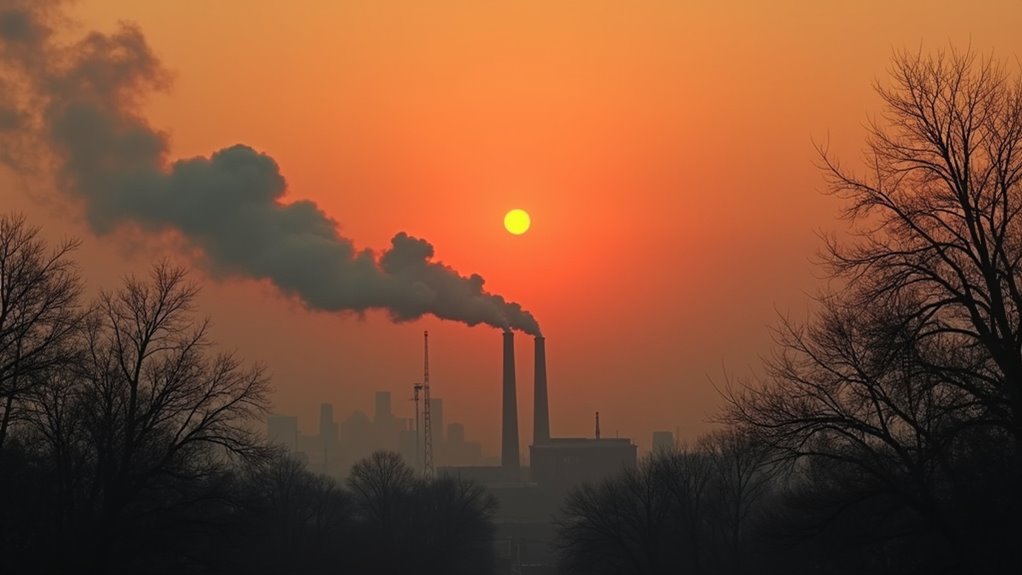
Fossil fuel combustion stands at the heart of this relationship, releasing both traditional air pollutants and greenhouse gases into the atmosphere. When vehicles, factories, and power plants burn fossil fuels, they produce a cocktail of emissions that simultaneously harm local air quality and drive global climate change. Black carbon particles from incomplete combustion absorb sunlight and warm the climate, while also posing serious health risks when inhaled. Reduced fossil fuel usage directly improves cardiovascular and respiratory health outcomes. Rising global temperatures correlate with increased extreme weather patterns, further intensifying the negative effects of air pollution and climate change.
Burning fossil fuels releases harmful emissions that poison our air locally while driving devastating climate impacts worldwide.
Conversely, some pollutants like sulfate aerosols actually have a cooling effect on the climate, though their negative impacts on human health and ecosystems make them far from beneficial. Land and forest management helps prevent and control wildfires that would otherwise release harmful smoke into the atmosphere. Climate change also influences the spread of infectious diseases by altering the habitats of disease vectors such as mosquitoes and ticks.
The relationship between air quality and climate operates as a two-way street. As climate change intensifies, it creates conditions that worsen air pollution. Rising temperatures accelerate the formation of ground-level ozone, while increasingly frequent wildfires pump massive amounts of particulate matter into the atmosphere. Changes in weather patterns affect how pollutants move and accumulate in the air, potentially creating more severe pollution episodes in certain regions.
These interconnected challenges pose significant risks to human health and the environment. Both air pollution and climate change contribute to respiratory and cardiovascular diseases, reduce crop yields, and damage ecosystems. The Arctic region provides a striking example of these combined effects, where black carbon deposits accelerate ice melt while also degrading local air quality.
However, this close connection between air quality and climate also presents opportunities for solutions that address both problems simultaneously. Policies targeting energy efficiency, clean transportation, and reduced emissions from industry can deliver co-benefits for both air quality and climate stability.
The growing recognition of these linkages has led to more integrated approaches in environmental policy-making, though significant challenges remain in modeling and understanding these complex interactions.
Research continues to reveal new dimensions of the air quality-climate relationship, highlighting the importance of addressing these issues together rather than in isolation. While the challenges are substantial, the potential for co-benefits makes integrated solutions particularly appealing from both environmental and economic perspectives.
Understanding and acting on these connections represents a vital step toward creating a healthier, more sustainable future for both local communities and the global environment.
Frequently Asked Questions
How Do Indoor Plants Affect Both Air Quality and Climate Change?
Indoor plants have a complex relationship with air quality and climate change.
While NASA studies showed they can filter certain pollutants, recent research indicates their real-world impact is minimal – requiring hundreds of plants per square meter to match ventilation systems.
They absorb CO2 during photosynthesis but also release it through respiration.
Their main benefits are humidity regulation and psychological effects, with limited direct impact on climate change mitigation.
What Role Do Oceans Play in Regulating Air Quality Worldwide?
Oceans serve as Earth’s natural air purification system, absorbing roughly 25% of human CO2 emissions and acting as massive carbon sinks.
Through continuous gas exchange with the atmosphere, oceans filter pollutants and regulate global air quality. The ocean surface absorbs airborne contaminants at night, while daytime evaporation creates clean rain systems.
Additionally, marine phytoplankton produce about 50% of Earth’s oxygen, making oceans essential for maintaining breathable air worldwide.
Can Artificial Rain Help Improve Air Quality in Heavily Polluted Cities?
Artificial rain through cloud seeding can temporarily improve air quality in polluted cities by washing away particulate matter and other airborne pollutants.
When raindrops fall, they capture and bring down harmful particles, providing brief relief from smog and haze.
However, this solution is limited by weather conditions, high costs, and uncertain environmental impacts.
While cloud seeding offers short-term benefits, it doesn’t address the fundamental causes of urban air pollution.
How Do Volcanic Eruptions Impact Both Air Quality and Climate?
Volcanic eruptions release massive amounts of gases and particles that impact both air quality and climate.
Sulfur dioxide emissions form sulfuric acid aerosols that can cause local air pollution and respiratory issues. These same aerosols, when injected into the stratosphere, reflect sunlight back to space, leading to temporary global cooling.
While CO2 is also emitted, its climate impact is minimal compared to human sources. Large eruptions effects can last several years.
What Are the Effects of Space Debris on Earth’s Atmosphere?
Space debris has significant atmospheric impacts when re-entering Earth’s atmosphere.
Around 80 tons of debris burns up annually, releasing chemicals that deplete the ozone layer and alter Earth’s temperature regulation.
Aluminum oxide from disintegrating debris damages the ozone and changes atmospheric density. This affects satellite operations and creates a cycle of increased debris lifetimes.
The growing accumulation poses risks for future space activities and atmospheric stability.