Air pollution directly impacts heart and lung function through complex biological mechanisms. When pollutants enter the bloodstream, they trigger inflammation, raise blood pressure, and disrupt normal heart rhythms. In the lungs, exposure leads to reduced lung development, worsened asthma symptoms, and increased risk of respiratory infections. Both short and long-term exposure can cause serious health effects, from irregular heartbeats to chronic lung disease. Understanding these impacts helps reveal the broader scope of pollution’s effects on human health.
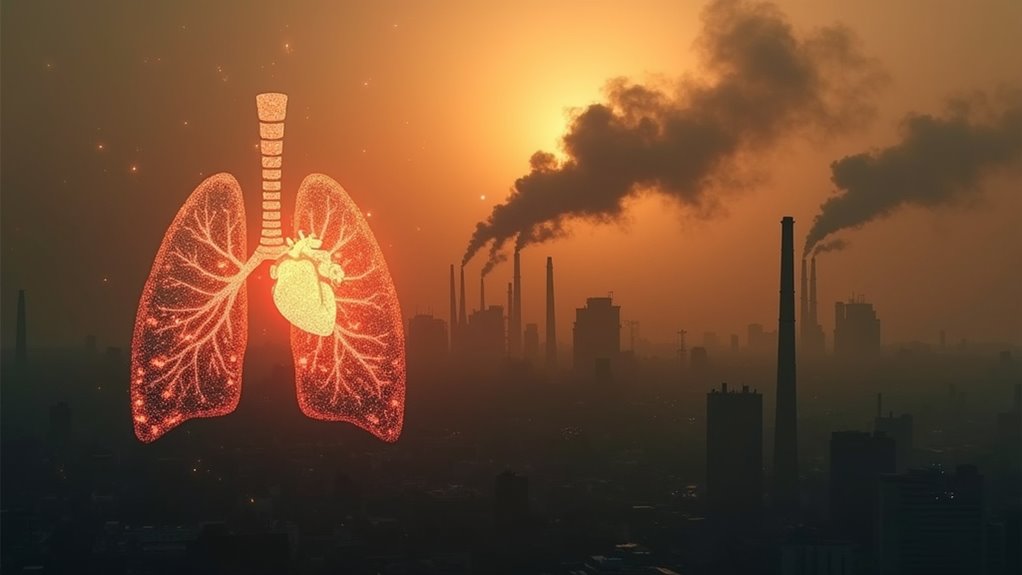
As silent and invisible as it may seem, air pollution has emerged as one of the most formidable threats to human health in the modern era. The air we breathe contains a complex mixture of pollutants, with PM2.5 and PM10 particles being particularly harmful due to their ability to penetrate deep into our respiratory system and bloodstream. These microscopic particles, along with other pollutants like ozone, nitrogen dioxide, and sulfur dioxide, originate from various sources including vehicle emissions, industrial processes, and increasingly, wildfire smoke. Understanding the sources of air pollution, such as factories and cars, is vital for crafting effective solutions to this pervasive issue. Reducing air pollution also has a positive impact on climate change solutions by decreasing the amount of greenhouse gases released into the atmosphere.
The impact of air pollution on cardiovascular health is both immediate and long-lasting. When polluted air enters the bloodstream, it triggers a cascade of biological responses that can lead to increased blood pressure, irregular heart rhythms, and acceleration of atherosclerosis – the buildup of plaque in arteries. Research has consistently shown higher rates of heart attacks, strokes, and cardiac-related deaths in areas with elevated air pollution levels. This health crisis mirrors historical incidents like the London smog disaster of 1952, which resulted in 4,000 deaths. The effects are particularly pronounced among elderly individuals and those with pre-existing heart conditions. Smog is a common occurrence in urban areas, where high concentrations of pollutants can lead to severe air quality issues.
The respiratory system bears the initial brunt of air pollution exposure. Children growing up in polluted environments often experience reduced lung development and function, setting the stage for lifelong respiratory challenges. Asthma sufferers find their symptoms exacerbated by poor air quality, while the general population faces an increased risk of respiratory infections, COPD, and even lung cancer. Vulnerable populations, especially children and the elderly, face disproportionate health impacts from air pollution exposure.
Indoor air pollution, often overlooked, compounds these problems, with cooking fumes and secondhand smoke contributing notably to the overall exposure.
The body’s response to air pollution involves complex biological mechanisms. Exposure triggers oxidative stress and inflammation at the cellular level, while also causing dysfunction in blood vessels and alterations in the autonomic nervous system. These effects aren’t limited to the heart and lungs – research indicates systemic impacts throughout the body, including potential effects on brain function and fetal development during pregnancy.
The public health burden of air pollution is staggering, resulting in millions of premature deaths annually and enormous economic costs through healthcare expenses and lost productivity. However, there’s reason for optimism. Studies have shown that improvements in air quality lead to immediate and considerable health benefits. When cities implement stricter emission controls or individuals reduce their exposure through air filtration and behavioral changes, positive health outcomes follow quickly.
Vulnerable populations, including children, the elderly, and low-income communities, often bear a disproportionate burden of air pollution’s effects. These groups frequently face higher exposure levels due to their proximity to pollution sources and limited access to protective resources. Understanding these disparities is essential for developing effective public health interventions and environmental justice initiatives that protect all members of society from the harmful effects of air pollution.
Frequently Asked Questions
Can Indoor Plants Effectively Filter Out Harmful Air Pollutants From My Home?
While indoor plants can remove some air pollutants in controlled settings, their real-world effectiveness is limited.
Research shows that an unrealistic number of plants (10-1,000 per square meter) would be needed to match the air-cleaning power of ventilation systems.
For meaningful air quality improvements, plants should be combined with HEPA air purifiers, proper ventilation, and low-emission materials.
Spider plants and peace lilies are among the most effective species.
What Types of Face Masks Provide the Best Protection Against Air Pollution?
N95/KN95/FFP2 respirators provide the strongest defense against air pollution, filtering 95% of particles above 0.3 microns with their tight-fitting design.
Carbon masks offer good protection by combining particle filtration with activated charcoal for gas absorption.
Surgical masks give moderate protection if properly fitted, while fabric masks provide minimal benefit.
For ideal protection against pollution, N95-type respirators are clearly the top choice, followed by carbon and surgical options.
How Long Does It Take for Lungs to Recover After Exposure?
Recovery time for lungs after air pollution exposure varies considerably.
Short-term effects like irritation and reduced lung function can improve within days of breathing cleaner air.
However, complete healing takes longer – inflammation may need 1-2 weeks to resolve, while tissue damage could require 6-12 months for full recovery.
Some people, especially those with pre-existing conditions, might need up to 2 years to regain ideal lung function.
Are Children More Susceptible to Air Pollution Than Adults?
Yes, children are considerably more vulnerable to air pollution than adults due to several key physiological factors.
Their higher breathing rates, narrower airways, and developing immune systems make them especially susceptible. Children also spend more time outdoors, breathe faster relative to their body size, and are closer to ground-level pollutants.
Their developing organs and ongoing lung development through adolescence means exposure during these critical periods can have lasting health impacts.
Can Air Pollution Trigger Existing Heart Conditions or Create New Ones?
Yes, air pollution can both trigger existing heart conditions and create new ones.
Research shows that short-term exposure can trigger immediate cardiovascular events like heart attacks and strokes in people with existing heart disease.
Long-term exposure is linked to the development of new conditions, including heart failure and atherosclerosis.
The pollution particles enter the bloodstream, causing inflammation and affecting heart function even at levels below current safety standards.