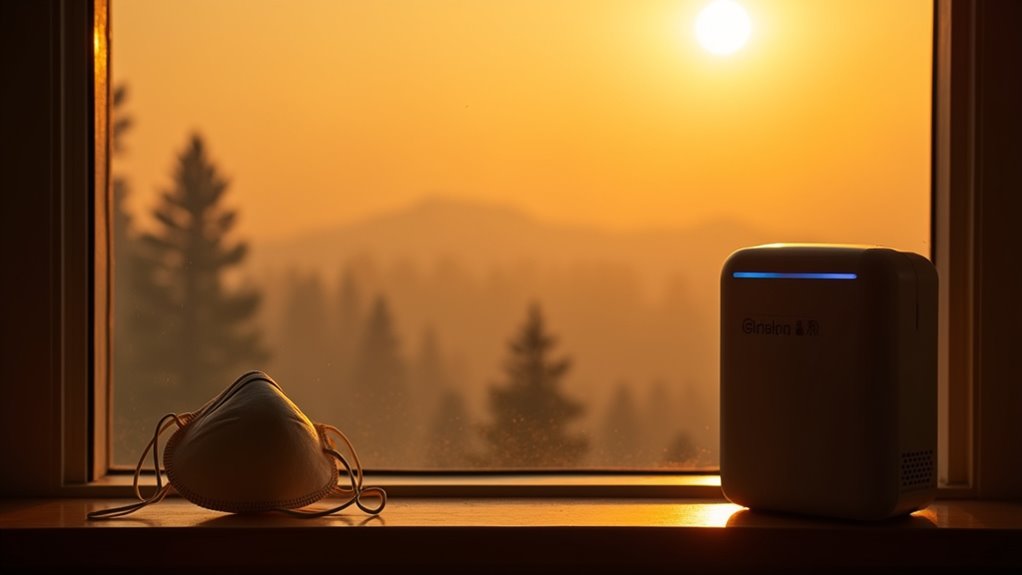
Natural solutions offer powerful ways to combat urban air pollution while creating more livable cities. Urban gardens and green spaces absorb pollutants and release oxygen, while green infrastructure like living walls and rooftop gardens filter harmful particles from the air. Natural ventilation systems leverage wind patterns and water features to disperse pollutants, while specialized plants actively remove toxins through phytoremediation. These nature-based approaches work together to transform concrete jungles into cleaner, healthier environments – discovering how opens up a world of sustainable possibilities.
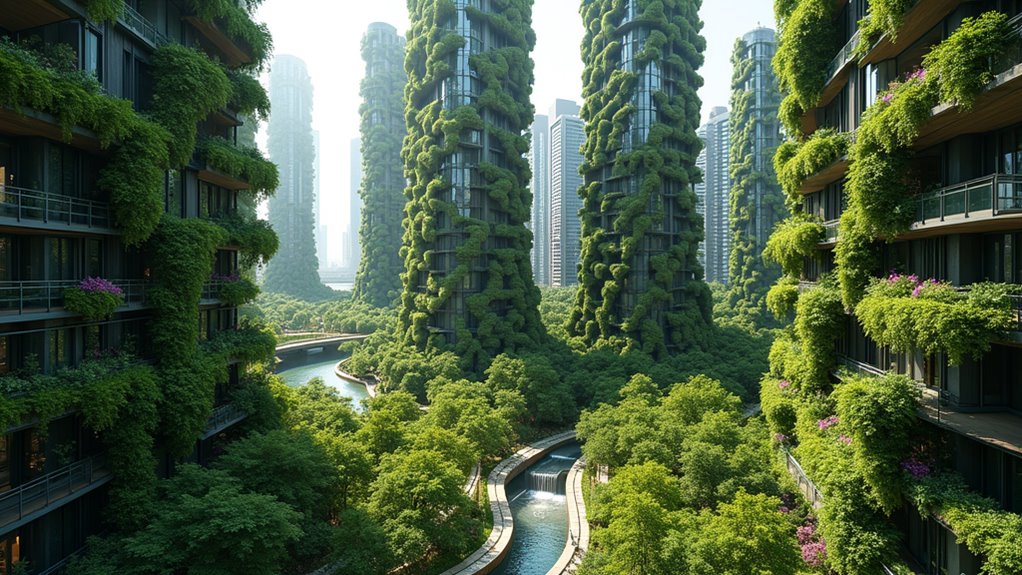
Breathing new life into congested cities, natural solutions are emerging as powerful weapons in the fight against urban air pollution. At the forefront of this green revolution are urban gardens and green spaces, which not only absorb harmful pollutants and release oxygen but also help tackle the urban heat island effect. These verdant oases can contribute up to 10% of global vegetable production, simultaneously addressing food security and environmental justice in metropolitan areas.
Trees and vegetation serve as nature’s air filters, capturing particulate matter and absorbing gaseous pollutants with remarkable efficiency. When strategically positioned, they can slash exposure to harmful particles by up to 50%. Beyond their air-cleaning capabilities, these green sentinels cool urban environments and provide essential mental health benefits to city dwellers. Trees enhance public health by improving air quality, which is crucial for reducing respiratory and cardiovascular diseases. Community engagement initiatives have proven crucial in maintaining and expanding these green spaces for optimal air quality benefits. Cities like Sydney and Guadalajara demonstrate success by creating green areas to improve urban air quality.
The integration of green infrastructure into urban design has revolutionized how buildings interact with their environment. Green roofs and vertical gardens transform ordinary structures into living, breathing entities that filter air pollutants while reducing energy consumption. Permeable pavements and bioswales work in concert to manage stormwater runoff while filtering out pollutants, creating a more resilient urban ecosystem. Smart metering technology is also being employed to regulate water usage and ensure efficient management of resources. Urban wildlife corridors are also being incorporated to allow local fauna to thrive alongside these green innovations.
Green infrastructure has transformed cities, turning concrete jungles into living ecosystems that naturally filter pollution and enhance urban resilience.
Natural ventilation systems leverage the power of wind and water to create cleaner, more breathable cities. Smart urban design incorporates wind tunnels and strategic building placement to enhance airflow, while water bodies generate cooling breezes that help disperse pollutants. These natural systems work tirelessly to maintain air quality without consuming additional energy.
The science of phytoremediation has introduced innovative solutions through specific plants that actively remove toxins from the air. Indoor plants, moss walls, and algae-based systems serve as natural air purifiers, while specialized microorganisms break down pollutants at the molecular level. These living solutions demonstrate nature’s remarkable capacity to heal human-made environmental damage.
Water-based solutions play an essential role in improving urban air quality. Fountains and waterfalls generate negative ions that help clean the air, while urban wetlands act as natural purification systems. The integration of green-blue infrastructure combines the benefits of vegetation with sophisticated water management, creating multifunctional spaces that address multiple environmental challenges simultaneously. Safeguarding fisheries in coastal cities can also contribute to cleaner air by maintaining the health of coastal ecosystems that act as natural air purifiers.
The evolution of natural building materials has introduced exciting possibilities for cleaner urban air. Photocatalytic materials and self-cleaning concrete actively break down pollutants, while sustainable materials like bamboo and cork reduce the carbon footprint of construction.
Living walls integrated into building design represent a perfect fusion of architecture and nature, proving that sustainable solutions can be both beautiful and functional in our quest for cleaner urban air.
Frequently Asked Questions
How Quickly Can Natural Air Pollution Solutions Show Measurable Results?
Natural solutions demonstrate remarkably swift impacts on air quality.
Within days, water features cut airborne dust by 30-50%, while green walls reduce NO2 levels up to 40% in just a week.
Moss installations capture 80% of particulates within a month.
Medium-term results emerge over 6-12 months, with urban forests decreasing PM2.5 by 10-20%.
Long-term benefits peak after 3-5 years, when mature trees can reduce pollution by up to 50%.
What Role Do Weather Conditions Play in Urban Air Pollution Levels?
Weather conditions fundamentally shape urban air pollution levels through multiple mechanisms.
Temperature inversions trap pollutants near ground level, while strong winds help disperse them. Heat waves intensify smog formation and ozone production.
Precipitation acts as nature’s air filter, washing particulates from the atmosphere.
Seasonal patterns also play a vital role – summer heat accelerates chemical reactions that form pollutants, while winter conditions can create stagnant air pockets in cities.
Can Indoor Plants Effectively Filter Outdoor Air Pollution Entering Homes?
While indoor plants can remove some airborne pollutants through their leaves and roots, they are not efficient at filtering outdoor air pollution entering homes.
Research shows that unrealistic numbers of plants (10-1000 per square meter) would be needed to match the effectiveness of proper ventilation systems.
Plants work best in sealed environments and are limited in their ability to remove particulate matter and microorganisms from outdoor sources.
Mechanical air purifiers remain more effective.
How Do Different Cities Compare in Their Natural Pollution Reduction Approaches?
Cities worldwide are taking diverse natural approaches to combat pollution.
Seoul’s innovative wind path forest channels clean air downtown, while Guadalajara focuses on endemic tree planting.
Sydney’s expanding urban canopy contrasts with Warsaw’s stove elimination program.
Some cities, like Accra and Addis Ababa, integrate community-based solutions through waste management and composting.
Beijing combines education with practical incentives, while Copenhagen prioritizes green transportation infrastructure for maximum environmental impact.
What Are the Cost Implications of Implementing Natural Air Pollution Solutions?
Natural air pollution solutions offer remarkable returns on investment, with cost-benefit ratios reaching 30:1.
While initial investments vary – from $10 million to fill global air quality data gaps to €320 billion for major emissions reductions – the economic benefits are substantial.
Clean Air Act implementation has saved $1.5 trillion from a $65 billion investment since 1970.
Urban gardens and green spaces prove particularly cost-effective, while converting open fireplaces to efficient wood stoves delivers strong financial returns.