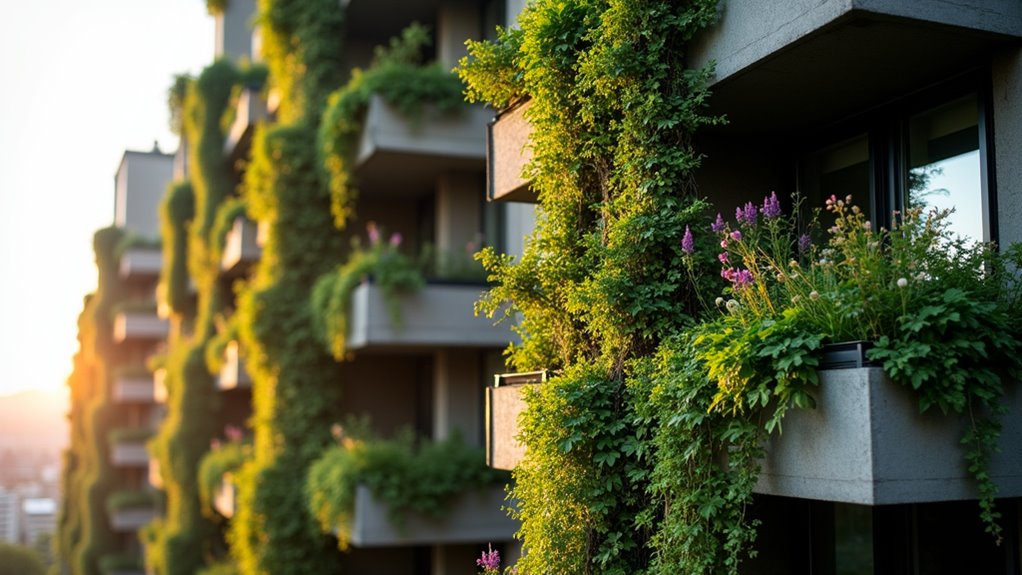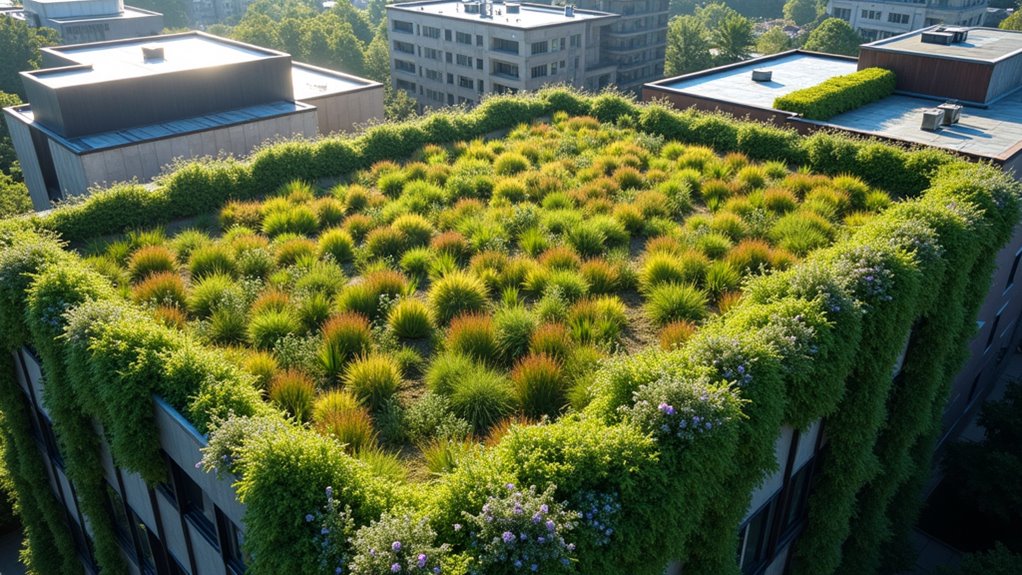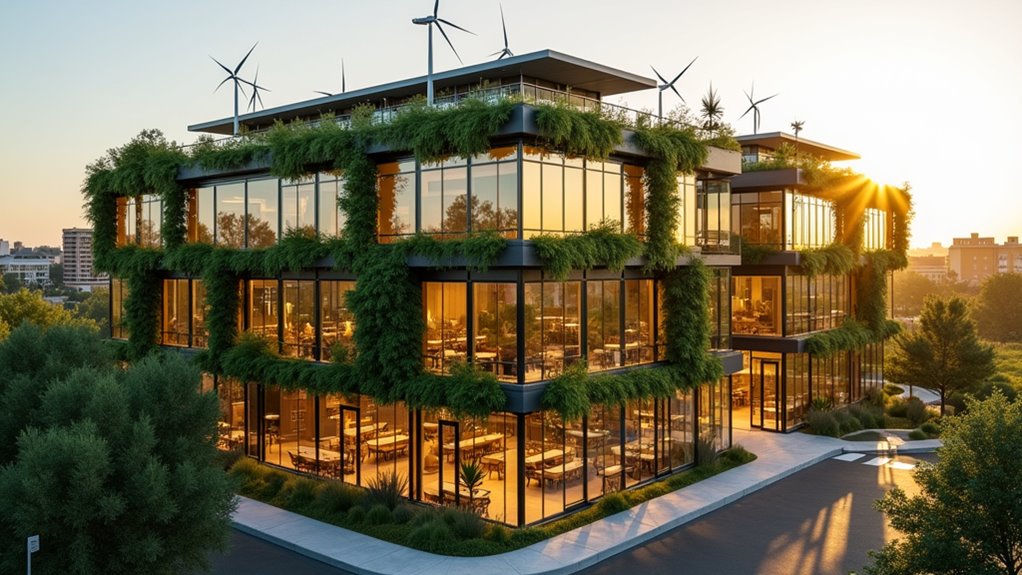
Green building codes are transforming modern construction through mandatory sustainability standards now adopted by two-thirds of U.S. local governments. These regulations drive widespread implementation of energy-efficient designs, renewable systems, and water conservation measures – projected to cut global carbon emissions 23% by 2035. While initial costs run higher, properties meeting green standards deliver superior value through reduced operating expenses, improved occupant health, and enhanced durability. The construction industry’s evolution toward sustainability promises even greater innovations ahead.
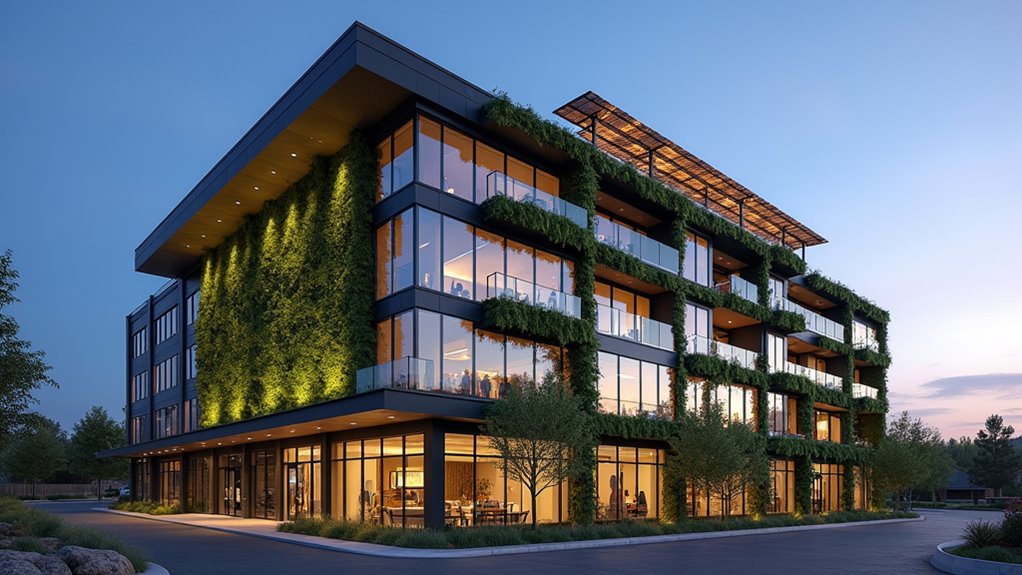
Nearly two-thirds of local governments across America have embraced green building codes, marking a transformative shift in how we construct our built environment. These regulations represent more than just guidelines – they’re enforceable frameworks that are reshaping the construction industry’s approach to sustainability, energy efficiency, and environmental impact. Unlike voluntary standards, these codes set mandatory benchmarks that builders must meet, driving widespread adoption of sustainable practices. Local jurisdictions enforce annual fines for non-compliance with these standards.
The impact of these changes extends far beyond environmental benefits. Green building codes are projected to slash global carbon emissions by 23% by 2035, while simultaneously creating $1.5 trillion in new investment opportunities. Building owners are discovering that properties built to these standards command higher values, enjoy better occupancy rates, and generate above-market rental income. Furthermore, tenants benefit from reduced utility costs and improved indoor air quality, leading to better health outcomes and increased productivity. The International Green Construction Code has been instrumental in establishing these sustainable building practices across commercial and multi-family buildings. Innovative financing models enhance project viability and impact, further driving adoption. Government support mechanisms, like federal tax credits, play a pivotal role in reducing initial project costs and encouraging investment in green building projects.
Currently, 25% of U.S. building stock falls under green standards, with 40 more cities planning to implement these regulations by 2026. California leads the charge with extensive regulations that other states are beginning to emulate. These codes encompass everything from energy-efficient designs and renewable energy systems to water conservation measures and sustainable material selection. Net zero energy buildings demonstrate how smart design can ensure that as much energy is generated as consumed. The integration of smart building technologies and living materials is pushing the boundaries of what’s possible in sustainable construction. The LEED certification process offers a structured way to evaluate and measure the sustainability of these building efforts.
However, the change hasn’t been without its challenges. Initial construction costs tend to be higher, though they’re typically offset by long-term savings. There’s also resistance from certain industry sectors and a concerning lack of education among stakeholders. The fragmented approach to policy across jurisdictions creates confusion, while some worry about maintaining affordability alongside sustainability requirements.
Despite these obstacles, the economic benefits are becoming increasingly clear. The green building sector is creating jobs in technology and construction, while building operators report notably lower maintenance and operating costs. The focus on resilience against natural disasters is particularly timely, as communities face increasing climate-related challenges. The emphasis on embodied carbon in building materials is driving innovation in construction methods and manufacturing processes.
The future of construction is being written today through these evolving codes and standards. As more cities and states adopt these regulations, we’re seeing a fundamental shift in how buildings are designed, constructed, and operated. The development of net-zero energy building codes represents the next frontier, pushing the industry toward even greater achievements in sustainability.
With proper implementation and continued innovation, green building codes are proving that environmental responsibility and economic success aren’t mutually exclusive – they’re increasingly inseparable in modern construction.
Frequently Asked Questions
How Much Do Green Building Certifications Typically Cost for Residential Projects?
Green building certifications for residential projects typically range from 2-10% of total construction costs.
Basic LEED certification adds around 2% to building costs, while Passive House certification can increase expenses by 5-10%.
Specific fees include $350-1,200 for registration, $2,500-22,000 for certification, and $10,000-30,000 for consultants.
The final cost depends on project size, certification level sought, and local market conditions.
Can Existing Buildings Be Retrofitted to Meet New Green Building Codes?
Yes, existing buildings can be successfully retrofitted to meet new green building codes through targeted upgrades.
Effective strategies include improving insulation, upgrading HVAC systems, installing renewable energy, and implementing water conservation measures.
While retrofits present challenges like historic preservation requirements and potential occupant disruption, they offer significant benefits – reducing environmental impact, preserving cultural heritage, and creating local jobs.
Government incentives and standards increasingly support these green retrofitting efforts.
What Penalties Exist for Non-Compliance With Green Building Regulations?
Non-compliance with green building regulations carries significant consequences.
Financial penalties range from $100-300 per day in cities like Boston and Philadelphia, while NYC imposes $268 per metric ton of excess emissions.
Large buildings could face penalties exceeding $3 million by 2030.
Beyond fines, violators risk license revocation, civil penalties, and reputational damage.
Some jurisdictions may enforce operational restrictions or public listing of non-compliant properties, affecting property values and tenant relationships.
How Long Does the Green Building Certification Process Usually Take?
The green building certification timeline varies greatly based on the program chosen and project complexity.
LEED certification typically takes 6-12 months, while BREEAM averages 3-6 months. Energy Star certification is quickest at 1-3 months.
The process involves initial registration, documentation gathering, preliminary review (20-25 days), addressing feedback, and final review.
Team experience, data availability, and design complexity can either speed up or slow down the process.
Which Countries Have the Strictest Green Building Code Requirements?
Based on current regulations, European nations generally maintain the strictest green building requirements.
The Netherlands leads with mandatory energy-neutral new construction since 2020, while Germany’s commitment to climate-neutral buildings by 2050 shows ambitious targets.
Singapore stands out in Asia with its extensive Green Mark Scheme, and New York City’s Local Law 97 represents one of North America’s most aggressive approaches, mandating 40% emissions cuts by 2030.