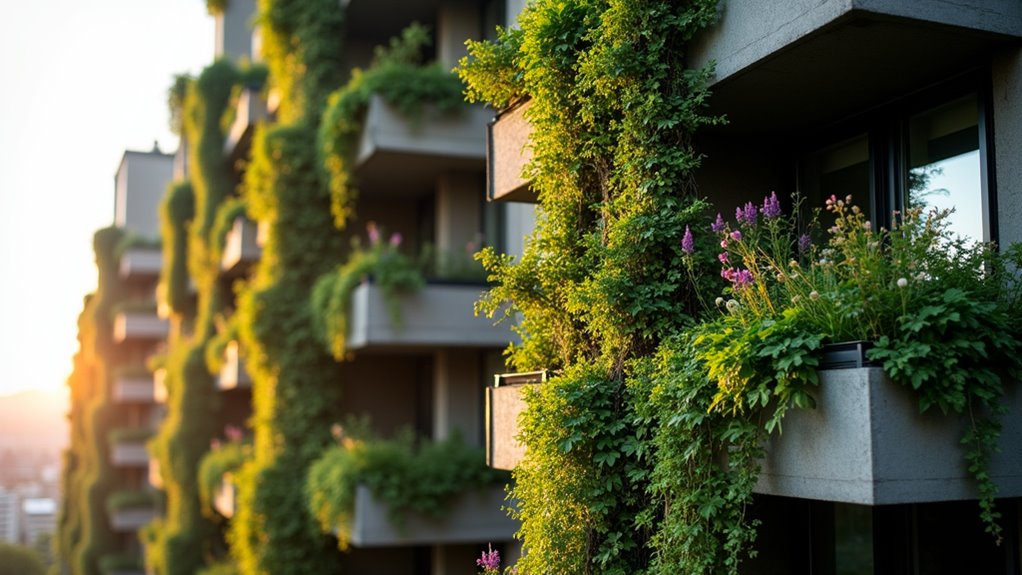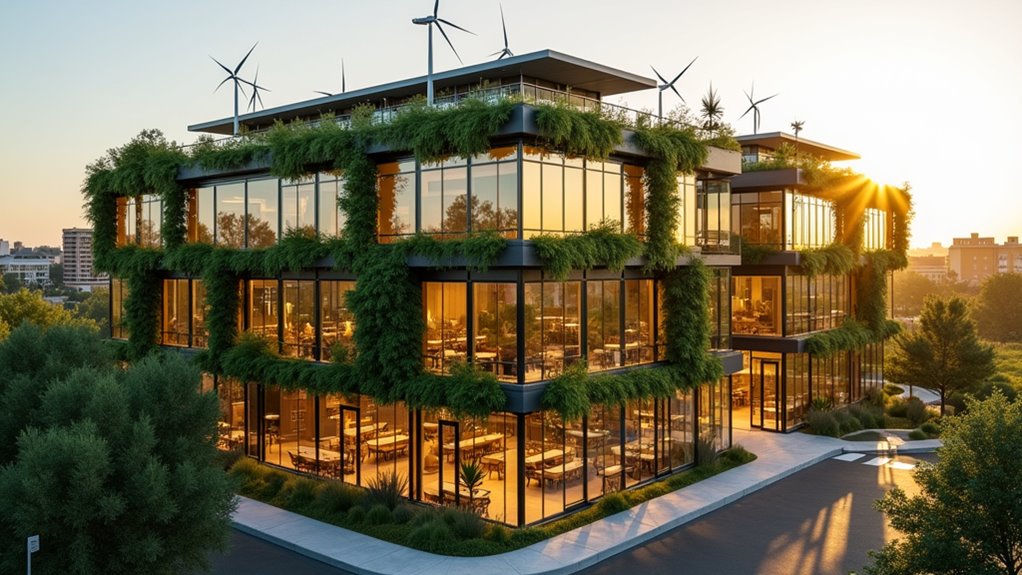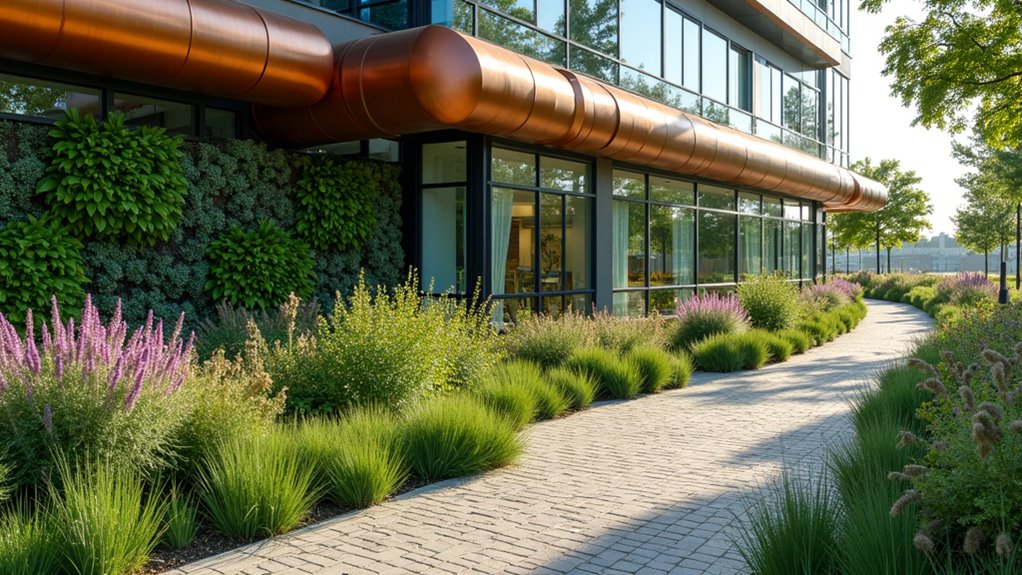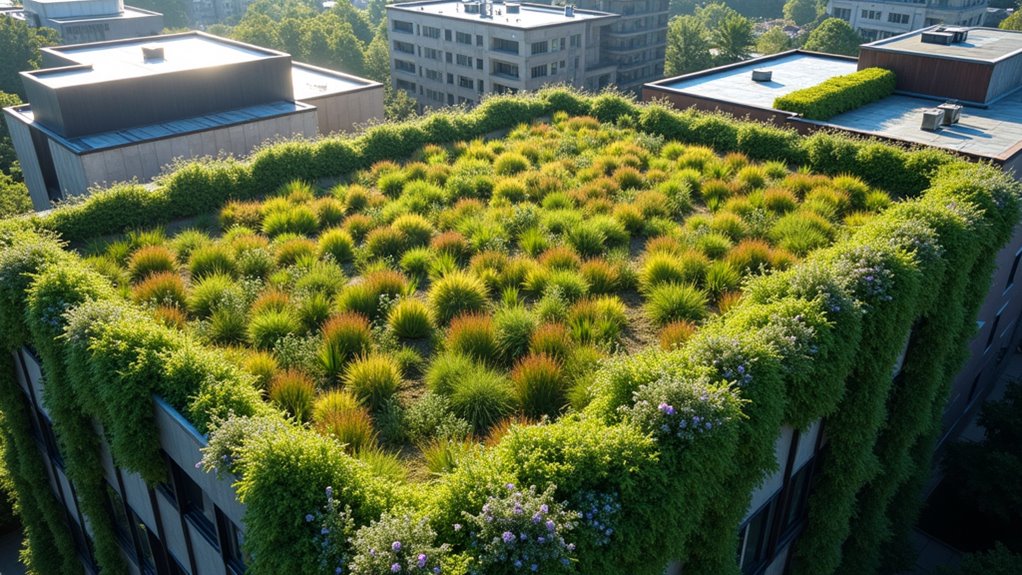
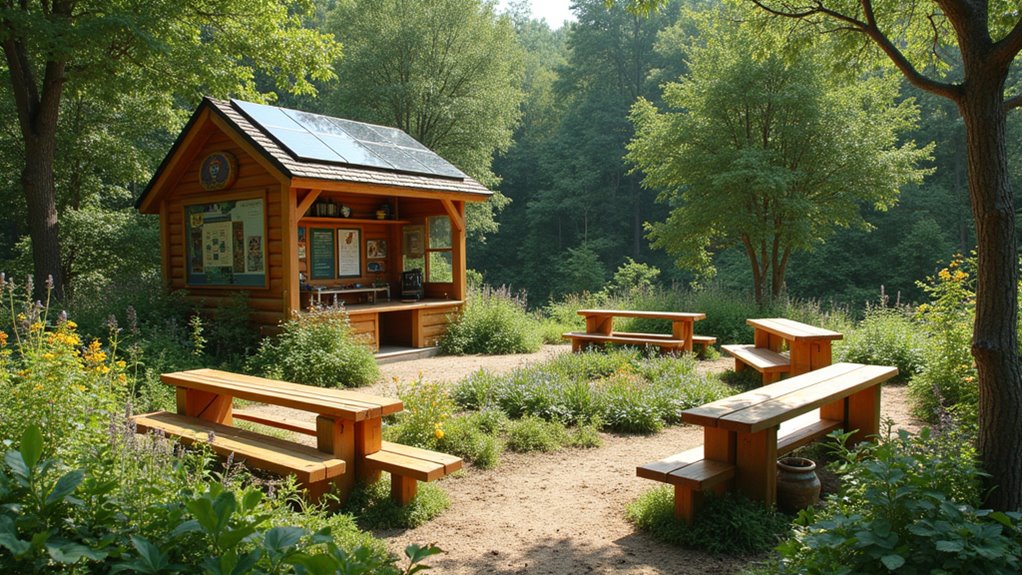
Green roofs and living walls serve as natural cooling systems and air purifiers in urban environments. These vegetated surfaces absorb 50% of solar energy while reflecting 30%, reducing local temperatures by up to 9°F. Through photosynthesis and dry deposition, plants trap airborne pollutants and convert CO2 to oxygen, creating cleaner city air. The systems can lower cooling needs by 75% in summer and cut heat loss by 25% in winter. Understanding their full potential reveals even more impressive benefits.
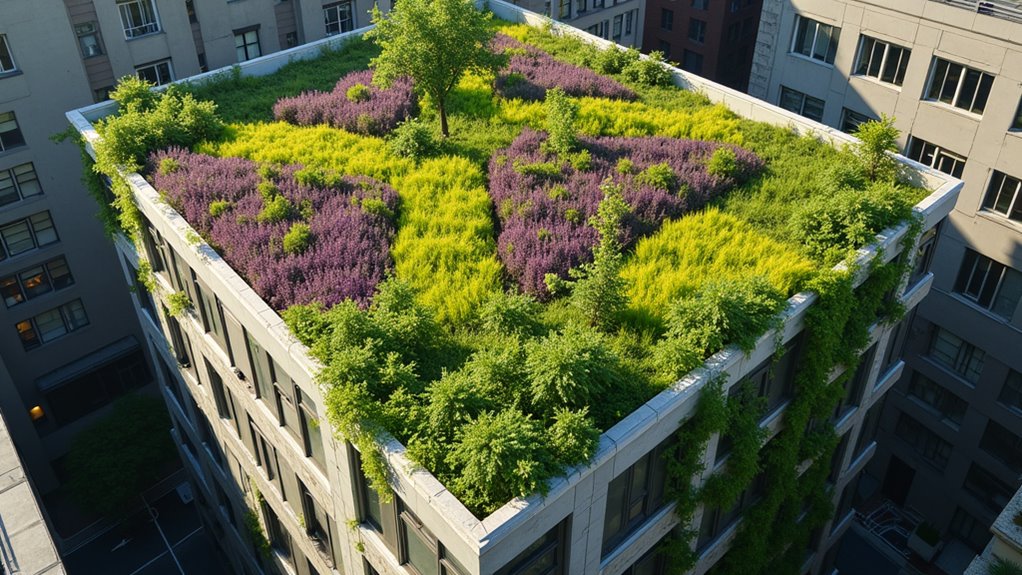
As cities around the world grapple with climate change and urbanization challenges, green roofs and living walls have emerged as innovative architectural solutions that transform barren building surfaces into thriving ecosystems. These vegetated systems serve as natural air filters and temperature regulators, offering a powerful weapon in the fight against urban heat islands and air pollution. Both extensive and intensive systems provide green coverage based on the building’s structural capacity.
The impact of green infrastructure on urban temperatures is remarkable. By absorbing 50% of solar energy and reflecting another 30%, green roofs and living walls can reduce local temperatures by up to 9°F (5°C). This cooling effect isn’t just about comfort – it translates into considerable energy savings, with buildings experiencing up to 75% reduction in cooling needs during summer months and 25% less heat loss in winter. Smart building technologies enable optimized water usage through automated irrigation systems. Public transportation systems complement these cooling infrastructures by reducing overall urban emissions and further enhancing city livability. Expanding urban public transit can significantly reduce emissions, supporting overall climate action goals.
These living systems act as the city’s lungs, actively filtering pollutants through a process called dry deposition. As air moves through the vegetation, particulate matter becomes trapped in plant leaves, while the natural process of photosynthesis converts CO2 into oxygen. This natural filtration system helps mitigate greenhouse gas emissions and creates cleaner air for urban residents. Furthermore, freshwater ecosystem protection is enhanced as these systems play a role in maintaining water quality and availability.
Beyond air quality and temperature regulation, green roofs and walls excel at managing stormwater – a critical function in increasingly dense urban environments. These systems can capture and retain 60-100% of rainfall, depending on their design, considerably reducing the burden on municipal sewer systems and helping prevent urban flooding. The vegetation and soil media also filter pollutants from rainwater before it enters the watershed. This approach to water management aligns with the importance of water conservation on a global scale, addressing issues tied to climate change, agriculture, and survival.
The economic benefits of green infrastructure are equally compelling. Building owners benefit from extended roof lifespans, as the vegetation protects roofing materials from harsh UV rays and temperature fluctuations. Reduced heating and cooling costs provide a tangible return on investment, while property values typically increase due to enhanced aesthetic appeal and environmental performance.
Perhaps most notably, green roofs and walls contribute to human health and wellbeing in ways that traditional infrastructure cannot. They reduce stress levels and improve mental health by providing visual connections to nature in otherwise concrete-dominated environments. These living systems also absorb sound, reducing noise pollution that can affect productivity and quality of life in urban areas.
The potential for urban agriculture adds another dimension to the benefits of green infrastructure. Rooftop gardens and living walls can produce local food, reducing transportation emissions and improving food security while creating educational opportunities about sustainable agriculture.
This combination of environmental, economic, and social benefits makes green roofs and living walls essential components of resilient, sustainable cities. As urban populations continue to grow, these innovative solutions offer a path toward cooler, cleaner, and more livable urban environments.
Frequently Asked Questions
How Much Maintenance Do Green Roofs Require During Different Seasons?
Green roofs require seasonal maintenance throughout the year.
Spring focuses on post-winter repairs, debris removal, and weeding.
Summer demands regular monitoring of plant health, irrigation adjustments, and pest control.
Fall preparation includes trimming vegetation and winterizing systems.
Winter needs minimal intervention as plants go dormant, though snow removal may be necessary if accumulation exceeds weight limits.
A 4-inch snow buffer should remain to protect plants.
Can Green Roofs and Living Walls Attract Unwanted Pests or Insects?
Green roofs and living walls can indeed attract various pests and insects.
Common visitors include plant-feeding pests like aphids and caterpillars, stinging insects attracted to flowers, and rodents seeking shelter in vegetation.
Birds may nest in the greenery, while mosquitoes can breed in standing water features.
However, effective pest management strategies, such as proper plant selection, water circulation, and Integrated Pest Management plans, help mitigate these challenges effectively.
What Happens to Green Roofs During Extreme Weather Conditions?
Green roofs demonstrate remarkable resilience during extreme weather. They can reduce temperatures by up to 20°F compared to conventional roofs during heat waves, though their cooling effect diminishes in severe heat.
During storms, they absorb up to 75% of rainfall and reduce runoff by 60-100%. When properly installed, they withstand high winds, while in winter, they provide additional insulation and can reduce heat loss by 25%, with snow adding an extra insulating layer.
Are All Buildings Structurally Suitable for Installing Green Roofs?
Not all buildings can support green roofs due to structural limitations.
The additional weight of soil, plants, and water requires significant load-bearing capacity – typically 60-150 kg/m2 for basic systems and over 300 kg/m2 for intensive designs.
Older buildings and wood-frame structures often lack adequate support.
While reinforcement options exist, like adding support beams or using lightweight materials, retrofit costs can be prohibitively expensive for many existing structures.
How Long Does It Take for Living Walls to Reach Full Coverage?
Living walls typically reach full coverage within 12-18 months, though initial coverage can appear within 3-6 months.
The timeline varies based on several factors: climate conditions, irrigation quality, plant selection, and maintenance practices.
Hydroponic systems generally achieve faster results than soil-based ones, with pre-grown plants providing immediate 60-80% coverage.
Regular care, proper lighting, and ideal temperature control are essential for maximizing growth speed and coverage.