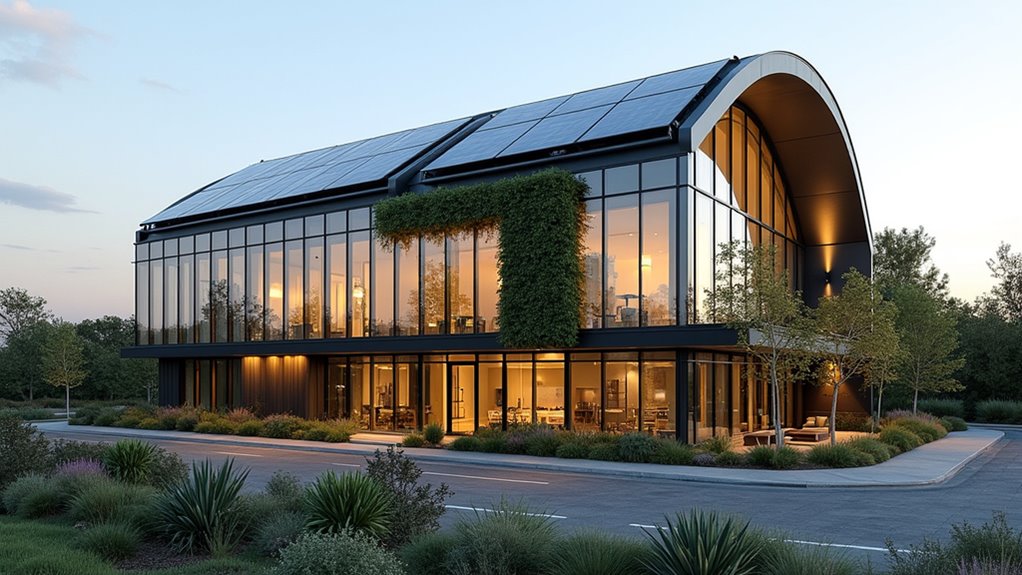
Effective water conservation in green buildings combines multiple proven strategies that dramatically reduce consumption while maintaining functionality. Low-flow fixtures and smart appliances can cut water use by up to 50%, while rainwater harvesting systems collect up to 169,000 gallons annually. Greywater recycling, drought-resistant landscaping, and advanced monitoring systems provide additional savings. When integrated thoughtfully, these approaches create buildings that are both environmentally responsible and resource-efficient. The depths of sustainable design innovation reveal even more promising solutions.

As buildings account for nearly 12% of global water consumption, innovative water conservation strategies in green buildings have emerged as an imperative solution for sustainable resource management. Modern buildings are incorporating an array of proven technologies and approaches that markedly reduce water usage while maintaining functionality and comfort for occupants. This focus on water conservation has become increasingly vital as researchers from Enugu State University lead investigations into sustainable building practices. Water conservation is a global issue tied to various factors, including climate change and agriculture, making it crucial for survival.
Low-flow fixtures and appliances represent one of the most straightforward yet effective solutions, capable of reducing water consumption by up to 50% compared to conventional alternatives. Regular maintenance checks help prevent costly leaks and ensure optimal performance of these water-saving devices. These include dual-flush toilets, efficient showerheads, and metering faucets that precisely control water flow. Self-charging automatic faucets and energy-recovery dishwashers further enhance water savings while providing convenience to users.
Modern low-flow fixtures slash building water usage by half while maintaining comfort through smart technology and precise flow control.
Rainwater harvesting systems are transforming how buildings source their water, with properly designed systems capable of collecting up to 169,000 gallons annually. These systems capture precipitation from rooftops and process it through a sophisticated series of components including roof-wash mechanisms, conveyance systems, and treatment facilities. The collected water serves various non-potable purposes, from irrigation to cooling system operation.
Greywater recycling takes conservation to the next level by reusing wastewater from daily activities like showering and clothes washing. This approach can slash potable water usage by up to 45%, though it requires carefully designed separate plumbing systems. The treated greywater finds new life in irrigation, toilet flushing, and cooling tower operations, creating a circular water economy within the building.
Smart water management systems have revolutionized how buildings monitor and optimize their water usage. Using advanced sensors and data analytics, these systems provide real-time insights into consumption patterns and quickly identify leaks or inefficiencies. This technology enables building managers to align water usage with peak efficiency periods and respond rapidly to any issues that arise. Cities are increasingly adopting urban water management innovations to support these efforts in green buildings. Smarter farming techniques, like precision irrigation, also offer insights for buildings on how to optimize water usage and boost efficiency. Smart irrigation technology is particularly influential, offering precise monitoring and automation to further reduce water waste.
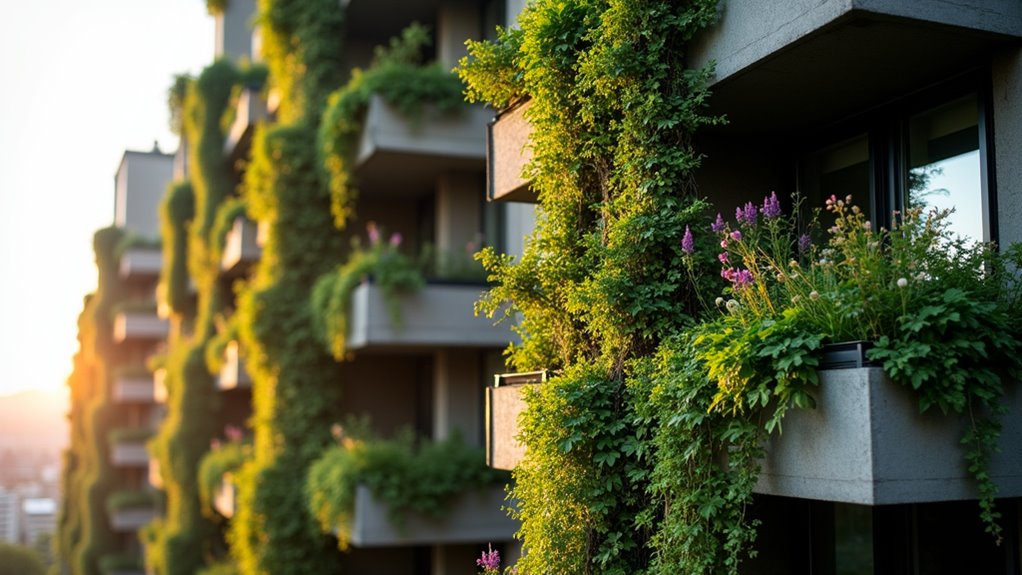
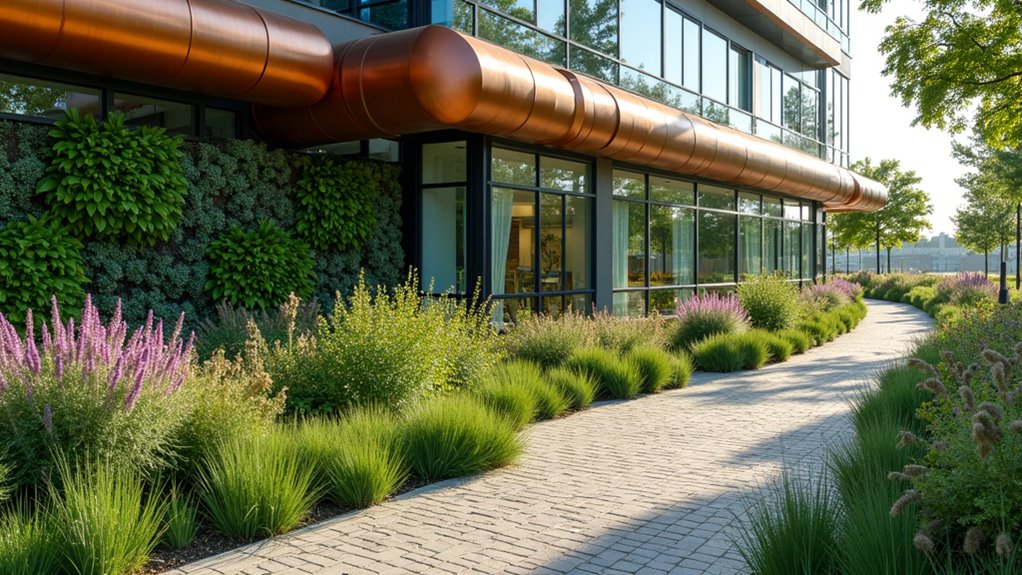
The landscape surrounding green buildings plays a vital role in water conservation. Native, drought-resistant plants considerably reduce irrigation requirements, while drip systems deliver water precisely where needed. Permeable paving and green roofs enhance water infiltration and reduce runoff, while organic hardwood mulch helps retain soil moisture. These approaches work together to create a water-efficient ecosystem around the building.
Effective stormwater management complements these strategies through features like bioretention cells and underground detention systems. These elements help filter and manage runoff while reducing the burden on municipal infrastructure.
When combined with extensive education and awareness programs, including regular water audits and real-time usage monitoring, these strategies create a holistic approach to water conservation that delivers measurable results.
Through these integrated approaches, green buildings are demonstrating that substantial water conservation is not just possible but practical and cost-effective. As more buildings adopt these strategies, they’re setting new standards for sustainable water management in the built environment.
Frequently Asked Questions
How Much Does Implementing Water Conservation Systems Affect Property Insurance Rates?
Installing water conservation systems can greatly reduce property insurance premiums by 15-20%.
Insurance companies offer substantial discounts for features like leak detection devices, automatic shut-off valves, and smart water monitoring systems. These technologies demonstrate reduced risk to insurers, who increasingly value sustainable improvements.
Properties with water-efficient fixtures, rainwater harvesting, and regular maintenance typically qualify for better insurance terms and specialized coverage options through green insurance products.
Can Water Conservation Systems Be Retrofitted Into Existing Historical Buildings?
Yes, water conservation systems can be effectively retrofitted into historical buildings with proper planning and expertise.
While preserving architectural integrity presents challenges, modern non-invasive technologies like smart meters, sensors, and low-flow fixtures can be integrated seamlessly.
Success depends on the building’s structure, age, and preservation requirements.
Though costs may be higher than standard retrofits, these upgrades offer significant water savings while maintaining the building’s historical character and reducing utility expenses.
What Certifications Do Contractors Need to Install Green Water Systems?
Contractors installing green water systems typically need multiple certifications.
Basic requirements include state plumbing licenses, while specialized credentials like LEED AP, WaterSense, or CWEP demonstrate expertise in sustainable systems.
Some regions mandate specific certifications – California requires CALGreen compliance, while Florida promotes Water Star certification.
Additional qualifications through IAPMO, ARCSA, or NGICP provide valuable expertise in rainwater, greywater, and green infrastructure installations.
How Do Water Conservation Features Impact Resale Value of Commercial Properties?
Water conservation features markedly boost commercial property resale values.
Green-certified buildings command higher rents and typically see up to 7.5% increase in asset value.
Properties with water-efficient systems attract environmentally conscious tenants, resulting in 4% higher occupancy rates on average.
These features also future-proof buildings against stricter regulations and rising utility costs.
The combination of lower operating expenses and enhanced marketability makes water-conserving properties more valuable investments.
What Government Incentives Exist for Installing Water-Efficient Systems in Green Buildings?
Multiple government incentives support water-efficient systems in green buildings.
Federal programs offer tax credits up to $5,000 per unit through the 45L credit, while state-specific initiatives provide additional benefits.
Maryland offers an 8% tax credit for green construction, and California provides rebates for efficient upgrades.
Local utilities complement these with rebates for water-conserving fixtures and HVAC systems.
Green building certifications like LEED and WaterSense reveal additional financial incentives.