
Modern farms are revolutionizing water management through innovative technologies and sustainable practices. Smart irrigation systems with soil moisture sensors and AI-powered controllers can reduce water waste by up to 80%, while maintaining robust crop yields. Data-driven approaches combining weather forecasts with soil conditions achieve 25-30% water savings. Conservation techniques like no-till farming and strategic crop selection further boost efficiency. These solutions offer a clear path to more profitable and environmentally-sound agricultural operations – and there’s much more to explore.
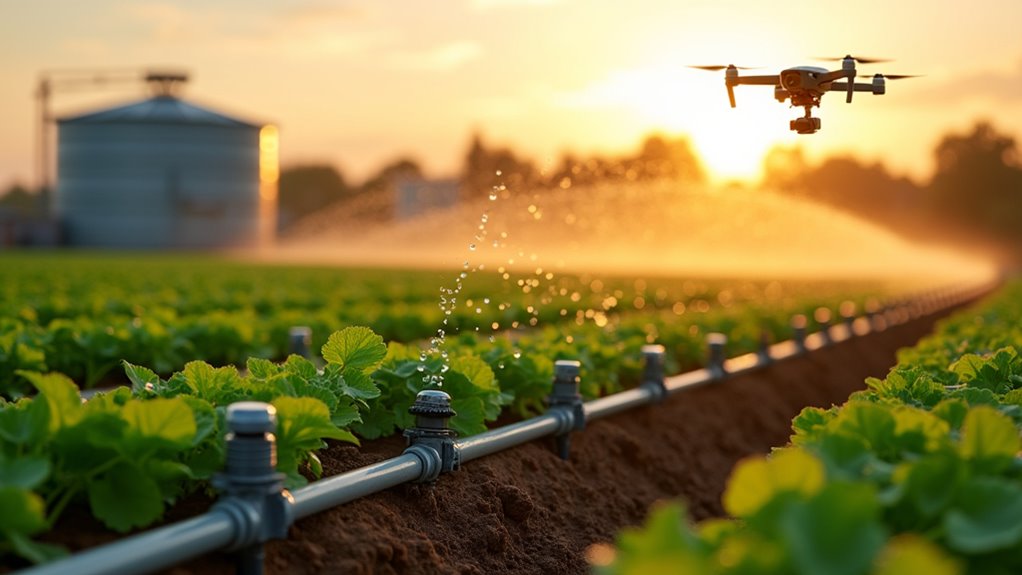
As modern agriculture grapples with increasing water scarcity, farmers are turning to innovative technologies and practices that revolutionize irrigation efficiency. At the forefront of this transformation is drip irrigation technology, which delivers water directly to plant roots and slashes evaporation by up to 80% compared to conventional methods. When paired with smart timers, these systems guarantee crops receive precisely what they need, when they need it. Texas farmers have demonstrated leadership by widely adopting water-saving irrigation techniques. These advancements in precision agriculture solutions have become essential as traditional irrigation methods often result in significant water waste and inefficiency. The global importance of water conservation is underscored by its connection to climate change and agriculture, making efficient water use a critical priority worldwide.
The integration of soil moisture sensors and weather data has emerged as a game-changer in agricultural water management. These technologies provide real-time insights into soil conditions and enable farmers to make data-driven decisions about irrigation scheduling. By combining this information with weather forecasts, farmers can achieve water savings of 25-30% while maintaining or improving crop yields. Rainwater harvesting systems also play a crucial role by ensuring a more stable water supply for farmers, even in regions prone to drought. Increased evaporation rates threaten water quality by concentrating pollutants, making efficient water management even more critical. Urban areas are similarly adopting green infrastructure solutions to manage water use effectively and reduce waste.
Artificial intelligence and smart irrigation controllers are taking water efficiency to the next level. These sophisticated systems leverage machine learning to analyze evapotranspiration rates and weather patterns, automatically adjusting irrigation schedules for ideal water use. Some farms have reported water savings of up to 50% after implementing these smart solutions, while maintaining robust crop production.
Strategic crop selection and rotation practices play an essential role in water conservation. Farmers are increasingly choosing drought-tolerant varieties and implementing rotation schemes that enhance soil health and water retention. The addition of cover crops helps reduce soil evaporation and builds organic matter, leading to yield increases of 15-20% while using less water.
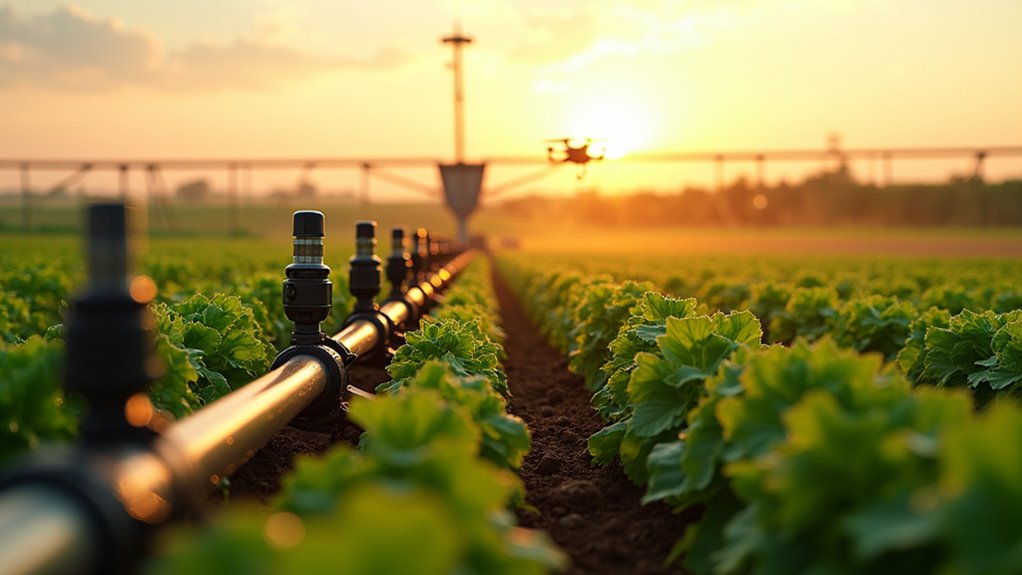
Precision agriculture technologies, including satellite imagery and drone monitoring, have revolutionized how farmers track crop health and manage irrigation. These tools enable targeted water application based on field variability and help identify system inefficiencies quickly. When combined with variable rate irrigation, these approaches can boost water use efficiency by 20-30% across entire fields.
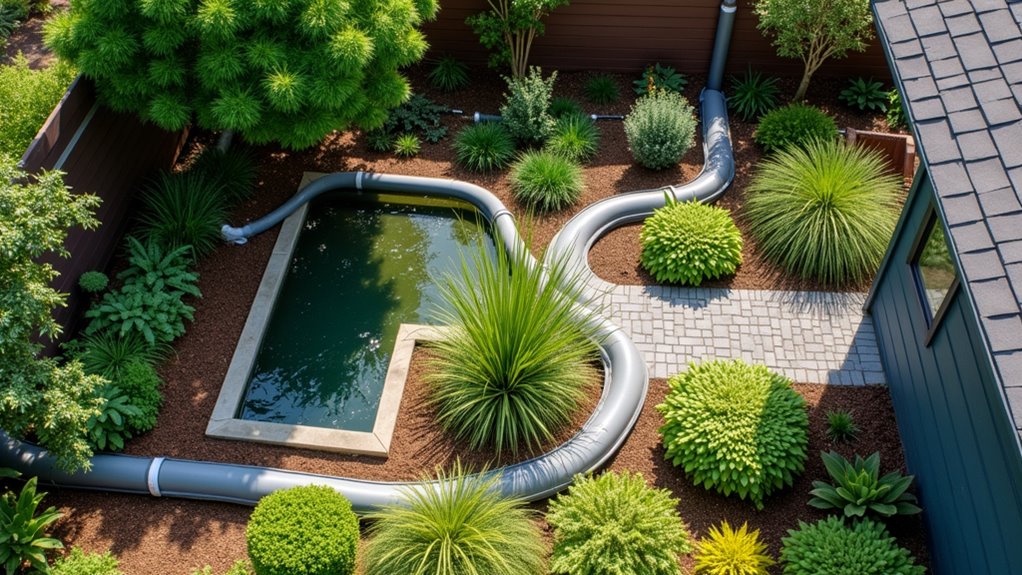
Water harvesting and recycling techniques are becoming increasingly important in sustainable farming practices. From rainwater collection systems to agricultural wastewater recycling, these methods can reduce a farm’s freshwater demand by 30-40%. Simple practices like mulching further contribute to water conservation by reducing surface evaporation.
Conservation tillage and proper soil management represent fundamental approaches to improving water efficiency. No-till or reduced tillage practices enhance soil structure and water-holding capacity, while the addition of organic matter through composting can greatly increase soil moisture retention. These methods can boost soil water storage by up to 100mm per meter of soil depth, creating more resilient agricultural systems that require less irrigation.
Frequently Asked Questions
What Are the Costs Associated With Implementing Smart Irrigation Systems?
Smart irrigation systems require significant upfront investment.
Initial hardware costs range from $2,500 to $45,000, depending on system sophistication. Additional expenses include soil moisture sensors ($15,000 for 100 acres), weather stations ($5,000), and control systems ($10,000).
Monthly operational costs span $500-$2,000 for cloud management.
However, these systems typically pay for themselves within 1.5-3 years through water savings of 15-40% and reduced labor costs of 30-50%.
How Long Does It Take to See Returns on Water-Efficient Farming Investments?
Most water-efficient farming investments show returns within 1-5 years, depending on several factors.
Drip irrigation systems typically pay back in 1-3 years in water-scarce areas, while smart irrigation technology takes 2-5 years.
Soil moisture sensors deliver the fastest returns, usually within 1-2 growing seasons.
Farm size, crop type, and local water costs greatly impact ROI timelines.
Long-term benefits extend well beyond initial payback, with water savings of 20-60% and yield increases of 5-25%.
Which Crops Benefit Most From Precision Irrigation Techniques?
High-value specialty and fruit crops show the strongest benefits from precision irrigation.
Hemp and tobacco see significant quality improvements, while fruits like citrus and berries thrive with controlled moisture.
Row crops also respond well – soybeans maintain yields with 40% less water, and corn yields increase by 4 bushels per acre.
Tree crops, particularly almonds and olives, demonstrate excellent results through regulated deficit irrigation and micro-sprinkler systems.
Can Small-Scale Farmers Afford to Adopt Water-Smart Farming Technologies?
Yes, small-scale farmers can increasingly access affordable water-smart technologies.
Low-cost smart controllers ($200-500), basic soil sensors (under $200), and mobile apps (under $50/year) make precision irrigation achievable.
Government programs, NGO support, and farmer-led initiatives provide grants, subsidies, and credit access.
DIY options like assembly kits and rainwater harvesting further reduce costs.
The investment typically pays off through 40% water savings and improved crop yields.
What Government Incentives Exist for Implementing Water Conservation Methods in Agriculture?
Multiple government programs offer substantial support for agricultural water conservation.
The USDA’s Environmental Quality Incentives Program provides up to 50% cost-sharing for irrigation improvements, while state-level incentives include tax credits and low-interest loans.
Farmers can access free technical assistance through NRCS and participate in Conservation Stewardship Programs for ongoing payments.
Regional grants up to $1.5 million are available in some areas, making water-smart farming more financially feasible.