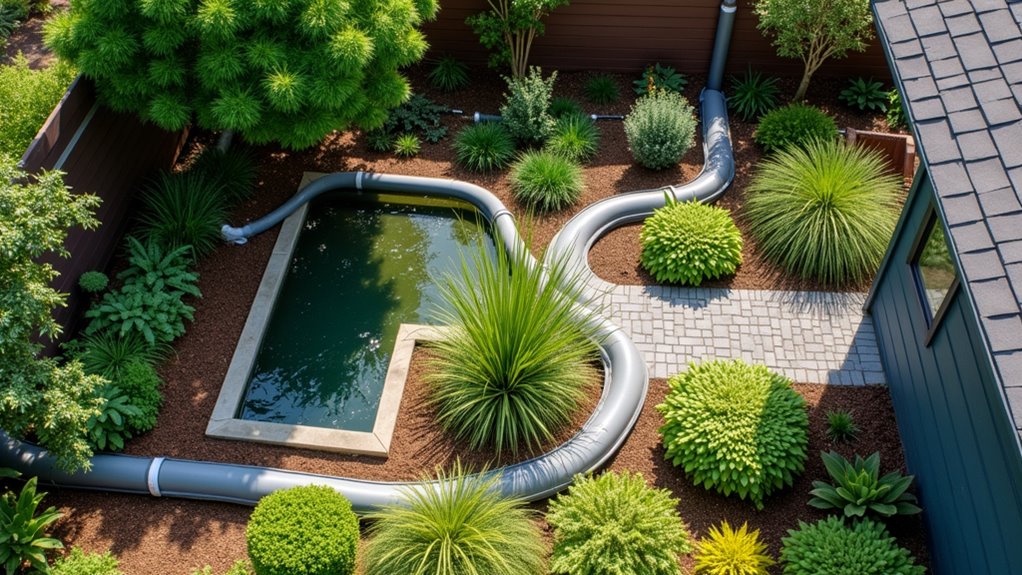

Greywater recycling captures gently used water from showers, sinks, and washing machines for garden irrigation, representing up to 80% of household wastewater that would otherwise go down the drain. Simple bucket collection or sophisticated laundry-to-landscape systems distribute this nutrient-rich water to trees, bushes, and ornamental plants. While not suitable for edible portions of plants, greywater irrigation reduces water bills and supports sustainable landscaping. Local regulations and proper setup guarantee safe, effective implementation for those ready to dive deeper into water conservation.
While freshwater supplies face mounting pressure worldwide, an often-overlooked solution lies right in our homes. Greywater – the gently used water from our showers, bathroom sinks, and washing machines – represents 50-80% of residential wastewater that could be repurposed instead of going down the drain. This valuable resource contains traces of organic matter and nutrients that can actually benefit plant growth, making it an ideal candidate for garden irrigation. Rising temperatures can disrupt global water resources, making greywater recycling a valuable practice in water conservation. Research indicates that proper plant care is essential when using greywater for irrigation. Using eco-friendly biodegradable soaps helps maintain system health and prevents harmful chemical buildup in garden soil.
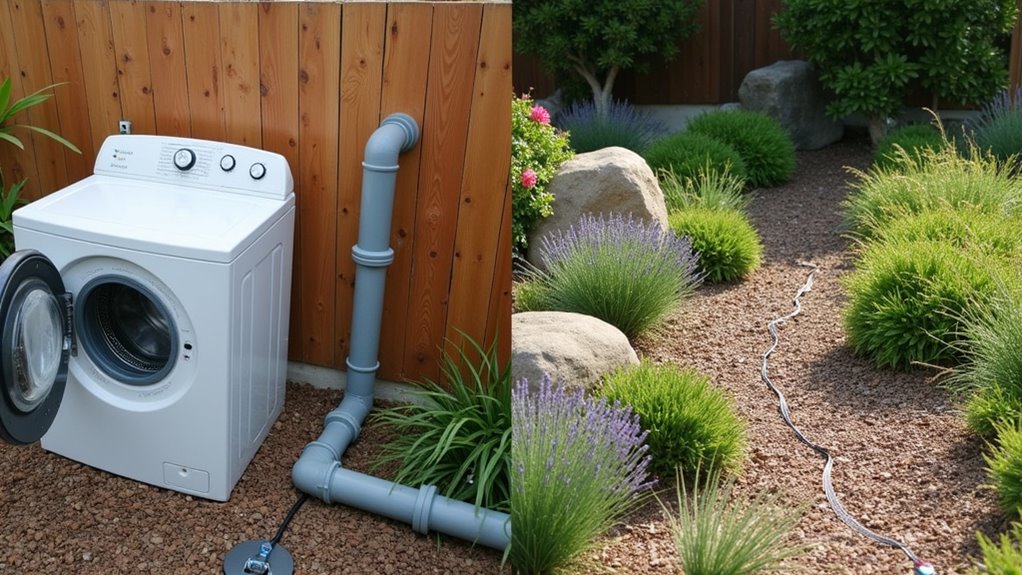
Converting to greywater recycling doesn’t have to be complicated or expensive. The simplest approach involves collecting shower or sink water in buckets, while more sophisticated systems like laundry-to-landscape setups can distribute water directly to garden areas. For properties where the yard sits higher than water sources, pumped systems offer a viable solution, though they do require a bigger investment. Constructed wetlands present another option, particularly useful for properties near natural waterways. The global importance of water conservation underscores the need for such sustainable practices in addressing water scarcity. Implementing fair water pricing can also incentivize sustainable water use, ensuring conservation efforts are economically viable. Government policies on water also play a crucial role in facilitating access to resources and information necessary for implementing effective greywater recycling systems.
When implementing greywater irrigation, plant selection becomes essential. Most landscape plants, including trees, bushes, and large annuals, thrive with greywater irrigation. However, certain species like avocado trees and Scotch pines may show sensitivity to the slightly alkaline conditions created by soap residues. It’s important to avoid using greywater on vegetables, fruits, or any edible portions of plants to maintain food safety standards.
Safety considerations play a critical role in successful greywater recycling. Users should stick to plant-friendly cleaning products that don’t contain excessive salt, boron, or chlorine bleach. Subsurface irrigation methods help minimize human contact with greywater, while alternating between greywater and freshwater prevents potential salt buildup in soil. It’s also essential to let hot water cool before application to prevent damaging plant roots.
The economic benefits of greywater recycling can be considerable. While simple bucket collection systems cost next to nothing, more elaborate setups range from $150 for basic laundry-to-landscape systems to $15,000 for thorough filtered systems. The investment typically pays off through reduced water bills, decreased fertilizer needs, and potential savings on air conditioning costs due to the cooling microclimate created around the home.
Before installing any greywater system, checking local regulations is important, as requirements vary greatly by location. Some areas mandate permits or professional installation for certain system types, while others restrict greywater use during dry periods. Professional consultation can guarantee compliance with local codes while maximizing the system’s effectiveness.
Despite these considerations, greywater recycling represents a powerful tool for sustainable water management, offering both environmental benefits and practical advantages for home gardeners committed to conservation.
Frequently Asked Questions
How Much Money Can I Save Annually by Installing a Greywater System?
Annual savings from greywater systems vary considerably based on household size, water rates, and system type.
A typical family of three can save 18,700 gallons yearly, while larger households of six may save up to 30,000 gallons.
The financial benefit depends on local water prices – some homeowners save hundreds annually on water bills, though installation costs must be considered.
Areas with higher water rates see faster returns on investment.
Are There Local Regulations That Restrict Greywater Recycling in My Area?
Greywater regulations vary considerably by state and local jurisdiction.
Since there’s no universal code, homeowners must check their specific area’s rules. Many states require permits, while others prohibit certain uses entirely.
The best approach is to contact the local health department or building authority directly – they can outline permit requirements, usage restrictions, and system specifications for that location.
Some areas even offer incentives for greywater installation.
Can Greywater Systems Be Installed in Existing Homes or Only New Construction?
Greywater systems can absolutely be retrofitted into existing homes.
Laundry-to-landscape setups are the simplest retrofit option, requiring minimal plumbing changes and costing $150-300 in materials.
More complex branched drain systems need access to under-floor pipes, while pumped systems work around obstacles or elevation issues.
While DIY installation is possible for basic systems, professional plumbers are recommended for complex retrofits, typically costing $500-1500 for proper installation that meets local codes.
What Is the Average Lifespan of a Residential Greywater Recycling System?
A properly maintained residential greywater system typically lasts 10-20 years.
Simple gravity-fed systems can function for up to 25 years, while systems with pumps generally last 8-15 years.
Regular maintenance, including filter changes every 3-6 months and annual inspections, greatly extends system life.
UV components need replacement every 1-2 years.
The system’s longevity depends heavily on installation quality, usage patterns, and environmental conditions.
Does Greywater Recycling Affect Home Insurance Rates or Property Values?
Greywater recycling systems typically don’t impact home insurance rates, though insurers may require professional installation and system disclosure.
On the property value front, these systems can boost home worth by 5-10%, especially appealing to eco-conscious buyers.
While installation costs range from $500-$2,500, the potential for reduced water bills (up to 40%) and available rebates in some areas make it an attractive investment for homeowners.


