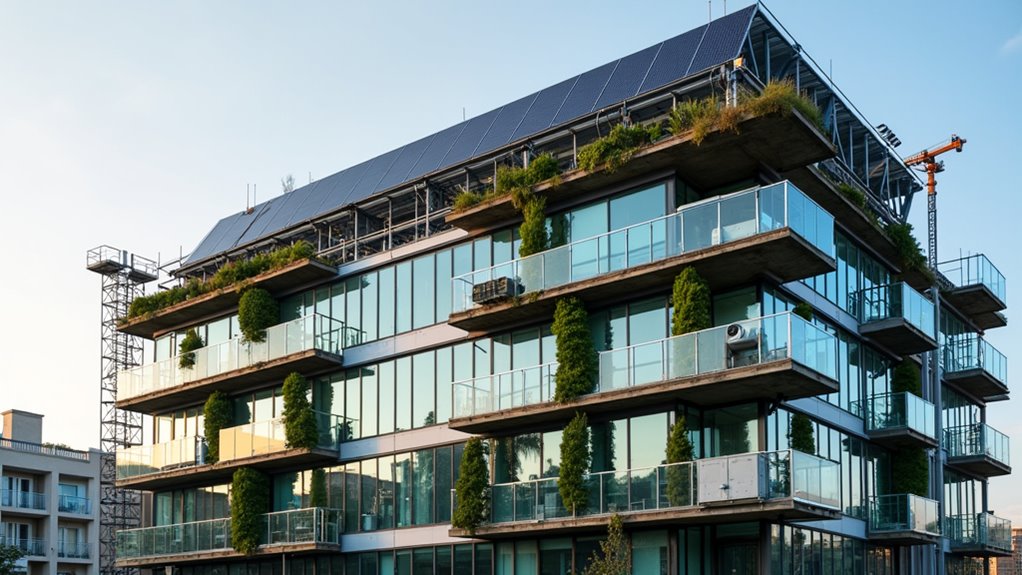
Smart building technologies are transforming modern architecture through interconnected systems that optimize performance and sustainability. IoT sensors and AI algorithms enable real-time monitoring of temperature, occupancy, and energy usage, reducing electricity consumption by up to 20%. Building Management Systems coordinate everything from HVAC to security, while machine learning predicts maintenance needs and peak usage patterns. As these technologies evolve, buildings are becoming responsive ecosystems that adapt and learn – promising even greater advances in efficient operation.
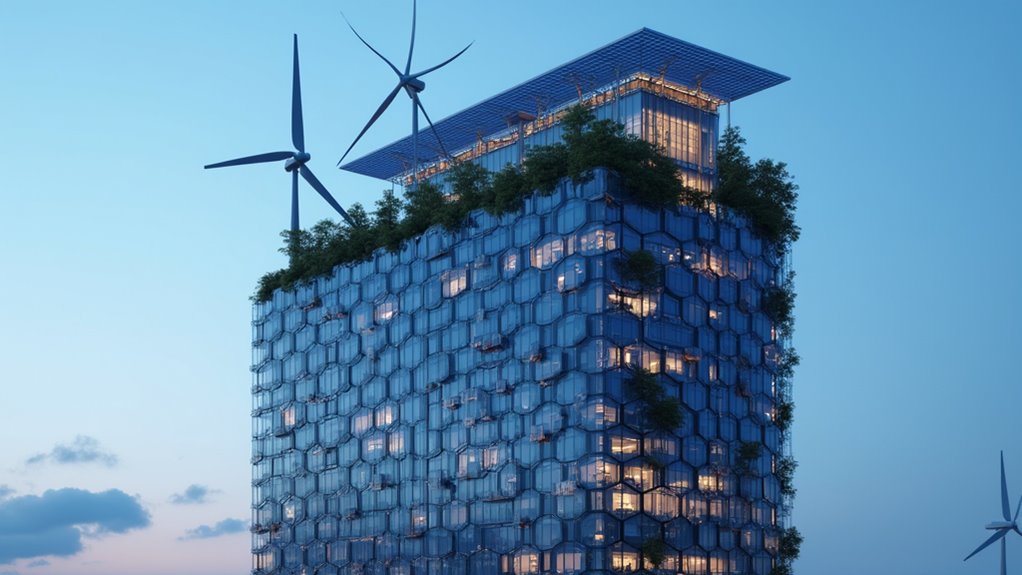
The technological revolution in building management has ushered in a new era of intelligent architecture. At the heart of this transformation lies the Internet of Things (IoT), connecting countless devices and sensors that work in harmony to create buildings that think, adapt, and respond to their occupants’ needs. These interconnected systems generate vast amounts of real-time data, enabling unprecedented levels of control and enhancement across all building operations. This innovative approach aligns with renewable energy deployment strategies, which are critical for reducing the carbon footprint and promoting sustainability. As smart buildings increasingly integrate with energy storage technologies, they can better manage power fluctuations and enhance overall efficiency. The integration of Artificial Intelligence has fundamentally changed how buildings operate. AI algorithms process complex data streams to make split-second decisions about everything from temperature control to security protocols. By analyzing occupancy patterns and environmental conditions, these systems can predict maintenance needs before equipment fails and adjust energy usage based on real-time demand, considerably reducing waste and operational costs. The incorporation of Digital Twin technology enables detailed simulations of building operations for enhanced performance optimization. Implementation of smart technologies can achieve 10-20% reduction in overall electricity consumption. Building Management Systems serve as the central nervous system of smart buildings, coordinating various subsystems into a cohesive whole. Through sophisticated control interfaces, facility managers can monitor and adjust HVAC, lighting, and security systems with unprecedented precision. This integration has revolutionized building operations, creating more efficient, comfortable, and sustainable environments for occupants. Energy management has evolved beyond simple monitoring into proactive enhancement. Smart sensors and actuators continuously collect data on temperature, humidity, and occupancy levels, enabling automated responses to changing conditions. These systems can detect inefficiencies and automatically implement corrections, while ensuring compliance with energy regulations and maintaining ideal comfort levels for occupants. The role of data analytics and machine learning cannot be understated in this technological ecosystem. These powerful tools process enormous amounts of information to identify patterns and predict future needs. By analyzing historical data, smart buildings can anticipate peak usage times, enhance maintenance schedules, and even suggest improvements to building operations based on proven patterns of success. Green building principles are increasingly being integrated into smart building designs to improve sustainability and occupant health. Cloud-based platforms have emerged as the backbone of smart building management, enabling remote monitoring and control from anywhere in the world. These platforms provide scalable solutions that can grow with changing needs, while facilitating collaboration between different stakeholders. The ability to access real-time building performance data and receive instant alerts about potential issues has transformed how facilities are managed. The convergence of these technologies is creating buildings that are not just smart, but truly intelligent. They learn from experience, adapt to changing conditions, and actively work to maximize efficiency while minimizing environmental impact. As these systems continue to evolve and become more sophisticated, they are setting new standards for building performance and sustainability. The future of architecture is not just about creating spaces – it’s about creating living, breathing ecosystems that respond to and anticipate the needs of their occupants while enhancing resource usage for a more sustainable future. Recent innovations, such as floating wind farms, illustrate how technology is evolving to optimize energy capture in diverse environments.
Frequently Asked Questions
What Is the Average Return on Investment for Implementing Smart Building Systems?
Studies show smart building investments typically deliver ROI between 5-15%, with payback periods of 1-3 years.
These returns come from multiple sources: energy savings up to 50%, increased rental rates of 8-35%, and operational cost reductions around 30%.
Additional benefits include higher occupancy rates (9-18%) and improved tenant satisfaction (18%).
When combined, these advantages create compelling financial returns that make smart building upgrades increasingly attractive for property owners.
How Long Does It Take to Fully Integrate Smart Technologies Into Existing Buildings?
The integration timeline for smart building technologies typically ranges from 6-18 months for standard buildings, though larger facilities may require 2-3 years.
Older buildings needing extensive retrofitting can take up to 5 years for complete integration.
The process involves distinct phases: assessment (1-3 months), system design (2-6 months), installation (3-12 months), testing (1-3 months), and staff training (1-2 months).
Cloud-based solutions can accelerate deployment to 3-6 months for certain systems.
Can Smart Building Systems Be Hacked, and What Security Measures Exist?
Smart building systems are indeed vulnerable to cyberattacks, with 38% experiencing breaches in 2019 alone.
Common vulnerabilities include unpatched software, weak authentication, and unsegmented networks.
However, robust security measures exist to protect these systems, including end-to-end encryption, multi-factor authentication, and AI-powered threat detection.
Regular security audits, coupled with physical and cyber security integration, help maintain system integrity.
The key is implementing thorough security protocols from the start.
Are There Government Incentives Available for Upgrading to Smart Building Technology?
Significant government incentives exist for smart building technology upgrades.
The IRA offers up to $3,200 in annual tax credits for energy-efficient improvements, while commercial buildings can access $362 million in tax deductions.
States and utilities provide additional rebates and financing options.
The Federal Smart Buildings Accelerator and Climate Smart Buildings Initiative aim to drive $8 billion in private investment by 2030.
Low-interest financing and performance contracts make upgrades more affordable.
How Much Training Do Facility Managers Need to Operate Smart Building Systems?
Facility managers typically require 4-6 months of foundational training to operate basic smart building systems, with thorough mastery taking 1-2 years.
Initial hands-on training spans 40-80 hours, covering building automation fundamentals, energy management, and data analytics.
Ongoing education includes quarterly tech seminars and annual refresher courses.
Many vendors offer specific training for their proprietary systems, while certification programs demand 100-200 hours of dedicated study time.