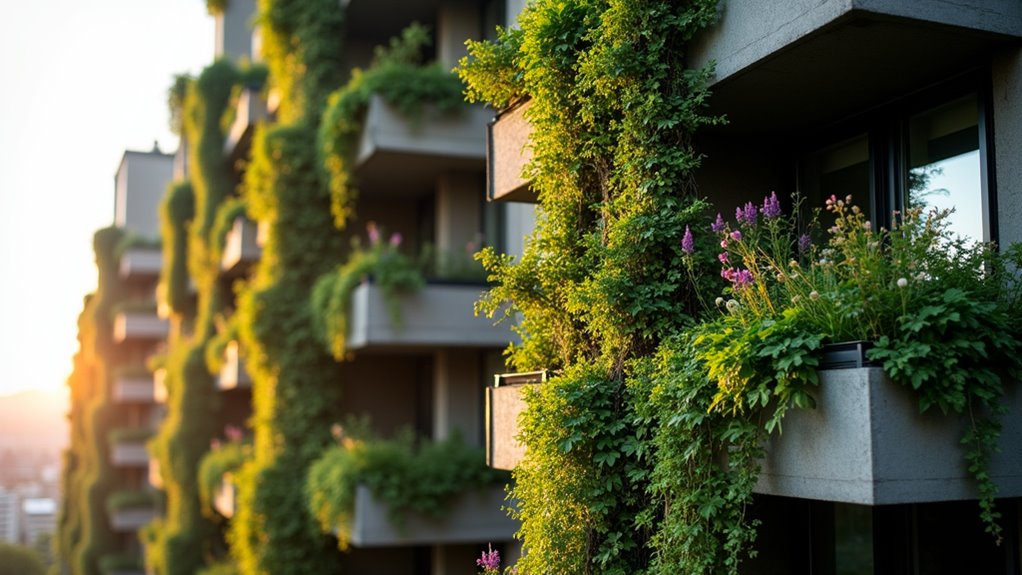
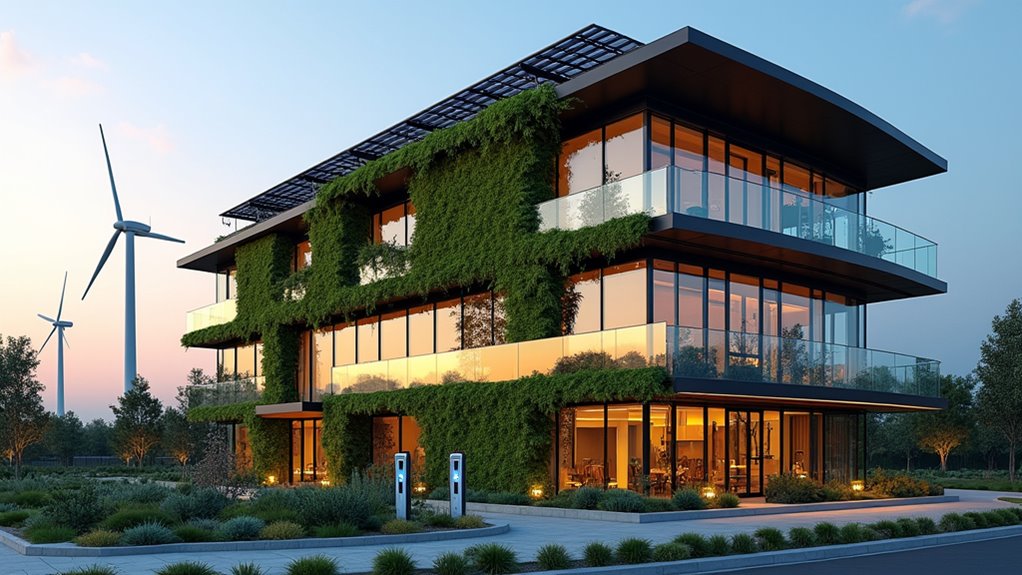
Sustainable urban planning revolutionizes cities through integrated environmental, social, and economic strategies. Well-designed communities incorporate green infrastructure like urban forests and parks, which filter pollutants and reduce heat islands while supporting local biodiversity. Mixed-use developments decrease car dependency by creating walkable neighborhoods where people live, work, and play. These practices boost property values, create green jobs, and deliver long-term cost savings. The path to greener cities starts with smart planning that balances growth with nature’s needs.
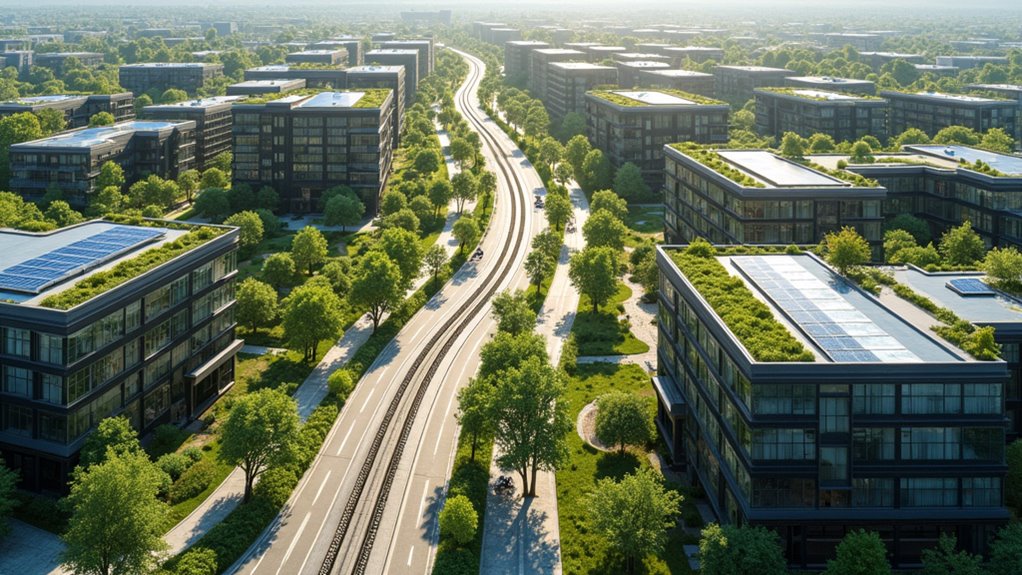
As cities across the globe grapple with rapid urbanization and environmental challenges, sustainable urban planning has emerged as a vital framework for creating livable, resilient communities. This thorough approach integrates environmental, social, and economic considerations into the fabric of urban development, prioritizing resource efficiency while ensuring communities thrive for generations to come.
At the heart of sustainable urban planning lies a network of green infrastructure that transforms cityscapes into living ecosystems. Urban forests, parks, and green roofs do more than beautify neighborhoods – they actively filter air pollutants, reduce urban heat islands, and provide essential wildlife habitat. The implementation of green infrastructure significantly helps capture carbon dioxide and improve overall air quality in urban areas. Smart grids help optimize energy distribution and consumption across urban developments. Understanding the different sources of air pollution is crucial for developing effective sustainable urban planning strategies that target specific pollutants and reduce emissions. Community gardens are another form of green infrastructure that offer critical havens for local flora and fauna, enhancing biodiversity within urban settings. Sustainable transport policies are also critical in reducing reliance on cars and promoting greener city environments.
Green infrastructure weaves nature into cities, turning concrete jungles into vibrant ecosystems that clean our air and shelter diverse wildlife.
Cities like Philadelphia and New York have implemented extensive green infrastructure plans that prove these natural solutions can effectively manage stormwater, prevent flooding, and improve water quality. Walkable cities, with pedestrian zones and people-first planning, have shown significant benefits for both public health and the environment, creating spaces where residents can safely and enjoyably navigate their urban landscapes.
The movement toward mixed-use, high-density development represents another cornerstone of sustainable planning. By designing compact neighborhoods where people can live, work, and play within walking distance, cities reduce car dependency and shrink their ecological footprint.
These vibrant districts, connected by robust public transit systems and bike lanes, foster active lifestyles and stronger community bonds while combating urban sprawl.
The economic benefits of sustainable planning are increasingly clear. Properties near well-maintained green spaces typically see higher values, while energy-efficient buildings deliver long-term cost savings through reduced resource consumption.
The green economy creates jobs in emerging sectors like renewable energy, sustainable construction, and environmental technologies. Additionally, cities with strong sustainability initiatives often attract innovative businesses and boost tourism revenue.
However, implementing these strategies isn’t without challenges. Many cities struggle to balance development pressures with environmental conservation goals, while funding disparities can lead to uneven access to green amenities between affluent and disadvantaged neighborhoods.
Success requires thoughtful public-private partnerships, meaningful community engagement, and careful integration of smart technologies for resource management.
The future of sustainable urban planning lies in scaling up successful pilot projects and ensuring equitable implementation across entire cities. As climate change impacts intensify, planners must adapt their approaches while maintaining focus on social inclusivity and ecological integrity.
Progressive cities are already showing how thorough planning can transform urban spaces into healthier, more resilient environments that work for everyone.
Through careful attention to both built and natural environments, sustainable urban planning creates communities that are not just environmentally responsible but also more livable, equitable, and economically viable.
As more cities embrace these principles, they’re discovering that sustainability isn’t just about protecting the environment – it’s about creating places where people and nature can thrive together for generations to come.
Frequently Asked Questions
How Much Does Implementing Sustainable Urban Planning Typically Cost for Small Cities?
Small cities typically invest between $18-54 million annually to implement sustainable urban planning initiatives.
The costs span across key sectors: transportation networks ($9.38-29.13M), affordable housing ($0.06-18.81M), public spaces ($0.09-17.82M), and governance ($0.84-1.72M).
While these figures vary based on population size, land prices, and existing infrastructure, cities often manage costs through phased implementation and public-private partnerships to guarantee feasible execution.
Can Existing Neighborhoods Be Retrofitted With Sustainable Urban Planning Features?
Yes, existing neighborhoods can be effectively retrofitted with sustainable features.
Through strategic implementation of green infrastructure like permeable pavements, rain gardens, and bioswales, communities can better manage stormwater.
Abandoned buildings can be adaptively reused, while vacant lots transform into community gardens.
Energy-efficient upgrades to older structures reduce emissions, and complete streets design enhances walkability.
These retrofits typically increase property values up to 30% while creating greener, more resilient neighborhoods.
What Qualifications Are Needed to Become a Sustainable Urban Planning Professional?
Sustainable urban planning professionals typically need a bachelor’s degree in urban planning, environmental science, or related fields.
Advanced positions often require a master’s degree from PAB-accredited programs.
Essential technical skills include GIS proficiency, CAD software expertise, and environmental modeling capabilities.
Professional certifications like AICP and LEED AP strengthen credentials.
Strong analytical, communication, and project management abilities are vital, as is experience working with diverse stakeholders and communities.
How Long Does It Take to See Measurable Results From Sustainable Planning?
Sustainable urban planning delivers results across different timeframes.
Immediate impacts emerge within 2 years, like improved air quality from tree planting and reduced urban heat from green spaces.
Short-term benefits appear in 2-5 years through increased transit use and renewable adoption.
Medium-term changes occur in 5-10 years with significant emissions reductions, while transformative outcomes like net-zero emissions and enhanced quality of life take 10-20+ years to fully materialize.
Which Countries Currently Have the Most Successful Sustainable Urban Planning Projects?
Based on measurable results, Northern European nations lead sustainable urban development, with Denmark, Norway, and Switzerland showing remarkable progress.
Copenhagen’s car-free districts and Oslo’s EV adoption demonstrate their success.
Singapore stands out in Asia with innovative eco-districts, while Portland leads North American efforts.
South American cities like Curitiba and Medellín are making strides, though they generally rank lower globally in sustainability metrics.