

Clean technology encompasses innovative solutions that reduce environmental impact while driving economic growth. This rapidly expanding sector, valued at $5.5 trillion globally, spans energy, water, transportation, and agriculture. Clean tech creates millions of jobs while tackling pressing challenges like pollution and resource depletion through smart technologies like solar panels, wind farms, and AI-powered systems. As investment and adoption accelerate, clean tech’s dual benefits of sustainability and profitability make it a defining force of modern industry. Exploring its potential reveals transformative opportunities ahead.
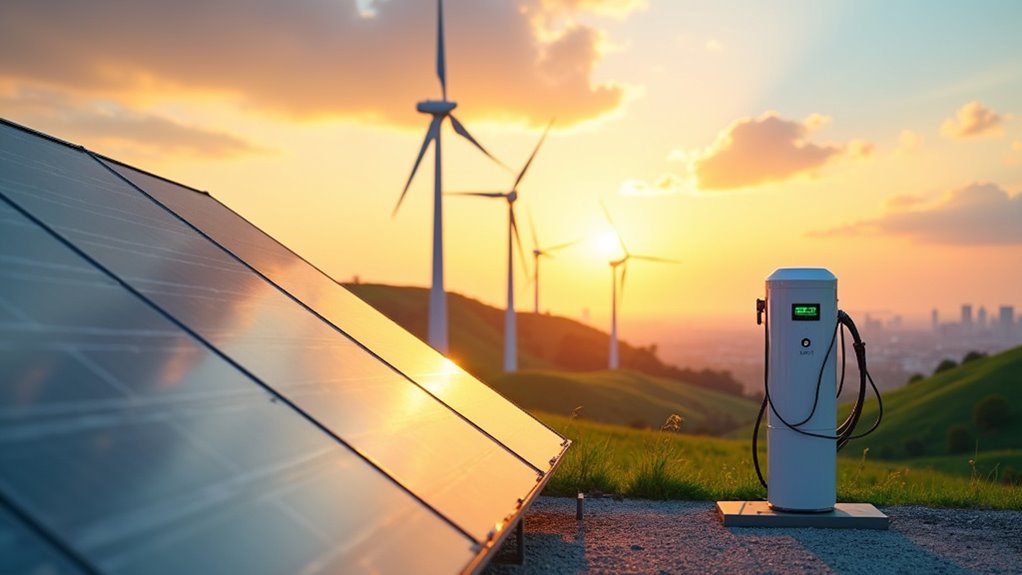
Innovation stands at the forefront of humanity’s response to environmental challenges, and clean technology represents one of the most promising paths forward. Clean tech encompasses a diverse range of technologies and solutions designed to reduce negative environmental impacts while improving resource sustainability and efficiency across multiple sectors, including energy, water, waste management, agriculture, and transportation. The sector has evolved significantly since the late 1990s emergence of the clean tech movement.
Clean technology leads the fight against environmental challenges, offering innovative solutions that protect our planet while revolutionizing key industries.
The global clean tech market has emerged as a powerful economic force, currently valued at $5.5 trillion and projected to reach an impressive $7.4 trillion by 2030. This remarkable growth isn’t just about profits – it’s transforming the job market, having created 36 million positions across clean energy supply chains in 2023 alone. The sector’s contribution to global GDP growth stands at 10%, demonstrating its increasingly central role in the world economy. The development of green building technologies has become a significant driver of sustainable urban development. Green investments are reaching unprecedented levels, further propelling the clean tech industry forward.
At its core, clean tech aims to address pressing environmental challenges through innovative solutions. These technologies work to reduce pollution and emissions, enhance air and water quality, and maximize the efficient use of natural resources. From solar panels and wind turbines to advanced water purification systems and energy-efficient building technologies, clean tech is revolutionizing how we interact with our environment and utilize resources. The rise of hybrid solar-wind farms reflects innovations in energy efficiency that enhance resilience and integrate renewables more effectively. The growth of decentralized power systems empowers communities to invest in renewable solutions, bridging access gaps in energy-deficient regions.
The impact of clean tech extends far beyond immediate environmental benefits. These technologies are instrumental in promoting sustainable practices, supporting biodiversity, and facilitating the shift to a circular economy. Smart grid technologies, energy storage solutions, and electric vehicles are reshaping our transportation and energy systems, while green building technologies are transforming urban development and construction practices. Government support mechanisms, such as federal tax credits, significantly reduce project costs and enhance investment attractiveness in clean tech.
Despite its promising trajectory, the clean tech sector faces several significant challenges. Scaling these technologies requires substantial investment, and they often compete with well-established fossil fuel industries. However, these challenges are increasingly offset by growing opportunities, as corporations and governments worldwide commit to net-zero goals and consumers demand more sustainable products and services.
The future of clean tech looks particularly bright, driven by advancing technologies and increasing global demand for sustainable solutions. Artificial intelligence and Internet of Things integration are enabling more efficient and sophisticated clean technologies, while rising environmental awareness continues to fuel market growth. This momentum is creating a positive feedback loop, where innovation drives adoption, which in turn spurs further development and investment.
Clean technology represents more than just a collection of innovative solutions – it’s becoming a fundamental driver of economic growth and environmental protection. As the world grapples with climate change and resource scarcity, clean tech offers practical, scalable solutions that benefit both the planet and the economy.
With continued investment, supportive policies, and technological advancement, clean tech is positioned to play a pivotal role in shaping a more sustainable and prosperous future for all.
Frequently Asked Questions
How Much Does It Cost to Switch to Clean Technology?
Switching to clean technology requires massive investment at different scales. Global estimates show developing economies need around $5.8 trillion annually, while the U.S. faces a $4.5 trillion total cost for 100% renewable shift.
However, costs are falling rapidly – solar prices dropped 87% in a decade, while wind power is 43% cheaper.
Despite high upfront expenses, long-term savings and declining technology costs make the shift increasingly viable.
Which Countries Are the Current Leaders in Clean Tech Innovation?
Several nations dominate the clean tech innovation landscape.
Switzerland leads the Global Innovation Index for the 14th year, while Sweden and the US hold strong at 2nd and 3rd positions.
China shows remarkable progress, reaching 11th place as the only middle-income economy in the top 30.
Finland excels in cleantech innovation, ranking 2nd globally, while Denmark leads in knowledge development.
The UK stands out for international collaboration and social legitimation.
What Jobs Are Available in the Clean Tech Industry?
The clean tech industry offers diverse career opportunities across multiple sectors.
Engineers can work on renewable energy systems, battery technology, and smart grid solutions.
Environmental scientists focus on pollution control, waste management, and ecosystem conservation.
Business roles include sustainability consulting, carbon trading, and cleantech investment analysis.
Technical positions involve electric vehicle design, charging infrastructure, and alternative fuel development.
Project managers oversee green construction and system installations.
How Long Does It Take to See Returns on Clean Tech Investments?
Returns on clean tech investments typically take 10-15 years to materialize, with successful companies averaging 11 years to reach IPO.
Hardware-focused projects generally require longer development periods than software solutions.
However, Climate Tech 2.0 is seeing accelerated timelines thanks to improved market readiness, strong policy support, and growing corporate commitments.
Investors can potentially speed up returns by focusing on commercially-ready technologies and sectors with established demand and regulatory incentives.
Can Clean Tech Solutions Work Effectively in Extreme Weather Conditions?
Modern clean tech solutions are specifically engineered to perform in extreme conditions.
Heat pumps maintain efficiency even in sub-zero temperatures, while solar panels with advanced materials continue generating power during intense heat.
Wind turbines equipped with de-icing technology operate reliably in winter storms.
Smart grid systems and microgrids provide essential backup power during severe weather events.
These technologies have proven increasingly resilient as designs evolve to meet climate challenges.


