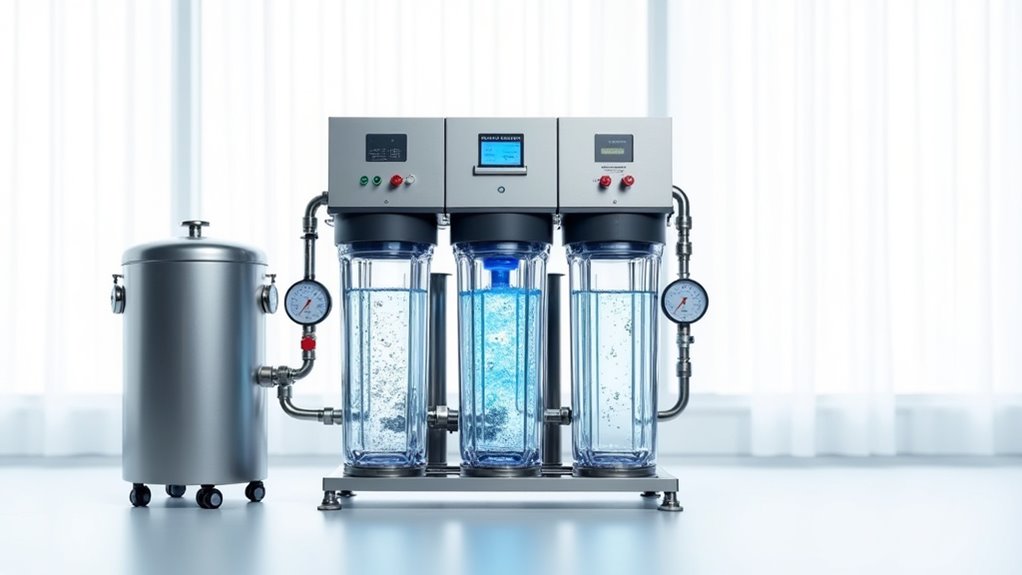
Waste-to-energy technology transforms non-recyclable waste into usable power through various methods, including incineration, gasification, and anaerobic digestion. This innovative approach reduces landfill dependency by up to 87% while generating substantial electricity – potentially 340.32 terawatt-hours by 2050. The industry, valued at $35.1 billion in 2019, creates jobs and revenue through electricity sales and tipping fees. With advancing technologies like improved flue gas cleaning systems and carbon capture, waste-to-energy facilities are evolving to power a more sustainable, circular future.
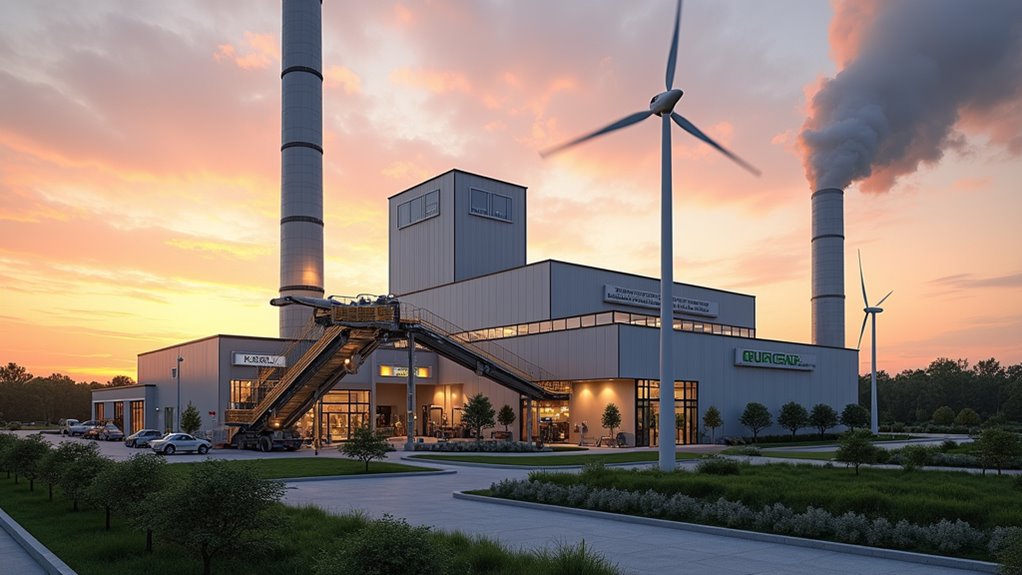
Transforming trash into treasure, waste-to-energy technology stands at the forefront of modern sustainability solutions, offering a powerful approach to tackle both mounting waste management challenges and growing energy demands. With over 1,700 thermal facilities worldwide, this innovative approach converts non-recyclable waste into usable forms of energy while reducing landfill dependency by up to 87%. These facilities, mainly located in developed nations, serve as essential components in the broader waste management ecosystem. The technology could generate up to 340.32 terawatt-hours of electricity by 2050. Additionally, businesses can adopt sustainable practices without compromising productivity or profits. Sustainable shopping habits can also contribute to reducing waste, complementing waste-to-energy efforts.
The technology employs several sophisticated methods to harness energy from waste. Incineration, the most widespread approach, burns waste at temperatures between 750-1100°C to generate steam and electricity. More advanced processes like gasification and pyrolysis break down waste through controlled heating, producing synthetic gas and liquid fuels. Meanwhile, anaerobic digestion offers a biological solution for organic waste, creating biogas and nutrient-rich digestate. For particularly challenging materials, plasma arc gasification utilizes extreme temperatures of up to 9600°C to safely process hazardous waste. The process of gasification takes place in a controlled environment with limited oxygen supply to produce synthetic gas. Waste-to-energy technology not only aids in waste management but also reduces emissions significantly, supporting climate mitigation efforts.
Beyond energy generation, these facilities deliver considerable environmental benefits. They greatly reduce greenhouse gas emissions, especially methane from landfills, while offsetting fossil fuel consumption in electricity production. Modern waste-to-energy plants operate under strict emission controls, consistently achieving lower pollution levels than permitted standards. Additionally, these facilities recover valuable metals and materials that might otherwise be lost to landfills. A crucial aspect of waste-to-energy is its ability to minimize landfill use, which significantly contributes to reducing environmental impact.
Modern waste-to-energy facilities reduce emissions, recover valuable materials, and help eliminate landfill waste while generating clean electricity.
The economic implications are equally compelling. The waste-to-energy market, valued at $35.1 billion in 2019, is projected to reach $50.1 billion by 2027. These facilities generate revenue through electricity sales and tipping fees while creating employment opportunities in construction, operation, and maintenance. However, the technology faces challenges, including high initial investment costs and occasional public resistance due to the NIMBY effect.
Technological advancement continues to enhance the industry’s potential. Modern facilities incorporate sophisticated flue gas cleaning systems and are increasingly integrating carbon capture technologies. Emerging innovations like supercritical water gasification promise even greater efficiency in energy recovery, while improved waste sorting capabilities maximize resource recovery.
Looking ahead, waste-to-energy technology is poised to play an increasingly important role in the circular economy. As urbanization accelerates, particularly in developing nations, these facilities offer a practical solution to mounting waste management challenges while contributing to energy security.
The success of this technology ultimately depends on supportive policies, public education, and continued innovation. By bridging the gap between waste management and energy production, waste-to-energy technology represents a significant step toward a more sustainable and resource-efficient future.
Frequently Asked Questions
How Much Does It Cost to Build a Waste-To-Energy Facility?
Building a waste-to-energy facility requires substantial investment, typically ranging from $30-$500 million depending on scale.
Smaller facilities (40,000 tons/year) cost around $41 million, while larger ones (250,000 tons/year) can reach $169 million.
Costs vary based on location – developed countries spend $600-$1000 per ton of capacity, while developing nations spend $250-$500.
Key expenses include equipment, emission controls, site development, and grid connections.
What Happens to the Toxic Ash Produced During Waste Incineration?
Incineration produces two types of toxic ash: bottom ash (90%) and more hazardous fly ash (10%).
This residue contains dioxins, heavy metals, and other harmful compounds. The ash must be carefully managed in special hazardous waste landfills to prevent environmental contamination.
When improperly handled, toxins can leach into soil and groundwater or become airborne. Some facilities attempt “recycling” schemes, but this risks spreading contamination.
Proper disposal remains a significant challenge.
Can Waste-To-Energy Plants Handle All Types of Municipal Waste?
Waste-to-energy plants can process most, but not all, types of municipal waste. While they effectively handle paper, yard waste, and certain plastics, some materials require special treatment.
Hazardous waste, certain metals, and large bulky items must be removed before incineration. Modern facilities use advanced sorting systems to separate unsuitable materials.
The plant’s efficiency depends heavily on proper waste segregation and the specific composition of incoming materials.
How Do Waste-To-Energy Emissions Compare to Traditional Landfill Emissions?
Waste-to-energy facilities demonstrate markedly lower greenhouse gas emissions compared to traditional landfills.
While landfills are the third-largest source of human-caused methane in the U.S., contributing 14.3% of emissions, WtE reduces GHG emissions by roughly 1 ton per ton of waste processed.
Data from EU27+UK shows landfills produced 99,425 kt CO2eq emissions in 2018, while WtE facilities generated 95,628 kt CO2, with the added benefit of preventing long-term methane releases.
What Is the Average Lifespan of a Waste-To-Energy Processing Facility?
Waste-to-energy facilities typically operate for 20-30 years before reaching end-of-life.
While some European plants have pushed past 40 years, most U.S. facilities close around age 25 due to rising maintenance costs and outdated technology.
Regular upgrades to pollution controls and processing equipment can extend lifespans, but revenue challenges and stricter environmental regulations often lead to earlier closures.
About 75% of U.S. incinerators are already past their 25th birthday.