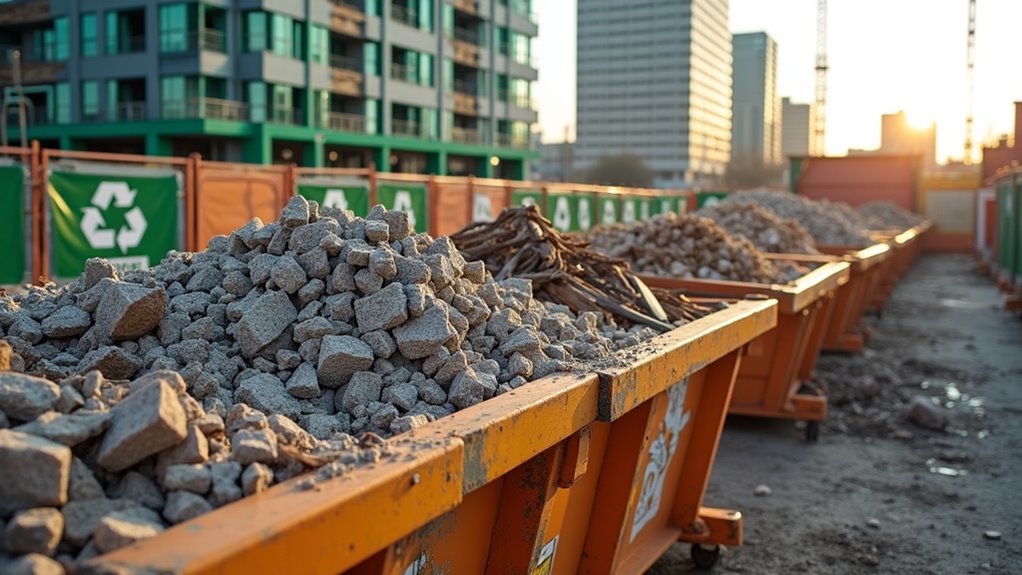
Modern industrial facilities are adopting integrated waste solutions that slash both pollution and costs. Source reduction strategies like upgraded equipment and employee training minimize waste generation upfront. Circular economy practices emphasize reuse and recycling, while advanced treatment technologies convert waste into valuable products. Energy recovery innovations, including pyrolysis and landfill gas capture, transform trash into power. These solutions deliver environmental and economic benefits that pioneering companies are already leveraging to gain competitive advantages.
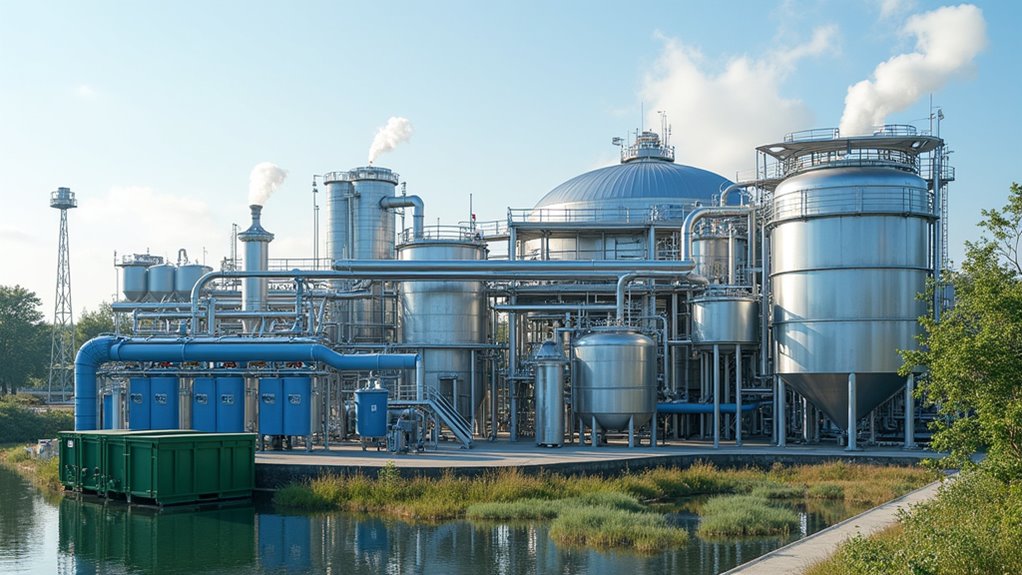
As industries face mounting pressure to reduce their environmental footprint, innovative waste management solutions have emerged as essential strategies for sustainable manufacturing. Forward-thinking companies are implementing extensive approaches that start with source reduction – the most effective way to minimize waste before it’s even generated. The implementation of industrial composting techniques helps transform disposal costs into profitable opportunities. By upgrading equipment, training employees, and implementing rigorous quality controls, manufacturers can notably reduce scrap and inefficiencies at the point of production.
Beyond prevention, progressive facilities are embracing circular economy principles through innovative reuse and recycling programs. Simple yet effective measures like switching to reusable towels, implementing absorbent recovery systems, and laundering PPE have shown impressive results in reducing waste volumes. Some companies have even found creative ways to repurpose materials through rummage sales, turning potential waste into valuable resources for other businesses. Setting up designated recycling bins and dumpsters has become a fundamental first step for effective material segregation. The use of IoT-enabled trash bins allows real-time monitoring of waste levels, optimizing collection routes and reducing emissions. Companies also need to comply with regulatory guidelines to ensure proper handling and disposal of hazardous waste, safeguarding both the environment and worker safety.
When waste cannot be eliminated or recycled, advanced treatment technologies offer solutions that minimize environmental impact. Physical, chemical, and biological treatment methods transform waste into less harmful forms, while anaerobic digestion and industrial composting convert organic waste into useful products. These processes not only reduce pollution but often generate valuable byproducts that can offset treatment costs. Extended producer responsibility is an effective policy that ensures manufacturers are accountable for the entire lifecycle of their products, further promoting sustainable waste practices. Incineration and gasification are waste-to-energy technologies that convert trash into usable power, highlighting another innovative approach to handling waste.
Energy recovery represents another frontier in waste management, with technologies like pyrolysis and gasification leading the way. These processes convert waste materials into valuable energy sources, including bio-oil, syngas, and electricity. Landfill gas capture systems are increasingly common, turning methane emissions into power generation opportunities. The integration of artificial intelligence and robotics has revolutionized waste sorting and processing, achieving unprecedented levels of accuracy and efficiency.
Regulatory compliance remains an essential aspect of industrial waste management. Companies must conduct regular waste characterization, maintain proper documentation, and stay current with evolving environmental regulations. This attention to compliance not only prevents costly violations but also drives continuous improvement in waste reduction strategies.
The economic benefits of extensive waste management are compelling. Companies implementing these solutions typically see notable reductions in disposal costs, while generating new revenue streams through recycled material sales. Energy recovery initiatives can substantially lower utility expenses, while sustainable practices enhance brand reputation and customer loyalty.
Modern waste management solutions demonstrate that environmental responsibility and economic success are not mutually exclusive. Through a combination of source reduction, recycling, advanced treatment technologies, and energy recovery, industries are finding ways to simultaneously cut pollution and costs. The key to success lies in viewing waste not as an inevitable byproduct, but as an opportunity for innovation and improvement.
As technology continues to advance and regulations become more stringent, companies that embrace these solutions will be better positioned for long-term success in an increasingly sustainability-focused marketplace.
Frequently Asked Questions
How Do Small Businesses Afford Expensive Industrial Waste Treatment Systems?
Small businesses can effectively manage industrial waste treatment costs through several strategic approaches.
They can join shared treatment facilities in industrial parks, splitting expenses with other companies.
Equipment leasing and pay-per-use services eliminate large upfront investments.
Government incentives and low-interest environmental loans provide financial relief.
Additionally, implementing waste reduction at the source and exploring modern compact treatment technologies helps minimize overall treatment costs.
What Penalties Do Companies Face for Improper Industrial Waste Disposal?
Companies face severe penalties for improper waste disposal.
Financial consequences include daily fines up to $81,540 per RCRA violation and $109,024 for Clean Air Act infractions.
Criminal penalties are harsh – up to 15 years imprisonment for knowing endangerment.
Beyond fines, businesses may face costly cleanup orders, permit revocations, and damaged reputations.
In 2014 alone, vessel pollution cases resulted in over $11 million in fines and mandatory restitution payments.
Can Industrial Waste Be Converted Into Renewable Energy Sources?
Industrial waste can be effectively converted into renewable energy through several proven methods.
Incineration burns waste to generate electricity, while gasification transforms it into synthetic fuel gas.
Anaerobic digestion breaks down organic waste into biogas, and pyrolysis produces biofuels and biochar.
These technologies not only create sustainable energy but also reduce landfill usage and greenhouse emissions.
Many facilities worldwide already successfully implement these waste-to-energy solutions.
Which Industries Produce the Most Hazardous Waste Globally?
The chemical manufacturing industry leads global hazardous waste production, generating over 22 million tons annually in the U.S. alone.
Following closely is the petroleum and coal products sector, which creates substantial toxic byproducts during refining processes.
The mining industry ranks third, using dangerous chemicals like mercury and cyanide.
The healthcare sector is the fourth-largest producer, generating chemical, biological, and radioactive wastes thru various medical procedures.
How Long Does It Take to Implement New Waste Management Solutions?
Implementation timelines for new waste management solutions typically range from 1 month to 5 years, depending on project scope and complexity.
Small-scale changes like adding recycling bins take 1-3 months, while major infrastructure upgrades require 6-12+ months.
Organization size, current practices, and available resources greatly impact schedules.
Policy changes need 1-2 years, and cultural shifts in waste behavior take 3-5 years to fully embed.
Clear goals and executive support can help accelerate these timeframes.