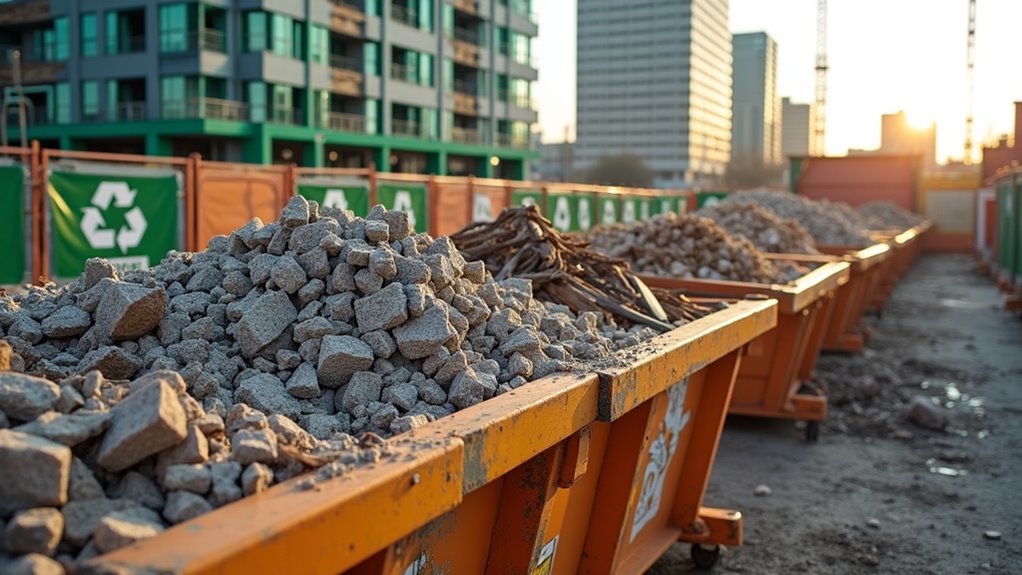

Construction waste recycling transforms debris from building projects into valuable resources, with innovative technologies like BIM and RFID tracking maximizing material recovery. Modern facilities can achieve recycling rates above 90% by converting concrete into aggregate, metals into new products, and wood into mulch. This approach reduces landfill usage while creating jobs in recycling industries and earning LEED certification points. Smart waste management practices reveal both environmental and economic benefits that reshape construction’s future.
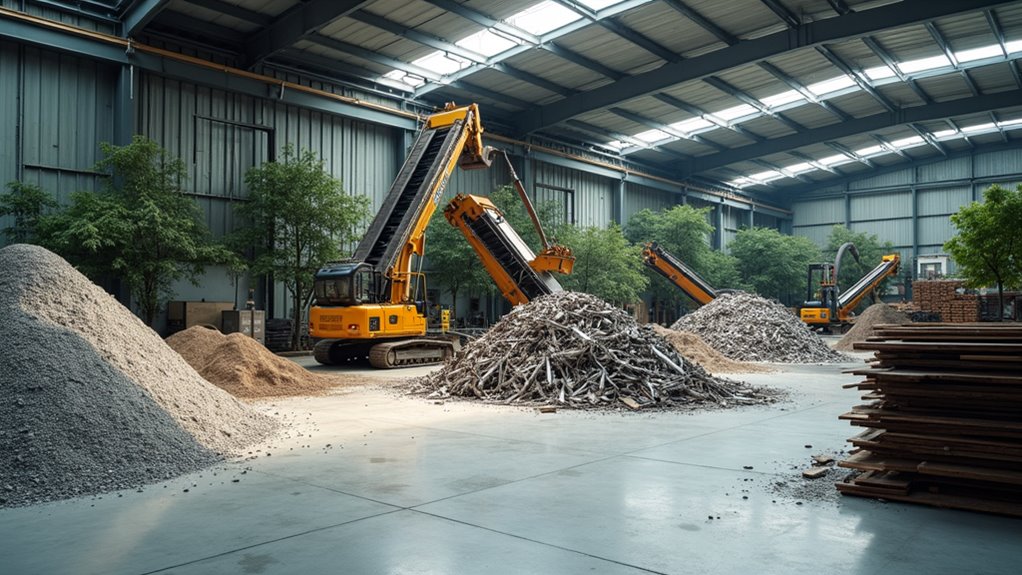
The massive volume of construction and demolition waste generated globally presents both an environmental challenge and an economic opportunity. With over 600 million tons of debris produced annually in the United States alone, the construction industry faces mounting pressure to adopt more sustainable waste management practices. The traditional approach of sending materials to landfills is becoming increasingly unsustainable, both environmentally and financially. Value engineering principles help optimize material selection and minimize waste generation during the design phase.
Construction waste recycling has emerged as a viable solution, offering multiple benefits across the value chain. Materials such as concrete, metals, wood, and drywall can be diverted from landfills and transformed into valuable resources. Concrete can be crushed and repurposed as aggregate, while metals are melted down for new applications. Wood waste finds new life as mulch or engineered wood products, demonstrating the versatility of recycling programs. Projects that achieve 75% waste recycling can earn two LEED points, incentivizing sustainable practices. Similarly, composting agricultural waste demonstrates how organic materials can be transformed into valuable resources, highlighting the potential for cross-industry applications.
The economic advantages of construction waste recycling are compelling. Companies can notably reduce disposal fees while potentially generating revenue from recyclable materials. The practice also creates jobs in the recycling and reprocessing industries, contributing to local economic development. Additionally, organizations that implement robust recycling programs often enhance their sustainability profiles, gaining competitive advantages in an increasingly environmentally conscious market. Effective waste management policies, such as extended producer responsibility, can further support these initiatives by ensuring manufacturers are accountable for the end-of-life disposal of their products. Cities play a critical role in community cooperation for implementing effective waste recycling initiatives, which helps address urban trash problems.
Modern technologies are revolutionizing the way construction waste is managed. Building Information Modeling (BIM) helps optimize material usage from the design phase, while mobile apps and RFID tagging improve waste tracking and sorting efficiency. Artificial intelligence and machine learning are being deployed to predict waste volumes and enhance recycling processes, making the entire system more efficient and cost-effective. These technologies can also be integrated with waste-to-energy solutions to further reduce environmental impact by converting non-recyclable materials into usable power.
Some regions are already demonstrating remarkable success in construction waste recycling. The United Kingdom, for instance, achieves nearly 90% recycling rates for construction and demolition waste. The European Union has set ambitious targets, aiming for 70% recycling rates for non-hazardous construction waste. Some innovative projects have even achieved impressive waste diversion rates exceeding 95%.
However, challenges remain in implementing effective recycling programs. Limited access to recycling facilities in certain areas, material contamination issues, and the time required for on-site sorting can pose notable obstacles. Inconsistent regulations and varying market demand for recycled materials across regions also complicate the adoption of recycling practices.
Best practices for successful construction waste recycling include designing buildings with eventual deconstruction in mind, utilizing prefabricated components, and implementing just-in-time delivery systems to minimize excess materials. Thorough waste management plans and proper worker training are essential elements for achieving high recycling rates.
As the construction industry continues to evolve, these practices will become increasingly important for creating more sustainable and resource-efficient building projects.
Frequently Asked Questions
How Much Can Construction Companies Save by Implementing Waste Recycling Programs?
Construction companies can achieve substantial cost savings through waste recycling programs.
The average savings on waste disposal is 30-50% compared to traditional methods, with $600 saved per truckload reduction.
Companies also benefit from a 25% reduction in material costs by using recycled materials.
Additional savings come from reduced landfill fees, transport expenses, and new revenue from selling waste materials to other industries.
Which Construction Materials Have the Highest Recycling Market Value?
Metals consistently command the highest recycling market value in construction waste.
Aluminum cans lead the pack as the most valuable recyclable material, while copper’s stellar 80% recycling rate stems from its premium resale value.
Steel, with its 66% recycling rate in Canada, remains a steady earner.
These metals maintain their worth due to their ability to be endlessly recycled without quality loss and strong demand from manufacturers across industries.
What Certifications Are Required for Construction Waste Recycling Facilities?
Construction waste recycling facilities require several key certifications.
RCI certification validates accurate reporting through third-party verification.
LEED certification demands 50-75% waste diversion and detailed management plans.
TRUE certification needs 90% diversion and evaluates 15 categories.
Local permits from city/county authorities are essential, along with compliance to CEQA standards.
Additional permits may be needed from air quality and water quality agencies, depending on facility operations.
How Does Weather Affect On-Site Construction Waste Sorting and Recycling?
Weather greatly impacts construction waste sorting efficiency and safety.
Rain makes materials heavier and creates slippery surfaces, while extreme heat requires more frequent worker breaks and can deform certain recyclables.
Strong winds scatter lightweight materials, complicating the sorting process.
Snow and ice restrict access to collection areas and damage equipment.
Sites typically implement covered storage areas, flexible schedules, and weather monitoring systems to maintain operations during adverse conditions.
What Insurance Considerations Apply When Recycling Hazardous Construction Materials?
Insurance for hazardous material recycling requires specialized coverage due to complex risks.
Companies need extensive environmental liability policies that address contamination, spills, and industrial pollution. Policy ratings depend on waste volume and type handled.
Key considerations include implementing property conservation programs, maintaining strict safety protocols, and securing adequate fire protection.
The limited availability of insurers and rising premiums make thorough risk mitigation strategies essential for maintaining coverage.


