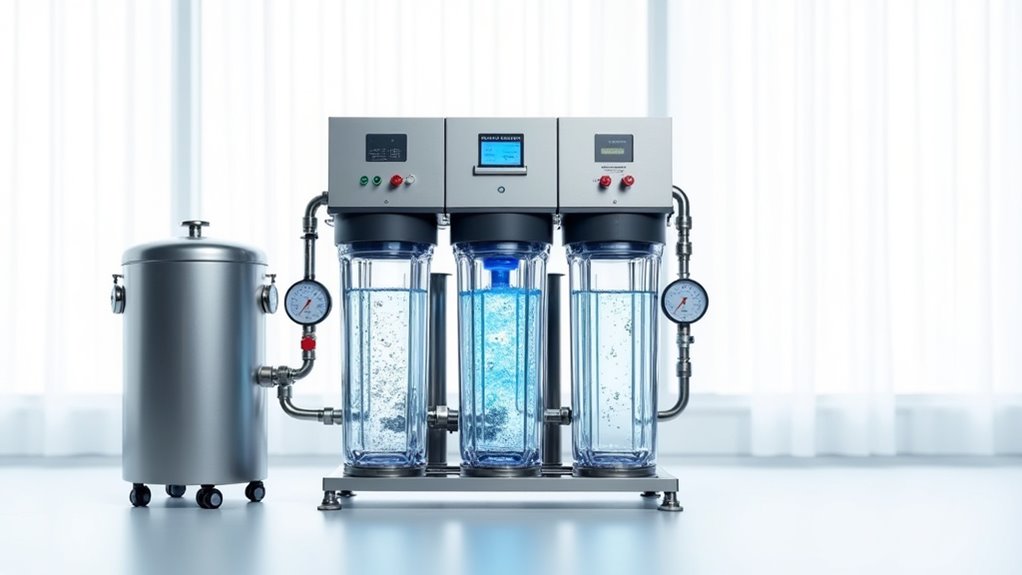

Modern water purification combines several powerful technologies to guarantee safe drinking water access. Reverse osmosis systems remove up to 99% of contaminants through semi-permeable membranes, while UV disinfection neutralizes harmful pathogens. Activated carbon filtration improves taste and eliminates chemicals, working alongside advanced membrane technologies and oxidation processes. This multi-barrier approach transforms contaminated water into clean, potable water – and the innovations keep flowing.
As global water scarcity intensifies, modern purification technologies offer increasingly sophisticated solutions for guaranteeing safe, clean drinking water. At the forefront of these innovations is reverse osmosis (RO), a powerful filtration method that removes up to 99% of contaminants using semi-permeable membranes. While RO excels at desalination and producing high-quality drinking water, its relatively slow flow rate has led engineers to explore complementary technologies. Regular maintenance is crucial for optimal RO performance, particularly regarding membrane replacement schedules. The importance of water conservation cannot be overstated, as it is a global issue tied to climate change, agriculture, and survival, making the role of advanced purification technologies even more critical.
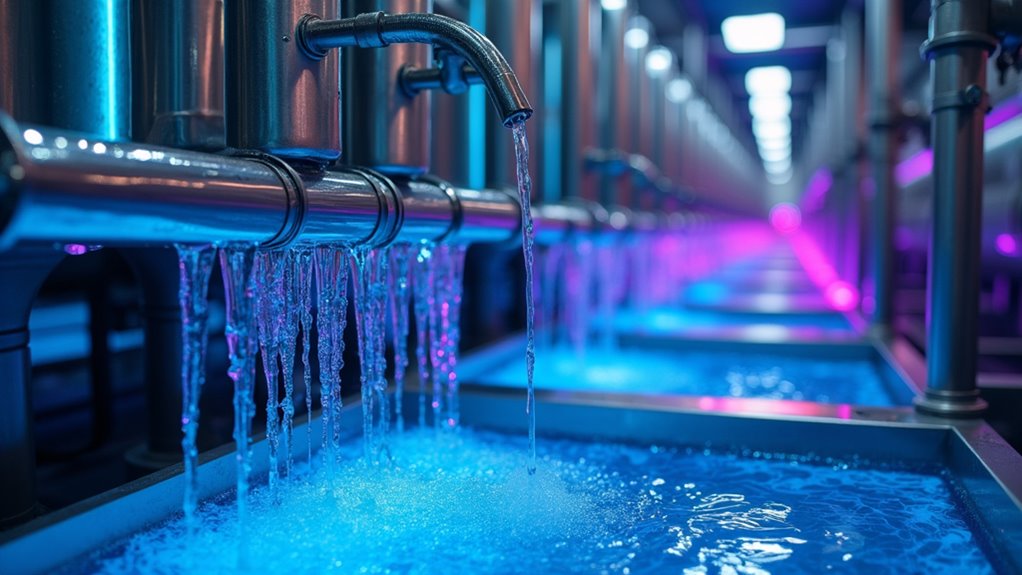
Ultraviolet disinfection has emerged as a vital weapon against waterborne pathogens. By exposing water to UV light, this method effectively neutralizes bacteria, viruses, and other harmful microorganisms. Though UV treatment cannot remove chemical contaminants on its own, it works synergistically with other purification methods to provide thorough water treatment. When combined with hydrogen peroxide treatment, UV light creates an exceptionally effective disinfection process. Warmer water temperatures can exacerbate waterborne diseases, making advanced purification methods even more critical in combating these health threats. Investments in sustainable technologies have surged, enhancing the efficiency and accessibility of water purification systems.
UV disinfection stands as a crucial defense, using light to neutralize dangerous waterborne pathogens while complementing other water treatment methods.
Activated carbon filtration addresses another important aspect of water quality – taste and odor. Through adsorption, contaminants become trapped within the porous surface of carbon media, effectively removing organic compounds, pesticides, and chlorine. This technology has become indispensable in both household and industrial applications, despite requiring regular maintenance and carbon replacement. As climate change leads to disrupted food/water security, ensuring effective purification systems becomes increasingly vital.
The evolution of membrane filtration technologies has revolutionized water treatment. From microfiltration to nanofiltration, these systems offer varying degrees of filtration precision, operating at lower pressures than RO while providing selective contaminant removal. This versatility makes membrane filtration particularly valuable in custom water treatment solutions.
Ozonation represents another powerful purification approach, using ozone gas to destroy pathogens and break down organic contaminants. Unlike chemical treatments, ozonation leaves no harmful residuals in treated water, though it does require specialized equipment for on-site ozone generation.
Ion exchange technology has proven extremely effective for specific water quality challenges, particularly water softening and nitrate removal. By exchanging unwanted ions with more desirable ones using resin beads, this method can greatly improve water quality, though it requires periodic regeneration of the resin media.
Perhaps most promising are Advanced Oxidation Processes (AOP), which combine UV light with oxidants like hydrogen peroxide to generate highly reactive hydroxyl radicals. This cutting-edge technology effectively addresses emerging contaminants such as pharmaceuticals and personal care products that traditional methods struggle to remove. AOPs often serve as a final polishing step in sophisticated treatment systems, representing the future of water purification.
These technologies, whether used individually or in combination, demonstrate humanity’s growing capability to guarantee clean water access. While each method has its strengths and limitations, the continuous advancement of water purification technology offers hope for addressing global water challenges.
As these systems become more efficient and accessible, they pave the way for a future where clean water isn’t a privilege but a universal right.
Frequently Asked Questions
How Much Does It Cost to Install a Home Water Purification System?
The cost of installing a home water purification system varies considerably based on the type chosen.
Whole-house systems typically range from $1,000 to $4,000 installed, while simpler options like under-sink filters cost $200-$600.
Faucet-mounted and pitcher filters are the most affordable at $20-$100.
Installation costs depend on existing plumbing, local labor rates, and permit requirements.
Annual maintenance adds $20-$300 for filter replacements.
Can Water Purification Systems Remove Pharmaceutical Contaminants From Drinking Water?
Modern water purification systems can effectively remove pharmaceutical contaminants from drinking water.
Advanced technologies like reverse osmosis and granular activated carbon filtration remove over 99% of active pharmaceutical ingredients. Ozonation and UV treatment combined with hydrogen peroxide also show high removal rates.
However, conventional treatment methods alone aren’t sufficient – it’s the combination of multiple purification technologies that provides the most thorough protection against pharmaceutical contamination.
What Is the Environmental Impact of Water Purification Waste Products?
Water purification waste products have several environmental impacts.
Treatment sludge contains hazardous substances and pathogens that can contaminate soil and water when improperly disposed.
Disinfection byproducts form when chlorine reacts with organic matter, potentially disrupting aquatic ecosystems and increasing health risks.
Chemical residues from treatment processes harm marine life, while energy-intensive operations contribute to greenhouse gas emissions.
However, technologies like anaerobic digestion and UV treatment help minimize these impacts.
How Often Should Water Purification Filters Be Replaced?
Filter replacement intervals vary based on several key factors.
Sediment pre-filters typically need replacement every 3-6 months, while carbon filters last 6-12 months.
RO membranes can function effectively for 2-3 years.
UV light filters require annual lamp changes.
The specific timing depends on water quality, usage volume, and filter type.
Watch for decreased water pressure, unusual tastes, or visible particles – these indicate it’s time for replacement.
Are Portable Water Purification Devices as Effective as Permanent Installation Systems?
Both portable and permanent water purification systems can be highly effective, but they serve different needs.
Permanent systems typically offer more extensive filtration and higher flow rates, protecting all household water sources.
While portable units may have slightly lower capabilities, they still remove 99.9% of common contaminants and offer flexibility for travel.
The choice depends on specific needs – permanent systems excel for whole-house coverage, while portable units provide reliable on-the-go solutions.