

Ocean plastic pollution dumps 33 billion pounds of waste into marine environments yearly, threatening over 1 million marine animals and contaminating the food chain. While 80% of ocean pollution is plastic and only 9% gets recycled globally, solutions exist. Communities worldwide are banning single-use plastics, developing innovative cleanup technologies, and improving waste management. Individual actions like reducing plastic consumption and supporting anti-plastic legislation can make measurable impacts. The path forward combines personal changes with systemic transformation.
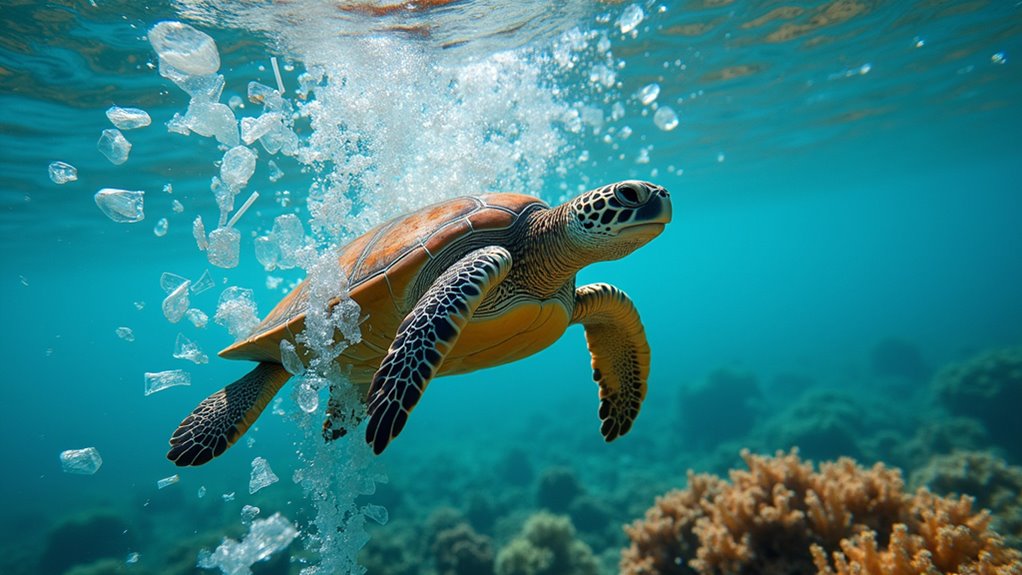
Plastic waste continues to choke the world’s oceans at an alarming rate, with a staggering 75-199 million tons currently polluting marine environments. Each year, an additional 33 billion pounds of plastic enters our oceans, creating a crisis that threatens marine ecosystems, human health, and the planet’s delicate balance. About 70 to 80 percent of this pollution comes from land-based sources. By 2050, experts predict there will be more plastic than fish in our seas, a sobering projection that demands immediate action.
The scale of this crisis is evident in the numbers: 80% of marine pollution consists of plastic waste, with half of all plastic produced globally being single-use items that are discarded after just one use. Common items like cigarette filters constitute 32% of all ocean waste. Microplastics, tiny particles that break down from larger pieces, have become particularly problematic. Every time we do laundry, more than 700,000 synthetic microfibers are released into waterways, eventually making their way to the ocean. Embrace change by considering alternative materials and reducing reliance on plastics to curtail this growing problem. Robotic skimmers and other ocean clean-up technologies are being developed as innovative solutions to help tackle the massive amounts of plastic waste already in the ocean. Emerging technologies are also being developed to address industrial carbon footprints, showing the potential for innovation to tackle environmental challenges on multiple fronts.
The impact on marine life is devastating. Over 1 million marine animals die annually due to plastic pollution, with 56% of all marine species having ingested plastic. The problem extends beyond visible debris – 92% of microplastics have been found in 60% of consumed fish, creating a concerning cycle that ultimately affects human health. These particles have now been detected in human blood, lungs, and placentas, linking plastic pollution to serious health conditions including heart disease and neurodegenerative disorders. Breeding programs and habitat corridors play a crucial role in giving endangered marine species a fighting chance against the threats posed by plastic pollution and other human activities.
Five countries contribute notably to this crisis: the Philippines leads with 36% of global plastic input to oceans, followed by India, Malaysia, China, and Indonesia. However, the responsibility extends globally. The United States alone produces 42 million metric tons of plastic waste annually, with only 9% of plastic waste worldwide being recycled. A shocking 50% ends up in landfills, while 20% is mismanaged and at risk of entering the environment.
Solutions exist, but they require collective action and systemic change. Improving waste management systems, particularly in developing countries, is essential. Communities worldwide are implementing bans on single-use plastics, while innovative recycling technologies offer promising alternatives.
Individual actions matter too – reducing personal plastic consumption, supporting legislation that restricts plastic production, and participating in local cleanup efforts can make a considerable difference.
The ocean’s health is inextricably linked to our own survival. While the current situation is dire, there’s still time to reverse course. By combining policy changes, technological innovation, and personal responsibility, we can reduce the flow of plastic into our oceans. The key lies in treating this crisis not as an insurmountable challenge, but as an opportunity to reimagine our relationship with plastic and protect our blue planet for future generations.
Frequently Asked Questions
How Long Does It Take for Plastic to Completely Decompose in the Ocean?
Plastic never fully decomposes in the ocean – it just breaks down into increasingly smaller pieces over hundreds of years.
Different types take varying times to fragment: plastic bags need 10-20 years, straws about 200 years, and fishing lines up to 600 years.
Eventually, all become harmful microplastics (particles under 5mm) that persist indefinetly in marine environments, absorbing and releasing toxins throughout their lifecycle.
Which Marine Species Are Most Affected by Ocean Plastic Pollution?
Based on global research data, marine mammals, sea turtles, and seabirds face the most severe impacts from ocean plastic pollution.
A staggering 81 out of 123 marine mammal species encounter plastic through ingestion or entanglement, while all seven sea turtle species are affected.
Seabirds are particularly vulnerable, with 60% of species having consumed plastic. By 2050, scientists predict that 99% of all seabird species will have ingested plastic debris.
Can Microplastics in Seafood Affect Human Health?
Research shows that microplastics in seafood pose concerning health risks to humans. When consumed, these tiny particles can accumulate in organs like the liver, brain, and blood vessels.
They’re linked to serious health issues including DNA damage, hormone disruption, and increased risk of cardiovascular problems. The average adult ingests over 78,000 microplastic particles annually through seafood consumption alone.
However, choosing whole fish over processed products and reducing plastic use can help minimize exposure.
Which Countries Contribute the Most to Ocean Plastic Pollution?
Five Asian nations dominate global ocean plastic pollution. The Philippines leads with 36.4% of total contributions, followed by India at 12.9%.
China ranks third, responsible for 7% of marine plastic waste, while Indonesia and Malaysia contribute 5.6% and 3.6% respectively.
Together, these countries account for over 65% of ocean plastic pollution worldwide.
Poor waste management infrastructure and rapid urbanization in these developing nations are key drivers behind these high numbers.
How Deep in the Ocean Has Plastic Pollution Been Found?
Plastic pollution has been discovered at staggering depths in Earth’s oceans. The deepest recorded finding was in the Mariana Trench at 10.8 kilometers (35,839 feet) below sea level, where a plastic bag was found in 1998.
Scientists have detected plastic debris in nearly all of the world’s deepest ocean trenches, including the Philippine Trench (10,540 meters) and Cayman Trench (7,686 meters).
Deep-sea currents and marine snow transport plastics to these extreme depths.


