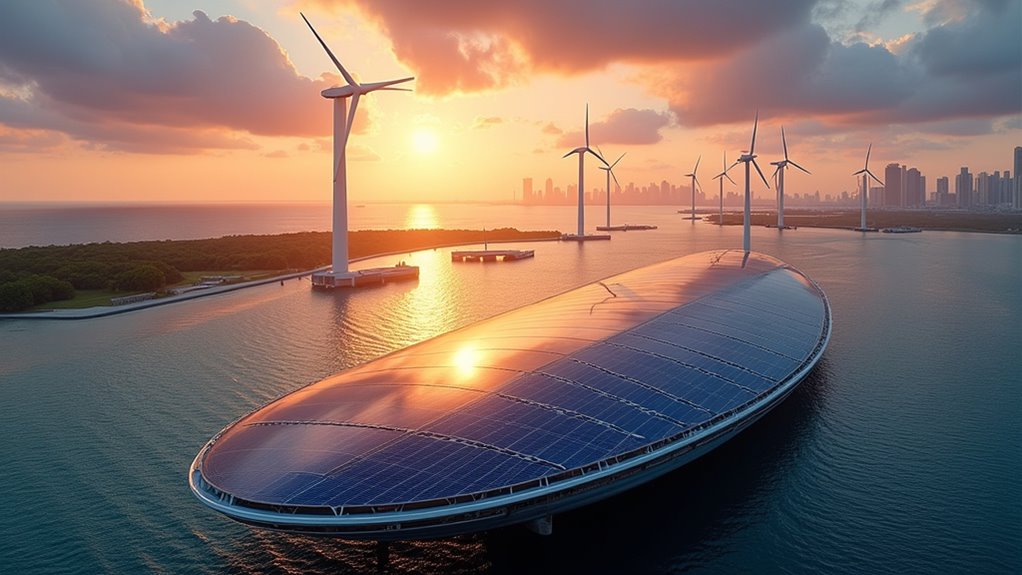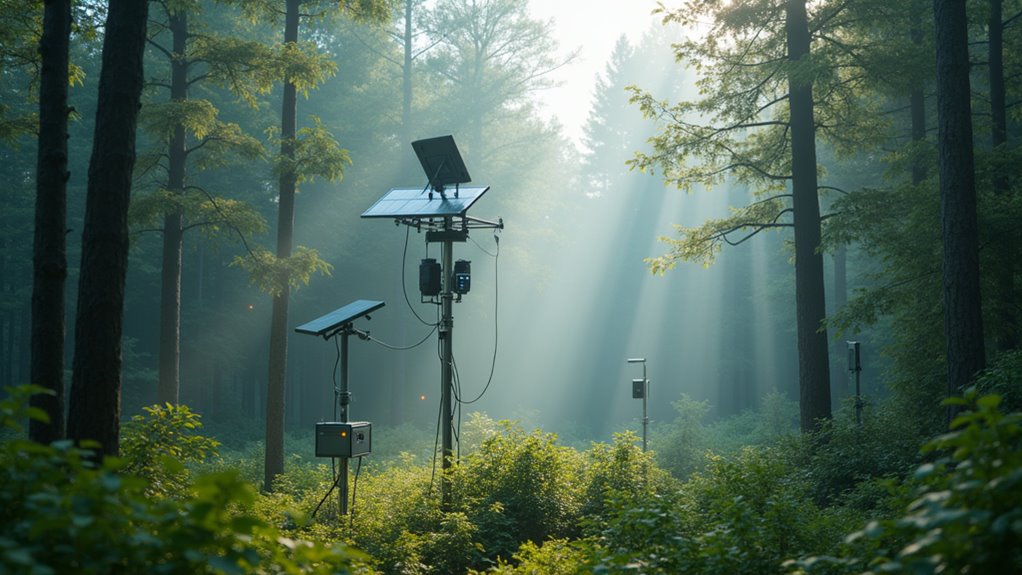

Green tech startups are securing massive funding while disrupting traditional industries through sustainable innovation. Companies like Watershed and GrowUp Farms lead the charge with AI-powered solutions and sustainable agriculture practices. The sector attracted $51 billion in global investments during 2023, with the US, China, and EU emerging as key players. From carbon management to clean transportation, these ventures are transforming how businesses approach environmental challenges. The growing $9.5 trillion market potential signals an exciting frontier for sustainable enterprise.

While global venture capital markets faced headwinds in 2023, green technology startups demonstrated remarkable resilience, securing $51 billion in funding despite broader economic uncertainties. The United States maintained its leadership position with $14.6 billion allocated to innovative startups, followed by China with $11.7 billion and the European Union with $10.8 billion. This sustained investment reflects growing confidence in the sector’s potential to address pressing environmental challenges while generating substantial returns. The emergence of clean tech solutions is reshaping industries by introducing sustainable practices across sectors like energy and transportation. Many regions could achieve 100% renewable power by 2050, demonstrating the transformative potential of these technologies. Additionally, sustainable transportation innovations such as electric vehicle sales and urban public transit expansion are crucial in reducing emissions, with the potential to avoid 6.6 gigatons of emissions by 2050.
Several standout companies are revolutionizing the green tech landscape. Watershed, a U.S.-based startup, has secured an impressive $239 million in funding to help corporations manage their carbon footprints through innovative software solutions. In the United Kingdom, GrowUp Farms is transforming agriculture with its vertical farming technology, backed by $184 million in investment. The surge in startups mirrors the explosive growth seen in 2022, with 45,000 climate tech startups emerging across Europe and North America. These success stories highlight the diverse opportunities emerging across different segments of the green tech sector.
Leading green tech innovators Watershed and GrowUp Farms exemplify the sector’s potential, securing major funding for carbon management and sustainable agriculture solutions.
The industry’s growth is being catalyzed by breakthrough technologies. Artificial intelligence is optimizing processes and predicting market trends, while IoT devices enable real-time monitoring of energy consumption and emissions. Blockchain technology is enhancing supply chain transparency, and investment in low-carbon hydrogen energy has doubled to $1.5 billion in 2023. Experienced investors now dominate the dealmaking landscape, bringing valuable expertise to climate tech ventures. Battery storage solutions are also gaining significant traction among investors seeking sustainable energy alternatives. The reduction in fossil fuel reliance through renewable energy technologies further enhances energy security and resilience.
However, green tech startups face substantial challenges. High capital requirements, extended commercialization timelines, and regulatory uncertainties create significant hurdles. Companies must demonstrate both environmental impact and financial viability to attract investment, particularly in hardware-dependent sectors. Despite these obstacles, the global green tech market is projected to reach $9.5 trillion by 2030, driven by growing demand for sustainable solutions.
Successful startups are adopting strategic approaches to overcome these challenges. Many are exploring alternative funding sources, including government grants and impact investors, while forming strategic partnerships to enhance market access and credibility. Companies like Sweep in France, which has raised $99.9 million for its carbon footprint management platform, exemplify how startups can effectively balance innovation with practical business models.
The most promising sectors include renewable energy, clean transportation, and sustainable agriculture. Water conservation, waste management, and carbon capture technologies are also attracting significant attention. Companies like WeaveGrid are leading the charge in electric vehicle charging management, while Pi Green Innovations is tackling air pollution with innovative solutions. These ventures demonstrate how green tech startups are not just developing new technologies but creating entirely new markets and business models.
As the industry matures, investors are becoming more selective, prioritizing companies with strong fundamentals and clear paths to profitability. This shift towards strategic investment suggests a more resilient and sustainable growth trajectory for the sector, as startups focus on building scalable solutions that deliver both environmental and financial returns.
Frequently Asked Questions
How Do Investors Evaluate the Potential Success of Green Tech Startups?
Investors evaluate green tech startups through multiple essential lenses. They analyze financial metrics like revenue growth, burn rate, and customer acquisition costs.
The uniqueness of technology and intellectual property protection is scrutinized alongside market opportunity and traction. Team composition and execution capabilities play a vital role.
Environmental impact potential and alignment with sustainability trends are assessed. Success prediction relies on balancing these factors against industry benchmarks and regulatory landscape.
What Qualifications Do Founders Typically Need to Start a Green Tech Company?
Successful green tech founders typically combine technical expertise with business acumen.
Most have advanced STEM degrees and experience in specific environmental technologies, while many also hold MBAs or equivalent business experience.
Prior startup experience, demonstrated leadership abilities, and a proven track record in sustainability initiatives are vital.
Strong networking skills and the ability to navigate complex regulatory landscapes round out the essential qualifications.
Relevant certifications in sustainability fields provide additional credibility.
How Long Does It Take for Green Tech Startups to Become Profitable?
Most green tech startups take 5-10 years to achieve profitability, though some complex sectors may require 15+ years.
The extended timeline is due to high upfront costs, lengthy development cycles, and gradual market adoption.
Companies can accelerate their path to profitability through modular designs, strategic partnerships, and government incentives.
However, the capital-intensive nature of green technologies and uncertain market dynamics make shorter timelines challenging for most ventures.
Which Countries Offer the Best Incentives for Green Tech Entrepreneurs?
Based on available data, the United States and China lead in green tech incentives.
The U.S. Inflation Reduction Act provides substantial clean energy support, while China invested $680 billion in 2023 alone.
European nations like Sweden offer significant funding, with €7.6 billion invested from 2018-2023.
Emerging markets like Chile and Singapore provide unique advantages – Chile’s Start-Up program offers world-class support, while Singapore enables real-world testing through Ecolabs-COI partnerships.
What Percentage of Green Tech Startups Successfully Secure Series a Funding?
Based on the data, 44% of Danish green-tech startups successfully secure Series A funding (second round), while only 18% reach their third funding round.
These success rates outperform traditional tech ventures, with green-tech startups also securing higher median first-time funding amounts of 17M DKK compared to 15.1M DKK for non-green ventures.
However, challenges like long commercialization timelines and high capital requirements continue to impact Series A success rates globally.