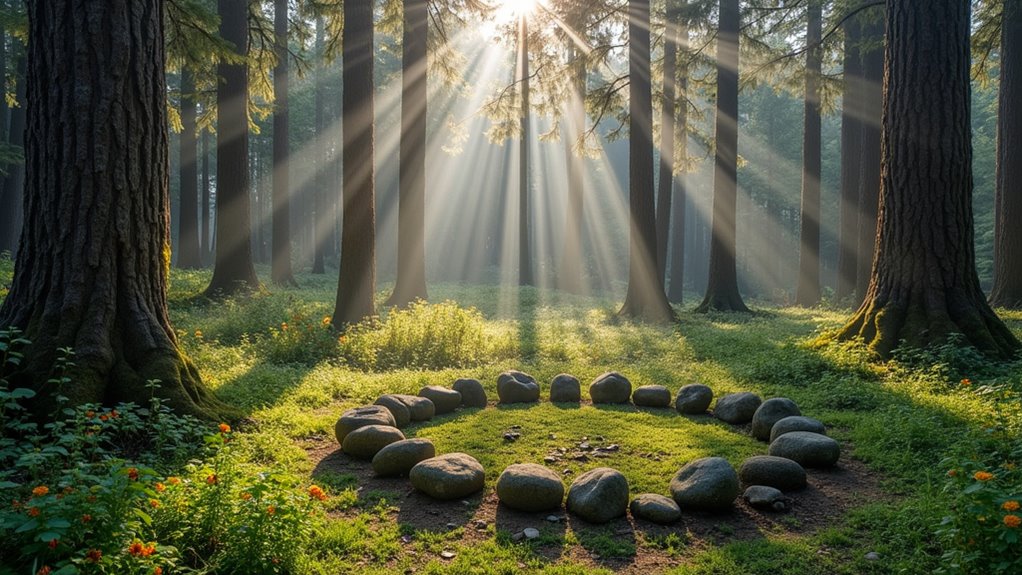

Indigenous environmental worldviews reflect a fundamentally different relationship with nature than Western approaches. These perspectives see humans as inseparable from the natural world, emphasizing sacred connections and reciprocal responsibilities. Traditional Ecological Knowledge, developed over generations, guides sustainable resource management through practices like traditional fire management and rotational farming. Indigenous-managed lands now protect 80% of Earth’s remaining biodiversity, demonstrating the effectiveness of these time-tested stewardship approaches. These ancient wisdom systems hold powerful solutions for modern environmental challanges.

While Western environmental approaches often compartmentalize nature and human society, Indigenous environmental worldviews offer a profoundly different perspective that has sustained communities and ecosystems for millennia. At the core of these worldviews lies a fundamental understanding that humans are inseparable from nature, forming an intricate web of relationships that spans ecological, spiritual, and cultural domains. This holistic approach views environmental stewardship not as a separate endeavor but as an integral part of Indigenous identity and existence.
Traditional Ecological Knowledge (TEK) forms the backbone of Indigenous environmental management, representing a sophisticated system developed through generations of careful observation and interaction with local ecosystems. This knowledge encompasses not just ecological understanding but also spiritual beliefs, cultural practices, and complex human-animal relationships. In the Arctic regions, warming rates double that of global averages, making this knowledge increasingly vital for adaptation.
Unlike Western scientific approaches that often isolate individual components for study, TEK examines the interconnected relationships between all elements of an ecosystem. The concept of kaitiakitanga in Maori culture exemplifies this interconnected approach to environmental guardianship. Reviving Nature through these traditional practices can lead to remarkable transformations in degraded ecosystems. Extreme weather events driven by climate change, such as hurricanes and wildfires, pose additional challenges to ecosystems and underscore the importance of these traditional practices.
Indigenous communities have developed remarkably effective sustainable resource management practices based on this thorough understanding. From the Mayan milpa farming system that maintains biodiversity to traditional fire management techniques that reduce wildfire risks, these practices demonstrate the effectiveness of Indigenous approaches. Efforts such as safeguarding fisheries ensure that marine resources are managed sustainably, contributing to the preservation of marine ecosystems.
It’s significant that Indigenous-managed lands currently harbor 80% of the world’s remaining biodiversity, highlighting the success of these time-tested methods. Climate justice connects human rights and sustainable development with climate action, making Indigenous stewardship vital for equitable solutions.
The spiritual connection to land plays a vital role in Indigenous environmental stewardship. Land is viewed as sacred, with inherent rights and spiritual significance that demand respect and protection. This spiritual framework reinforces environmental protection as both a moral and practical imperative, guided by the principle of reciprocity between humans and nature.
Ceremonies and rituals strengthen these connections while passing down essential ecological knowledge to future generations.
Indigenous environmental governance structures emphasize collective decision-making and intergenerational responsibility, often guided by the seven generations principle – considering how today’s actions will affect descendants seven generations into the future.
These traditional governance systems integrate customary laws that prioritize ecological preservation and utilize adaptive management strategies based on long-term observations of environmental changes.
In recent years, there has been growing recognition of the value of Indigenous environmental worldviews in addressing contemporary environmental challenges. TEK is increasingly being integrated into climate change adaptation strategies and conservation efforts worldwide.
While challenges persist in reconciling Indigenous and Western knowledge systems, successful examples of integration are emerging, demonstrating how these complementary approaches can work together to enhance environmental stewardship.
This convergence offers hope for more effective and holistic approaches to environmental management, combining the best of traditional wisdom with modern scientific understanding.
Frequently Asked Questions
How Do Indigenous Environmental Practices Differ From Modern Conservation Methods?
Indigenous environmental practices differ fundamentally from modern conservation through their holistic, interconnected approach.
While modern methods typically separate humans from nature and rely on scientific data, indigenous practices integrate spiritual beliefs, generational knowledge, and sustainable resource use.
Traditional methods emphasize community-based management, controlled harvesting, and adaptive strategies like selective burning.
Modern conservation focuses on preservation through protected areas, restrictions, and centralized governance – treating nature as something to be managed rather than lived with harmoniously.
What Role Do Traditional Ceremonies Play in Environmental Stewardship?
Traditional ceremonies play a crucial role in environmental stewardship by connecting communities to natural cycles and fostering sustainable resource management.
These rituals honor seasonal changes, enforce conservation practices like fishing bans during breeding seasons, and maintain sacred sites that serve as biodiversity hotspots.
Ceremonies pass down ecological knowledge through generations, while reinforcing cultural values that promote collective responsibility for environmental protection.
They effectively bridge traditional wisdom with modern conservation needs.
How Are Indigenous Environmental Teachings Passed Down Through Generations?
Indigenous environmental teachings flow through multiple channels across generations. Oral traditions like stories and songs transmit ecological knowledge, while hands-on experiential learning occurs through hunting, gathering, and land management activities.
Elders guide youth through seasonal practices and traditional ceremonies, reinforcing human-nature connections. Modern approaches combine these methods with formal education programs, digital documentation, and partnerships with scientists to preserve ancestral environmental wisdom.
Can Indigenous Environmental Practices Be Adapted for Urban Settings?
Indigenous environmental practices adapt remarkably well to urban settings through innovative applications.
Cities increasingly incorporate traditional methods like rooftop gardens using Three Sisters companion planting, urban food forests based on Indigenous agroforestry, and natural water management systems.
Indigenous-led urban conservation efforts successfully integrate cultural burns for park management, while traditional ecological knowledge enhances city biodiversity plans and green infrastructure development.
These adaptations demonstrate the continued relevance of Indigenous practices in modern urban environments.
What Challenges Do Indigenous Communities Face in Maintaining Their Environmental Traditions?
Indigenous communities face severe challenges maintaining environmental traditions, with land loss being the most devastating – a staggering 98.9% reduction in their territories.
Climate change disrupts traditional hunting and gathering practices, while deforestation threatens sacred sites.
Language extinction (one lost every two weeks) breaks knowledge transmission chains.
Economic marginalization and limited political representation make it harder to protect ancestral lands.
Development projects often violate Indigenous rights to free, prior, informed consent.


