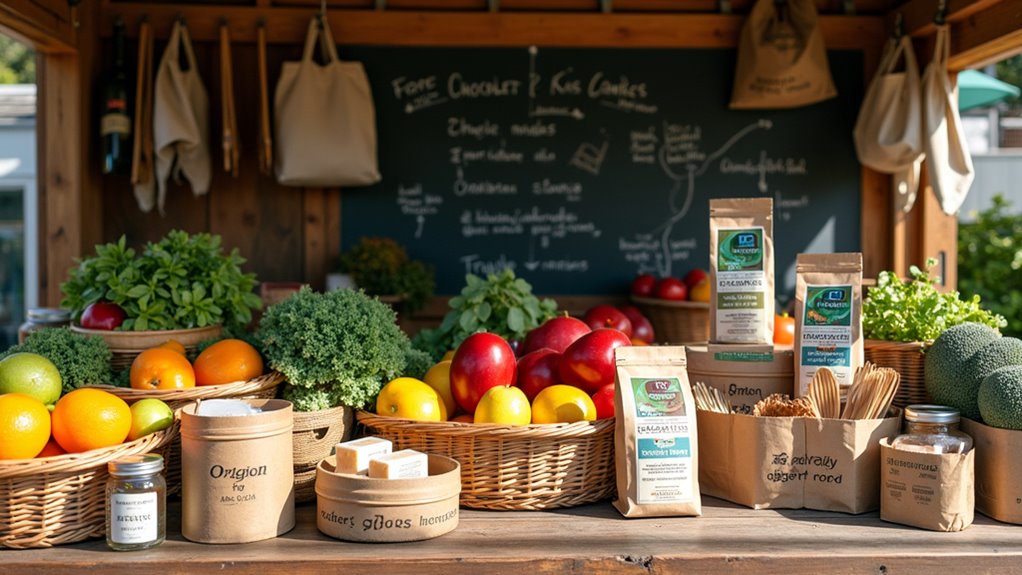
Simple changes in shopping habits can make grocery trips more sustainable without breaking the bank. Bringing reusable bags and containers, choosing products with minimal packaging, and buying seasonal produce from local farmers reduces environmental impact. Plant-based meal options and careful meal planning help prevent food waste while lowering emissions. Looking for eco-certifications and exploring zero-waste stores creates meaningful change. The journey toward sustainable shopping reveals suprising benefits for both wallet and planet.
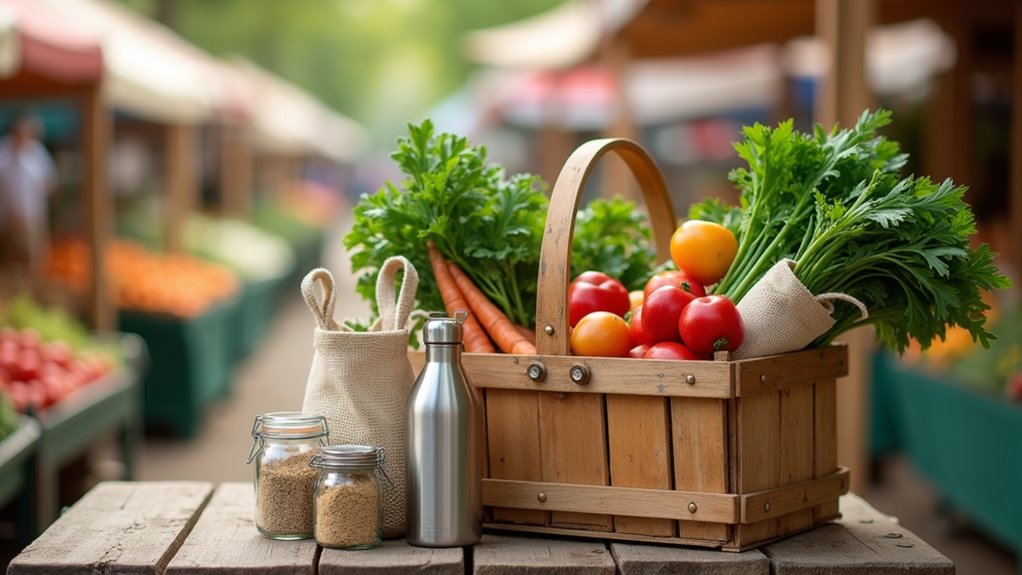
While many consumers feel overwhelmed by the challenge of sustainable living, making eco-conscious choices at the grocery store represents one of the most impactful ways to reduce environmental harm. The key lies in adopting simple yet effective strategies that alter routine shopping trips into opportunities for environmental stewardship. Sustainable consumerism encourages individuals to consider the ethical implications of their purchases, fostering a mindset that prioritizes the planet’s health.
Smart packaging choices stand at the forefront of sustainable shopping. By bringing reusable bags and containers, shoppers can dramatically reduce single-use plastic waste. Creating a weekly meal calendar helps shoppers make more deliberate packaging choices and reduce impulse purchases. Selecting products with minimal packaging or opting for items packaged in glass or metal instead of plastic creates a ripple effect that extends far beyond the shopping cart. Buying in bulk further minimizes packaging waste while often saving money – a win-win for both the environment and the wallet. Supporting local producers who use minimal packaging helps promote more sustainable business practices. Apps can assist in finding stores that align with these values, promoting ethical and conscious consumerism by providing information on sustainable brands and practices.
The distance food travels matters greatly. Shopping at local farmers’ markets and choosing seasonal produce not only supports community economies but also reduces transportation emissions. Seasonal foods typically require fewer pesticides and artificial growing methods, resulting in fresher, more flavorful options that leave a smaller environmental footprint. Local sourcing creates a direct connection between consumers and producers, fostering transparency and trust in food systems. Additionally, adopting plant-based diets can significantly reduce food-related emissions by 70%, making it a powerful choice for eco-conscious consumers. Participating in community-supported agriculture programs further strengthens the connection between consumers and local farmers, ensuring fresher produce and supporting small-scale growers.
Plant-based options have emerged as powerful tools for reducing individual carbon footprints. Incorporating more legumes, nuts, and seeds as protein sources can greatly lower the environmental impact of grocery choices. While not everyone needs to adopt a fully vegetarian diet, even small shifts toward plant-based meals make a meaningful difference in reducing greenhouse gas emissions and resource consumption.
Food waste prevention represents another essential aspect of sustainable shopping. Thoughtful meal planning, proper food storage, and creative use of leftovers help maximize the value of purchased items while minimizing waste. Composting inevitable food scraps completes the cycle, returning nutrients to the soil instead of contributing to landfill methane emissions.
Certifications serve as valuable guides for conscious consumers. Looking for labels like USDA Organic, Marine Stewardship Council (MSC), and Fair Trade helps guarantee purchases align with environmental and ethical standards. When choosing seafood, opting for smaller fish species and MSC-certified options supports ocean health and sustainable fishing practices.
Modern shopping methods have evolved to support sustainability goals. Zero-waste grocery stores, community-supported agriculture programs, and food co-ops offer alternatives to conventional supermarkets. These options often provide better access to local, sustainable products while building stronger community connections. Mobile apps now help locate sustainable food options and track environmental impact, making it easier than ever to shop consciously.
The change to sustainable grocery shopping doesn’t require perfection – it’s about making incrementally better choices that add up to meaningful positive impact. By implementing these strategies, shoppers can reduce their environmental footprint while supporting healthier food systems for future generations.
Frequently Asked Questions
How Can I Identify Truly Eco-Friendly Products Versus Greenwashed Marketing Claims?
Identifying genuine eco-friendly products requires looking beyond marketing claims.
Consumers should verify trusted certifications like Energy Star, USDA Organic, and Fair Trade.
Examining ingredient lists helps – the first five ingredients should include natural components for truly sustainable products.
Be skeptical of vague terms like “eco-friendly” or “green.”
Instead, look for specific environmental claims, third-party validations, and transparent company sustainability reports and practices.
Which Reusable Grocery Bags Are Most Durable and Environmentally Friendly?
Hemp and recycled PET bags offer the best combination of durability and eco-friendliness. Hemp grows with minimal water and pesticides, while recycled PET repurposes existing plastic waste.
Nonwoven polypropylene provides a practical middle-ground, requiring just 11 uses to offset its environmental impact. Cotton canvas, though sturdy, needs 131 uses to justify its high environmental footprint.
The key is consistent reuse – even the greenest bag must be used regularly to make a difference.
What’s the Environmental Impact of Choosing Frozen Versus Fresh Produce?
Frozen produce often has a lower environmental footprint than fresh options.
The freezing process preserves nutrients and reduces food waste, while enabling more efficient transportation methods. Fresh produce can lose up to 50% of its vitamin C within 48 hours and requires more energy-intensive shipping, especially when out of season.
While frozen vegetables need plastic packaging, their extended shelf life and reduced waste typically offset this impact, making them an environmentally sound choice.
How Do Different Grocery Delivery Services Compare in Terms of Sustainability?
Different grocery delivery services employ varied sustainability approaches.
Misfits Market and Imperfect Foods lead in food waste reduction by selling “ugly” produce.
Thrive Market emphasizes carbon-neutral shipping and eco-friendly packaging, while Good Eggs prioritizes local sourcing to minimize transport emissions.
Some services offer reusable containers or compostable materials.
Companies like Hungryroot focus on plant-based options and minimal packaging.
However, rural delivery can increase emissions due to longer transport distances.
Are Bulk Food Purchases Always More Sustainable Than Packaged Alternatives?
While bulk purchases generally reduce packaging waste, their overall sustainability depends on several factors.
Food waste can actually increase if consumers buy more than needed or if products spoil before use. The environmental benefits are maximized when shoppers bring reusable containers and purchase appropriate quantities.
For certain items like meat, proper packaging helps prevent spoilage. Bulk buying works best for shelf-stable pantry goods, while perishables may benefit from some protective packaging.