Several innovative apps empower consumers to make smarter, more sustainable purchasing decisions. Good On You rates fashion brands’ ethical impact, while barcode scanning apps instantly reveal product sustainability scores and certifications. Food waste reduction apps like EWG’s Healthy Living provide ratings for groceries and connect users with discounted surplus food. Carbon footprint calculators and package-free store locators round out the essential toolkit for conscious consumers. The journey toward ethical shopping starts with these digital companions.
A growing wave of conscious consumer apps is revolutionizing how people make everyday purchasing and lifestyle decisions. These digital tools are empowering shoppers to align their values with their spending habits, offering unprecedented transparency into product sourcing, environmental impact, and ethical manufacturing practices. It’s essential to be aware of greenwashing awareness to avoid falling for false eco claims and make smarter consumer decisions. Sustainable consumerism encourages individuals to adopt ethical, low-impact buying habits that significantly reduce environmental harm.
Modern consumers now have access to sophisticated barcode scanning apps that instantly reveal sustainability ratings and ethical certifications while shopping. These scanners provide vital information about fair trade status, carbon footprint, and cruelty-free certifications, enabling shoppers to make informed decisions in real-time. Complementing these tools are extensive databases of eco-friendly brands and alternatives, making it easier than ever to discover sustainable options for everything from cosmetics to clothing. The Good On You app provides detailed ratings for over 3,000 brands based on their ethical impact and sustainability practices.
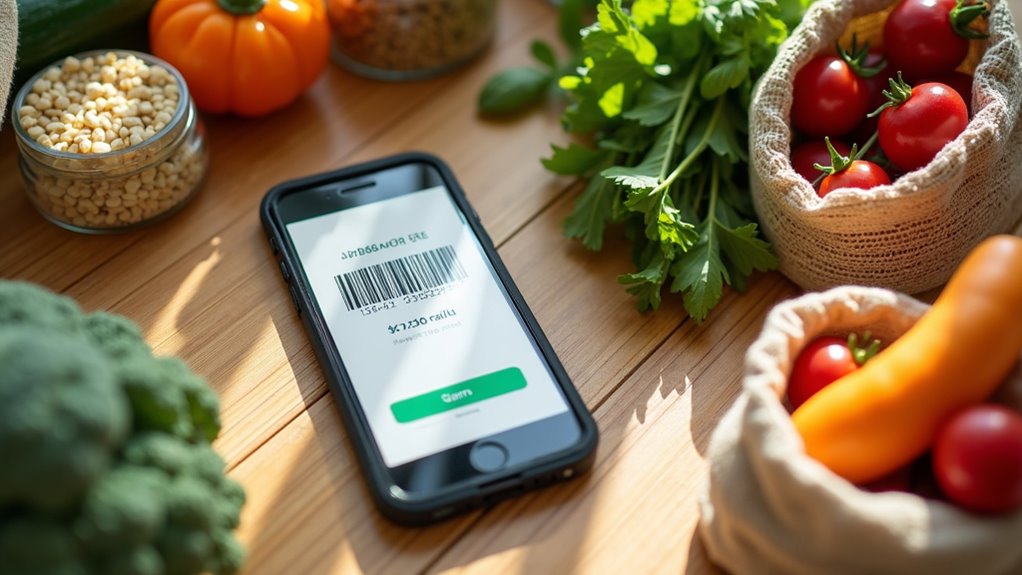
Barcode scanning technology empowers shoppers to instantly access product sustainability data, transforming routine purchases into conscious consumer decisions.
Food waste reduction has emerged as another critical focus area, with innovative apps connecting consumers to discounted surplus food from local restaurants and grocers. Apps like EWG’s Healthy Living offer detailed ratings for over 120,000 food products to help consumers make healthier choices. Sophisticated meal planning platforms help users minimize overbuying by suggesting recipes based on ingredients already in their pantry, while expiration date trackers guarantee food items are used before they spoil. Some apps even facilitate community food sharing, creating local networks to redistribute excess produce and prepared meals. Reducing food waste significantly lowers methane emissions, contributing to a decreased carbon footprint.
Environmental impact tracking has become increasingly sophisticated, with apps offering personalized carbon footprint calculations based on daily activities. These tools monitor everything from household energy consumption to transportation emissions, providing actionable insights for reducing individual environmental impact. Many apps integrate with smart home devices to optimize energy usage and suggest cost-effective eco-friendly improvements. Carbon capture and storage technology could further support these efforts by mitigating emissions at a larger scale, complementing individual actions.
The rise of sustainable product alternatives has led to the development of specialized marketplaces for refillable, plastic-free, and biodegradable goods. These platforms make it simple to locate package-free stores, second-hand items, and upcycled alternatives to conventional products. Some apps even track the environmental impact saved through sustainable purchasing choices, translating actions into tangible metrics like trees saved or plastic waste avoided.
Community engagement features are increasingly integrated into these platforms, connecting users with local environmental events, volunteer opportunities, and like-minded individuals. Forums and discussion boards facilitate knowledge sharing, while green business directories help conscious consumers support sustainable local enterprises. Many apps incorporate reward systems, offering points, discounts, or charitable donations tied to sustainable choices, effectively gamifying eco-friendly behavior.
These digital tools are transforming conscious consumerism from a niche interest into an accessible lifestyle choice. By combining practical shopping guidance with educational content and community support, these apps are helping users navigate the complexities of sustainable living while building lasting eco-friendly habits.
As technology continues to evolve, these platforms will likely become even more sophisticated, further simplifying the process of making environmentally responsible choices in our daily lives.
Frequently Asked Questions
How Can I Verify if a Company’s Sustainability Claims Are Genuine?
Consumers can verify sustainability claims through multiple reliable methods.
Third-party certifications like Green Seal and USDA Organic provide independent validation. Companies’ sustainability reports should follow recognized standards like GRI or SASB and include verified emissions data.
Supply chain traceability tools and blockchain platforms help track product origins. Independent verification apps and databases offer unbiased assessments of companies’ environmental practices.
Always look for concrete metrics rather than vague “eco-friendly” statements.
What Percentage of My Purchases Should Ideally Be From Conscious Brands?
While there’s no universal “ideal” percentage for conscious brand purchases, research suggests starting with 20-30% of purchases from verified sustainable companies is a realistic target for most consumers.
This creates meaningful impact while remaining practical. As comfort and availability increase, gradually expanding that percentage makes sense.
The key is making intentional choices within one’s means, rather than pursuing an arbitrary target that may not be sustainable long-term.
Are Conscious Consumer Products Always More Expensive Than Conventional Alternatives?
Conscious consumer products aren’t always more expensive, though they typically command a 28% premium over conventional alternatives.
While sustainable goods can cost up to 39% more in some categories, the price gap is gradually narrowing as production scales up and demand increases.
The higher costs often reflect fair labor practices, eco-friendly packaging, and sustainable production methods.
However, some conscious products are competitively priced, especially as the market grows and technology improves.
How Do I Find Local Sustainable Businesses in My Area?
Several user-friendly apps and directories make finding local sustainable businesses simple.
Greenopia vets and lists eco-conscious businesses by location, while NatureHub connects users with green companies and sustainability communities.
Apps like ethy focus on ethical enterprises, and Happy Cow specializes in plant-based dining options.
Even mainstream platforms like Yelp now include searchable sustainability filters.
For water refills, Refill shows nearby stations, while Too Good To Go helps locate surplus food deals.
Can Conscious Shopping Apps Help Track My Carbon Footprint While Shopping?
Yes, several apps effectively track carbon footprints during shopping activities.
Apps like Commons and Greenly calculate emissions from purchases in real-time, while Giki Zero provides personalized guidance to reduce shopping-related carbon impact.
Klima offers quick 3-minute footprint assessments, and Aerial automatically monitors travel-related emissions.
These tools make it simple to understand environmental impact while making purchase decisions and often include rewards for sustainable choices.