
Minimalist living powerfully reduces environmental impact while enhancing personal wellbeing. This intentional lifestyle focuses on owning fewer, higher-quality possessions, digitizing documents, and embracing multi-functional spaces with natural lighting. Practitioners report decreased stress, improved finances, and stronger relationships by shifting focus from material goods to experiences. The one-in-one-out rule and 90-day decluttering method help maintain simplicity, while sustainable purchasing decisions lower carbon footprints. This transformative approach offers a path to both individual and planetary harmony.
A growing number of people are discovering that living with less doesn’t mean living with less joy – quite the opposite. The minimalist lifestyle movement has gained momentum as individuals recognize its profound benefits, from reduced stress and anxiety to improved financial health and environmental impact. By consciously choosing to own fewer possessions and simplify their living spaces, practitioners of minimalism report increased clarity of thought, enhanced productivity, and greater overall life satisfaction. This approach aligns with the core philosophy of intentional living, making deliberate choices about what adds value to one’s life. With global carbon footprints averaging 4 tons per person, the need for minimalist practices has never been more crucial.
The environmental benefits of minimalist living are particularly compelling in today’s climate-conscious world. Decreased consumption naturally leads to reduced waste production and a smaller carbon footprint. When people embrace minimalism, they tend to make more thoughtful purchasing decisions, focusing on quality over quantity and considering the environmental impact of their choices. This shift often results in support for sustainable and ethical products, while encouraging the reuse and recycling of existing items. Embracing zero waste principles can further enhance minimalism by reducing reliance on single-use items and promoting a circular mindset. Mindful green shopping is a way to support this lifestyle by embracing sustainable choices that prioritize long-term impact over convenience. Implementing water-efficient appliances in a minimalist home can decrease consumption by 30-50%, exemplifying how minimalism can extend to environmental conservation.
Mindful consumption through minimalism creates ripple effects, reducing waste while promoting sustainable choices that benefit our planet’s future.
Implementing minimalism doesn’t require dramatic lifestyle changes overnight. Many successful minimalists begin with simple decluttering strategies, such as the one-in-one-out rule for new purchases or the 90-day rule for evaluating unused items. Digitizing documents and photographs helps reduce physical clutter while maintaining important memories. Creating designated spaces for essential items guarantees organization without excess. Renewable energy sources like solar and wind power can be integrated into minimalist living, enhancing both sustainability and energy efficiency.
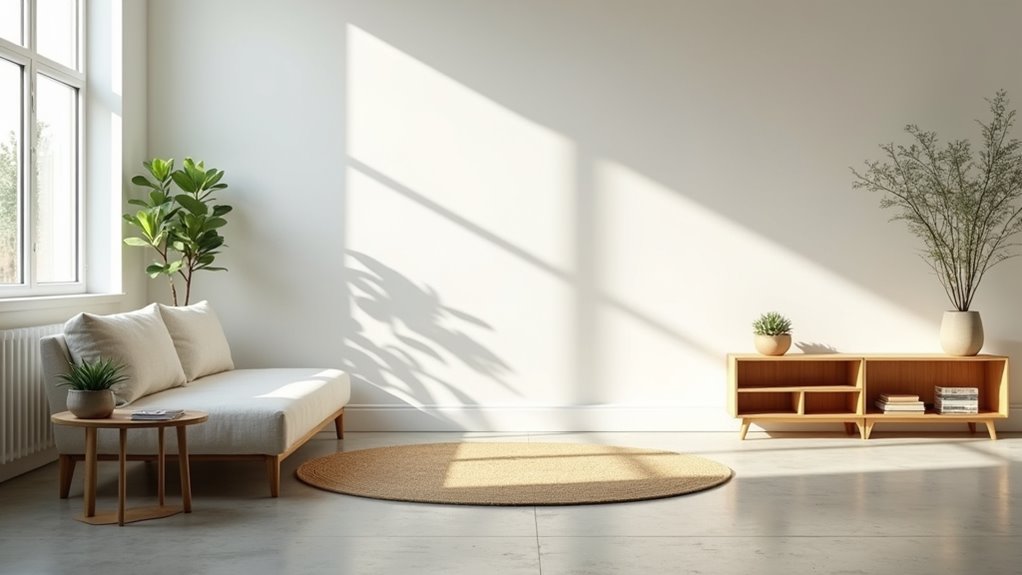
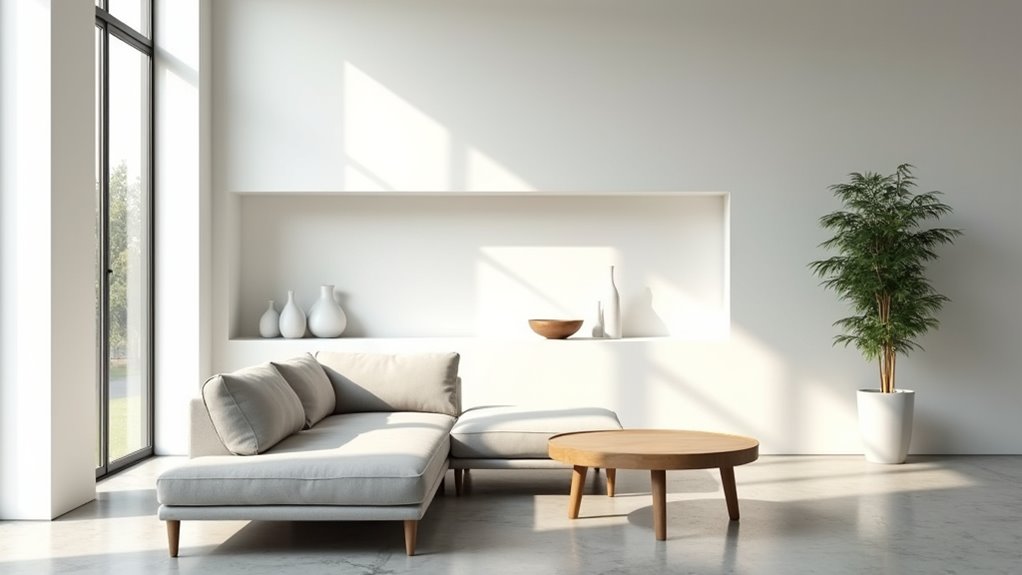
The aesthetic aspects of minimalism extend beyond simple decluttering. Minimalist home design emphasizes neutral color palettes, multi-functional furniture, and open floor plans that create a sense of spaciousness. Natural light and ventilation become focal points, contributing to both environmental efficiency and psychological well-being. This approach to design not only reduces energy consumption but also creates calming spaces that promote mental clarity.
The psychological effects of minimalism are perhaps its most transformative aspect. Practitioners report reduced decision fatigue, enhanced self-awareness, and stronger interpersonal relationships as they shift their focus from possessions to experiences and connections. However, the journey isn’t without its challenges. Many people struggle initially with letting go of possessions and may face resistance from family members or societal pressure to consume and accumulate.
Minimalism extends beyond physical possessions into various life aspects. A capsule wardrobe simplifies clothing choices, while digital minimalism helps reduce screen time and technology dependence. Minimalist approaches to finances, daily routines, and meal planning create streamlined systems that save time and reduce stress. These practical applications demonstrate how minimalism can be adapted to different areas of life while maintaining its core principles of intentionality and simplification.
The movement continues to evolve as more people recognize that minimalism isn’t about deprivation but rather about making room for what truly matters. Through thoughtful choices and conscious living, minimalists are proving that a simpler lifestyle can lead to greater fulfillment while contributing to environmental sustainability.
Frequently Asked Questions
How Do I Convince Family Members to Embrace Minimalist Living?
Successful adoption of minimalism requires leading by example rather than forcing change. Family members naturally become curious when they witness the benefits firsthand – less stress, more time, and increased savings.
Starting small with personal spaces while sharing positive experiences creates organic interest. Making it fun through decluttering games and family projects helps overcome resistance.
Gentle education about minimalism’s principles, backed by visible results, inspires lasting change.
Can Minimalism Work in a Household With Young Children?
Minimalism can absolutely work with young children. Research shows it actually benefits kids by reducing overstimulation and improving focus.
The key is implementing changes gradually – start with parents’ belongings first, then involve children in age-appropriate decluttering.
Setting up simple systems like toy rotation and designated storage spaces helps maintain order.
While it requires consistency and patience, many families find their children thrive with fewer, better-quality possessions.
What Should I Do With Sentimental Items I Can’t Let Go?
Storing sentimental items thoughtfully helps manage emotional attachments while respecting space limitations.
A dedicated memory box creates clear boundaries, while photographing objects preserves their essence digitally.
Some items can be displayed rather than hidden away, bringing daily joy.
For objects that don’t fit, consider sharing with family who’ll cherish them, or repurposing into functional pieces.
Remember – the memories live in one’s heart, not in physical possessions.
How Long Does It Typically Take to Transition to Minimalist Living?
The typical shift to minimalist living takes 1-2 years for most people to fully accomplish.
The initial decluttering phase usually spans 7-14 days for basic living spaces, while establishing new minimalist habits requires about 30 days.
People generally start seeing tangible benefits within 2-3 months.
However, the timeline varies based on factors like current clutter levels, emotional attachments to items, and family cooperation in the process.
Where Can I Sell My Excess Belongings for the Best Value?
To maximize value when selling items, online marketplaces like eBay and Amazon reach the widest audience but charge significant fees (10-20%).
For best returns, match items to specialized platforms – Etsy for handmade goods, Swappa for electronics, or ThredUp for clothing.
Local options like consignment stores offer quicker sales but lower profits.
The key is researching current market prices and using high-quality photos with detailed descriptions, regardless of platform choice.