

Sustainable packaging is undergoing a dramatic evolution, with groundbreaking innovations transforming how industries handle waste. Companies are embracing seaweed-based solutions, mushroom alternatives, and algae packaging that naturally dissolve. Smart technology like IoT and blockchain enables real-time monitoring and authenticity tracking, while refillable systems gain mainstream traction. With 78% of U.S. consumers checking recycling information, brands like Coca-Cola and Kraft Heinz are responding with plant-based and mono-material designs. These developments mark just the beginning of packaging’s sustainable future.
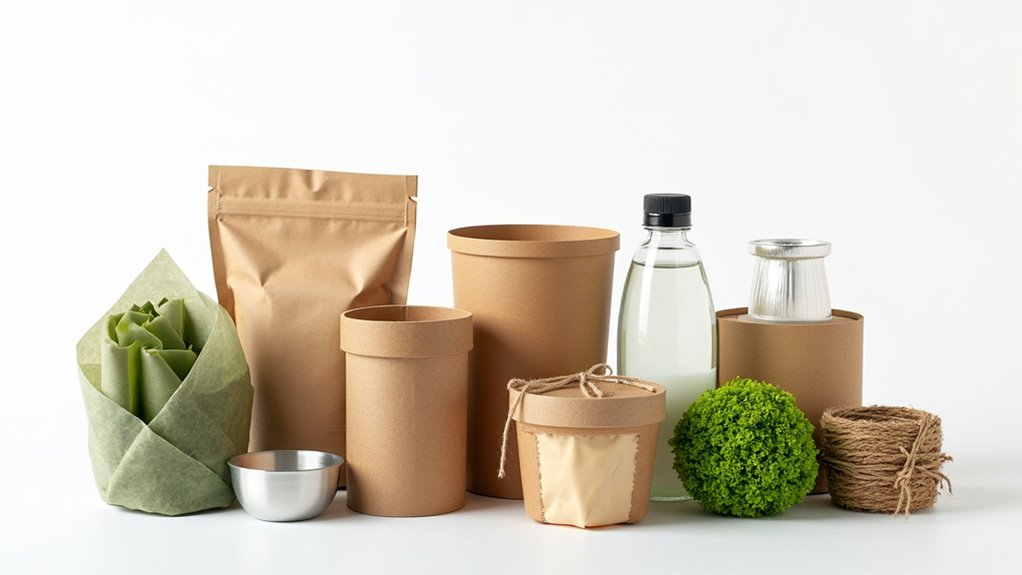
The packaging industry is undergoing a remarkable transformation as companies race to develop sustainable alternatives to traditional materials. From seaweed-based solutions that naturally dissolve to mushroom-based alternatives replacing polystyrene, innovators are reimagining how products reach consumers while minimizing environmental impact. These groundbreaking materials don’t just reduce waste – many actively benefit the environment, with algae-based packaging contributing to carbon sequestration and seaweed varieties absorbing CO2 during their growth phase. Leading manufacturers now prioritize FSC certification to ensure responsible forest management throughout their supply chain. Renewable energy sources like solar and wind are helping to power these innovations, as renewables generate 28% of global electricity. The circular economy presents powerful tools for emissions reduction, with recycling rates potentially doubling to 60% by 2030.
Consumer demand is driving this revolution, with 78% of U.S. consumers now checking recycling information on product labels and 69% actively seeking recyclable packaging options. Major brands are responding with bold initiatives – Coca-Cola has introduced its PlantBottle made from 100% plant-based plastic, while Kraft Heinz has developed a fully recyclable ketchup cap using single-type plastic. These innovations reflect a broader shift toward mono-material designs that enhance recyclability and streamlined packaging that optimizes shipping efficiency. Digital printing capabilities are enabling customized, on-demand production that significantly reduces packaging waste.
The future of packaging is increasingly smart and connected. IoT integration, QR codes, and RFID tags are revolutionizing supply chain transparency and consumer engagement. These technologies enable real-time monitoring of environmental conditions and food freshness, while blockchain technology guarantees product authenticity and traceability. This digital transformation isn’t just about convenience – it’s enabling reduced material usage through precise, on-demand packaging production. Apps for ethical and conscious consumerism are becoming vital tools for consumers looking to make informed choices. The concept of a circular economy emphasizes the importance of closing the loop through reuse, refurbishing, and recycling, which can revolutionize consumption patterns.
Reusable and refillable systems are gaining momentum in mainstream retail. Loop’s partnership with Tesco demonstrates how professional cleaning and reuse programs can work at scale, while companies like Kjaer Weis are pioneering refillable cosmetics cartridges. Zero-waste stores are expanding refill options, and incentive programs like Tim Hortons’ 10% discount for reusable mugs are encouraging consumer participation.
Perhaps the most intriguing development is the emergence of edible packaging solutions. Companies like Notpla and Loliware are creating edible alternatives to single-use plastics, while Evoware’s edible packaging is already being used by a Belgian waffle manufacturer. These innovations are complemented by regulatory changes, such as the EU’s Packaging and Waste Regulation, which sets ambitious recycling targets for 2030 and 2040.
The industry’s transformation is further supported by major retailers taking decisive action. Aldi’s commitment to remove 4,400 tons of plastic annually exemplifies how large-scale initiatives can drive meaningful change. Meanwhile, brands like Patagonia continue to lead by example, incorporating recycled materials into their packaging designs. Through these combined efforts, the packaging industry is not just reducing waste – it’s redefining our relationship with packaging materials and setting new standards for environmental stewardship.
Frequently Asked Questions
How Much More Expensive Is Sustainable Packaging Compared to Traditional Materials?
Sustainable packaging typically costs 20-30% more than conventional materials across different categories.
For instance, biodegradable plastics come at a 20-30% premium, while recycled materials have seen significant price increases – recycled PET plastic jumped 30% to 8.63 cents/pound in 2021, and recycled HDPE hit 70.25 cents/pound.
Compostable cornstarch bags illustrate the stark difference, costing $0.10-$0.40 compared to just $0.01 for traditional plastic bags.
Can Sustainable Packaging Maintain Food Freshness as Effectively as Conventional Packaging?
Research shows that sustainable packaging can now match conventional materials in maintaining food freshness.
Modern plant-based films and compostable trays provide comparable moisture and oxygen barriers to plastic packaging.
While some eco-friendly options initially faced challenges with sealing and barriers, recent innovations like nanocomposites and antimicrobial properties have bridged the performance gap.
Smart packaging technologies even enable real-time monitoring of food quality, making sustainable solutions increasingly reliable for preserving perishables.
What Happens to Biodegradable Packaging if It Ends up in Landfills?
Biodegradable packaging faces significant challenges in landfills, largely losing its environmental benefits.
Trapped between layers of waste with limited oxygen and beneficial microbes, these materials decompose much slower than intended – sometimes taking years or not degrading at all.
During breakdown, they release methane, a potent greenhouse gas.
Additionally, these materials can contaminate recycling streams and leach chemicals into soil and groundwater, making proper disposal essential.
Are There Industry Standards for Certifying Packaging as Truly Sustainable?
Yes, several established organizations provide rigorous certification standards for sustainable packaging.
Key players include the Forest Stewardship Council (FSC), Biodegradable Products Institute (BPI), and Cradle to Cradle Certified. These bodies evaluate factors like recyclability, recycled content, responsible sourcing, and overall environmental impact.
However, there’s no single universal standard – companies must typically pursue multiple certifications to verify different aspects of sustainability.
Third-party audits and regular reassessments guarantee ongoing compliance.
How Do Different Climates Affect the Decomposition of Eco-Friendly Packaging Materials?
Climate conditions dramatically influence how quickly eco-friendly packaging breaks down.
Tropical climates, with high heat and humidity, accelerate decomposition – biodegradable plastics degrade in 3-6 months, while paper takes just weeks.
In contrast, cold climates greatly slow the process, with materials taking months or years to break down.
Arid regions pose unique challenges due to low moisture, while temperate zones show moderate decomposition rates affected by seasonal changes.


