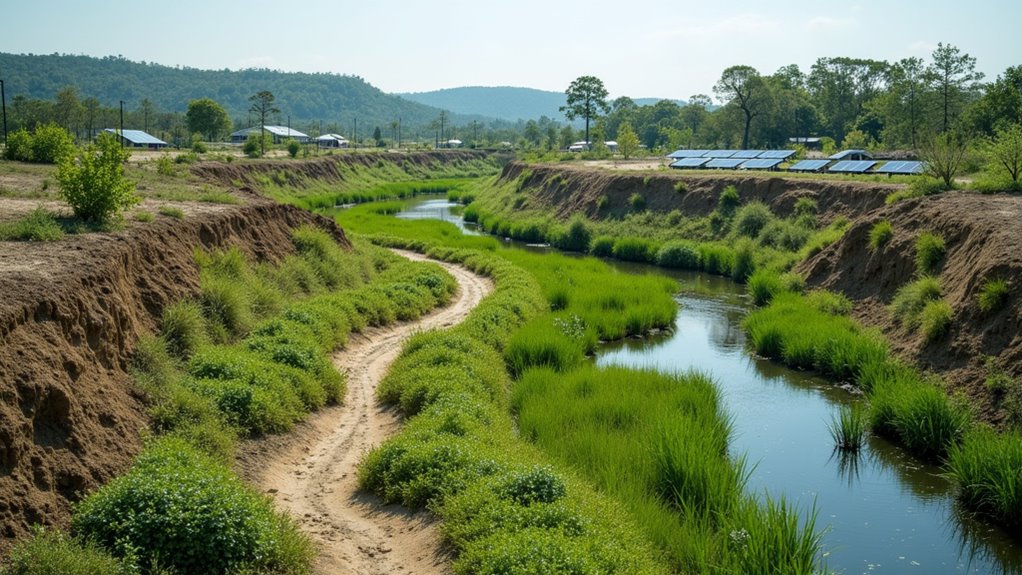

Post-disaster environmental recovery involves systematic efforts to heal damaged ecosystems through targeted interventions. Key components include detailed environmental impact assessments, sophisticated debris management, ecosystem restoration with native species, and water resource protection. Communities engage in sustainable rebuilding through green practices, citizen science programs, and eco-tourism initiatives. Well-executed recovery efforts can save substantial costs while creating more resilient environments. Understanding these elements reveals the path toward successful environmental rehabilitation.
When natural disasters strike, the path to environmental recovery requires a thorough and strategic approach that extends far beyond initial cleanup efforts. The first important step involves conducting detailed Environmental Impact Assessments to evaluate damage across ecosystems, measuring everything from soil contamination to threats facing endangered species. These assessments provide the foundation for developing targeted recovery strategies that address both immediate concerns and long-term sustainability goals. Additionally, incorporating renewable energy deployment can bolster recovery efforts by reducing carbon emissions and providing sustainable energy sources for affected areas.
A cornerstone of post-disaster recovery is effective debris management and waste reduction. Rather than simply clearing debris, successful programs implement sophisticated sorting systems that maximize recycling and repurposing opportunities. Hazardous materials receive special handling, while organic waste is transformed through composting. Some communities have found innovative ways to utilize debris in reconstruction projects, turning disaster waste into valuable resources for rebuilding. Every dollar invested in proper debris management during recovery yields approximately six dollars saved in future disaster costs. Implementing land management practices can also mitigate the impact of future wildfires, reducing the likelihood of widespread damage. Furthermore, waste-to-energy solutions such as incineration and gasification can convert debris into usable power, providing an environmentally friendly option for handling waste.
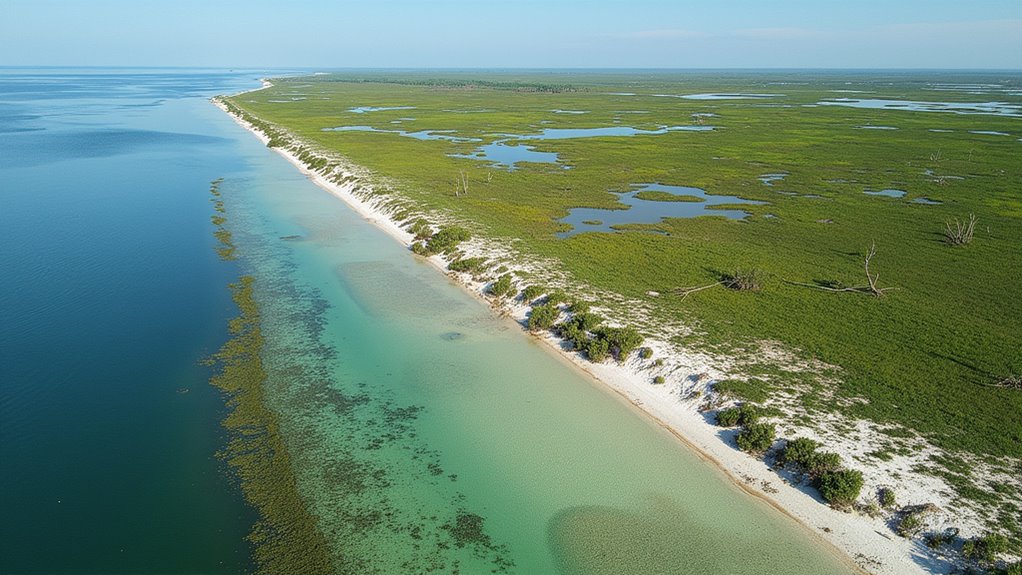
The restoration of damaged ecosystems forms the heart of environmental recovery efforts. This involves careful replanting of native vegetation, rehabilitation of wildlife populations, and restoration of natural water flows. Particular attention is paid to essential habitats like wetlands and mangroves, which not only support biodiversity but also provide natural buffers against future disasters. The devastating impact of Hurricane Katrina led to a loss of wetlands that dramatically reduced Louisiana’s natural coastal protection. Erosion control measures help stabilize soils, while careful monitoring guarantees the success of reintroduced species. Community-based approaches leverage local knowledge to ensure that restoration efforts are culturally appropriate and sustainable.
Restoring ecosystems requires careful attention to native species, water systems, and natural buffers, creating resilient environments that protect against future calamities.
Water resource management plays a fundamental role in recovery, focusing on both immediate needs and long-term sustainability. Communities must work to protect and restore water sources, implement effective treatment systems, and develop strategies for flood control. Special consideration is given to aquatic ecosystems, making sure that recovery efforts support the entire water cycle, from groundwater to surface water systems.
Climate change adaptation has become an indispensable component of modern recovery efforts. Communities are increasingly focusing on building back better, incorporating resilient design principles that account for future climate risks. This includes implementing early warning systems, creating buffer zones, and promoting climate-smart agricultural practices that can withstand extreme weather events.
The success of environmental recovery largely depends on community engagement and education. Local residents are trained in sustainable practices and often participate in citizen science programs to monitor recovery progress. Some communities have successfully launched eco-tourism initiatives, creating economic opportunities while protecting restored natural areas.
Sustainable rebuilding practices tie all these elements together, emphasizing green building techniques, energy efficiency, and water conservation. These approaches not only reduce environmental impact but also create more resilient communities capable of withstanding future disasters.
Through careful integration of nature-based solutions and smart urban planning, communities can emerge from disasters with stronger, more sustainable environmental systems than before. The key lies in viewing recovery not just as a return to normal, but as an opportunity to build a more resilient and environmentally sound future.
Frequently Asked Questions
How Long Does Soil Take to Recover After a Major Environmental Disaster?
Soil recovery after major environmental disasters varies dramatically based on the type and severity of the event.
While flood-damaged soils may bounce back in 3-10 years, wildfire recovery can take up to 80 years.
Industrial contamination often requires a century or more for full remediation.
Natural processes like microbial regrowth begin within months, but complete ecosystem restoration typically spans decades.
Accelerated techniques like phytoremediation can reduce recovery timeframes by 30-50%.
What Role Do Indigenous Communities Play in Post-Disaster Environmental Restoration?
Indigenous communities play a crucial role in environmental restoration through their deep ancestral knowledge of local ecosystems.
Their traditional practices, like cultural burning and sustainable agriculture, have proven effective in post-disaster recovery. These communities contribute unique insights about native species, water management, and climate adaptation.
When combined with modern scientific approaches, Indigenous wisdom offers powerful solutions for ecosystem healing, though their expertise often remains underutilized in official recovery efforts.
Can Certain Disasters Permanently Alter an Ecosystem Beyond Recovery?
Yes, certain disasters can irreversibly alter ecosystems beyond their capacity to recover. Major events like nuclear accidents, oil spills, and extreme natural disasters can fundamentally disrupt ecological systems by eliminating keystone species, introducing invasive organisms, or contaminating habitats with long-lasting toxins.
The 1986 Chernobyl disaster created a permanent exclusion zone, while the 2004 Indian Ocean tsunami destroyed coastal mangrove forests that haven’t fully regenerated even decades later.
What Psychological Impact Does Environmental Destruction Have on Local Communities?
Environmental destruction takes a severe psychological toll on communities, manifesting as increased rates of anxiety, depression, and PTSD.
When cherished landscapes disappear, people experience “solastalgia” – a deep sense of loss and displacement. Vulnerable groups, including children and indigenous peoples, face heightened risks.
The breakdown of social bonds and cultural connections compounds these mental health impacts.
However, access to green spaces and community-based support systems can help build resilience and facilitate healing.
How Do Climate Change Patterns Affect Post-Disaster Recovery Efforts?
Climate change greatly complicates post-disaster recovery through intensifying weather patterns. More frequent and severe disasters strain resources and overwhelm traditional recovery systems.
When multiple disasters occur simultaneously or in quick succession, communities struggle to rebuild effectively. Rising temperatures create new vulnerabilities in previously unaffected regions, while changing precipitation patterns disrupt established recovery protocols.
These evolving patterns require communities to develop more adaptable and resilient recovery strategies.


