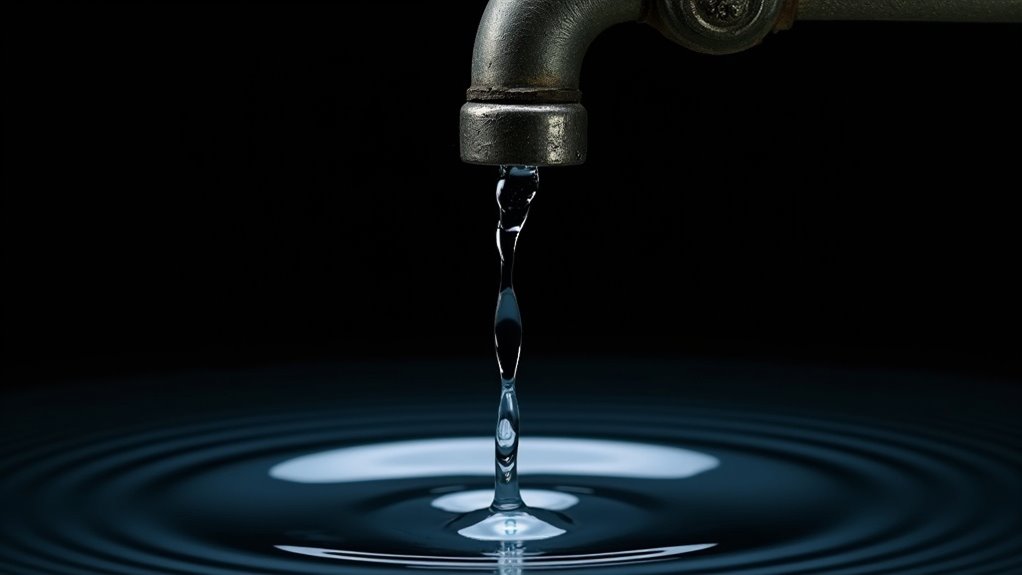
The global water crisis devastates communities through multiple interconnected challenges. Over 700 million people lack basic access to safe drinking water, leading to widespread health issues and economic instability. Women and girls sacrifice education and opportunities, spending hours daily collecting water. Climate change intensifies these problems, threatening to displace millions. However, solutions like solar-powered systems and improved infrastructure offer hope – communities worldwide are finding innovative ways to build water security and resilience. The path forward reveals promising possibilities for sustainable water management.
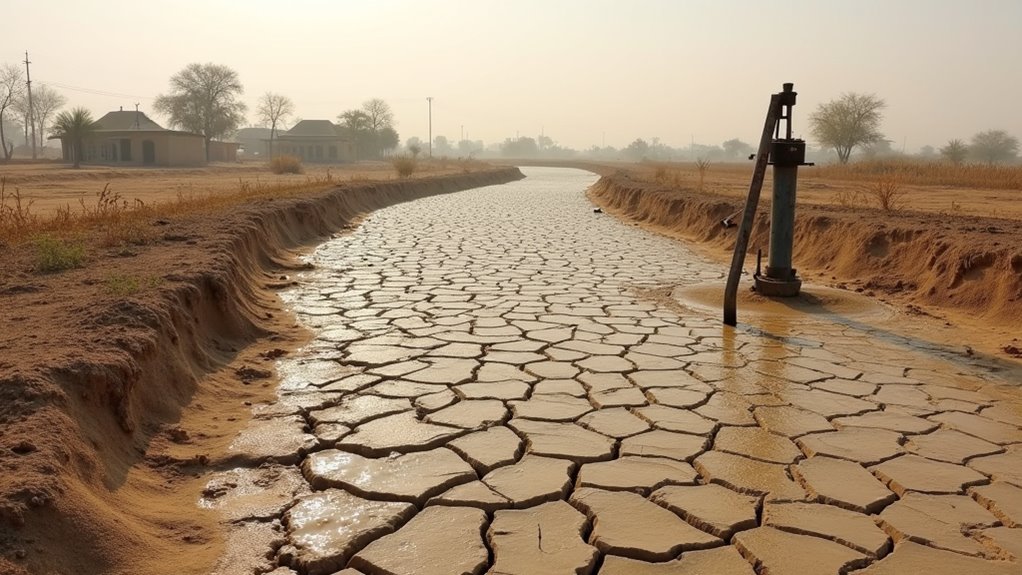
While access to clean water is often taken for granted in developed nations, the global water crisis continues to devastate communities worldwide, with over 700 million people lacking basic access to safe drinking water. The magnitude of this crisis becomes even more apparent when considering that 2.2 billion people lack safely managed drinking water services, and more than 1,000 children under age five die daily from water-related diseases. Safe water access proves essential for basic household needs like drinking and washing.
The economic toll of this crisis is staggering, with $260 billion lost globally each year due to inadequate water and sanitation. Agricultural communities bear a particularly heavy burden, as farming accounts for 70% of global water withdrawals. In some regions, water scarcity could slash GDP by up to 6% by 2050, creating a devastating ripple effect through local economies and global food markets. Global water scarcity challenges are further exacerbated by population growth and increased demand. Implementing strategies like precision irrigation can help optimize water use in agriculture, potentially alleviating some of these pressures.
Women and girls face disproportionate hardships, spending a collective 250 million hours each day collecting water. Walking an average of 6 kilometers daily while carrying 44 pounds of water, they sacrifice educational and economic opportunities. This burden not only perpetuates gender inequality but also exposes them to increased risks of sexual abuse during their long journeys to collect water.
Climate change intensifies these challenges, with 90% of climate disasters being water-related. By 2030, water scarcity could force more than 700 million people to leave their homes. Low- and middle-income countries face the greatest vulnerability to these climate-related water issues, while melting glaciers threaten freshwater supplies for countless downstream communities. Unpredictable rainfall patterns and severe droughts continue to reduce water availability in many regions. Altered precipitation patterns affect not only the availability of water but also the health of ecosystems and agriculture.
The crisis creates a perfect storm for social and political instability. As water becomes increasingly scarce, tensions rise between different water users, sometimes leading to conflict. Already, 25 African countries are projected to face increased water scarcity by 2025, potentially triggering widespread migration and regional instability. The importance of water conservation is underscored by these tensions, as managing water sustainably becomes crucial in preventing further conflict and instability.
However, communities worldwide are fighting back with innovative solutions. Solar-powered water systems are bringing reliable access to remote areas, while improved infrastructure helps reduce water waste and leakage. Community-led approaches to water management show promising results, empowering local populations to take control of their water security.
The food security implications are equally concerning, as agricultural production must expand 70% by 2050 to meet growing demand. Droughts increasingly threaten food crops and livestock, leading to rising food prices and malnutrition in water-stressed regions. Yet, technological innovations and sustainable farming practices offer hope for more efficient water use in agriculture.
International cooperation and funding for water security projects continue to grow, though much work remains. Education and awareness programs are helping communities understand the importance of water conservation, while technological solutions make water management more efficient and sustainable.
While the challenges are immense, collective action and innovation offer pathways toward a more water-secure future for communities worldwide.
Frequently Asked Questions
How Can Individuals Calculate Their Daily Household Water Footprint?
Individuals can calculate their daily household water footprint using online calculators from organizations like Water Footprint Network and UNESCO-IHE.
These tools analyze direct water use from taps and appliances, plus indirect consumption through food and manufactured goods. Users input details about shower length, toilet flushes, dishwashing habits, and laundry routines.
Some calculators even factor in outdoor usage and virtual water embedded in products consumed.
Which Water Filtration Methods Are Most Effective for Emergency Situations?
For emergency situations, boiling water remains the most reliable method, requiring just 1 minute of rolling boil to eliminate pathogens.
Chemical disinfection using chlorine or iodine provides a practical backup when heat sources aren’t available.
Gravity-fed filters offer sustainable long-term solutions, processing up to 24 gallons daily without electricity.
Portable devices like pump filters and UV purifiers work well for immediate needs, though their capacity is more limited.
What Role Does Groundwater Depletion Play in Agricultural Communities?
Groundwater depletion severely impacts agricultural communities through multiple critical pathways.
As aquifer levels decline, farmers face mounting challenges: wells run dry, pumping costs increase, and crop yields suffer.
Over 70% of global groundwater withdrawals support agriculture, making depletion an existential threat to farming livelihoods.
In the U.S. alone, the Ogallala Aquifer supports $7 billion in crop sales, yet continued overuse threatens both food security and rural community survival within a generation.
How Do Water-Related Conflicts Affect Migration Patterns Between Neighboring Regions?
Water-related conflicts between regions directly influence migration patterns, forcing populations to relocate when resources become scarce or contested.
Disputes over transboundary rivers, like the Nile and Euphrates, can lead to reduced water access downstream, compelling communities to abandon traditional settlements.
These tensions often result in both temporary and permanent displacement, with vulnerable populations moving to areas with more reliable water sources.
Cross-border migration increases when water conflicts intersect with existing political tensions.
Can Desalination Technology Become Affordable for Developing Coastal Communities?
Desalination technology is becoming increasingly viable for developing coastal communities through recent innovations.
While traditional plants require significant upfront costs, new modular systems and Water-as-a-Service models reduce initial investment barriers.
Improved energy efficiency, integration of renewable power, and declining operational costs are making desalination more affordable.
With prices dropping to $0.50-$1.50 per cubic meter and continued technological advances, coastal communities could realistically adopt these solutions within the next decade.