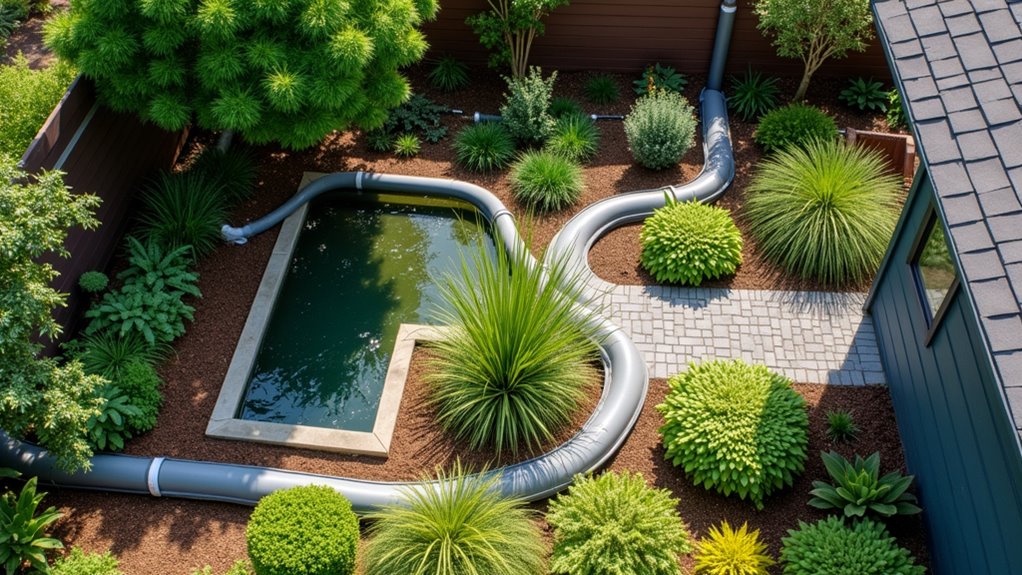
Desalination technology transforms seawater into drinking water through advanced filtration methods, primarily reverse osmosis. This process uses semipermeable membranes to remove 99.8% of dissolved salts and impurities, with over 18,000 plants worldwide producing 95 million cubic meters of fresh water daily. While traditionally energy-intensive, modern systems now require just 3-4 kilowatt-hours per cubic meter, down from 20 in the 1970s. New innovations like biomimetic membranes and graphene filters promise even greater efficiency in securing Earth’s water future.
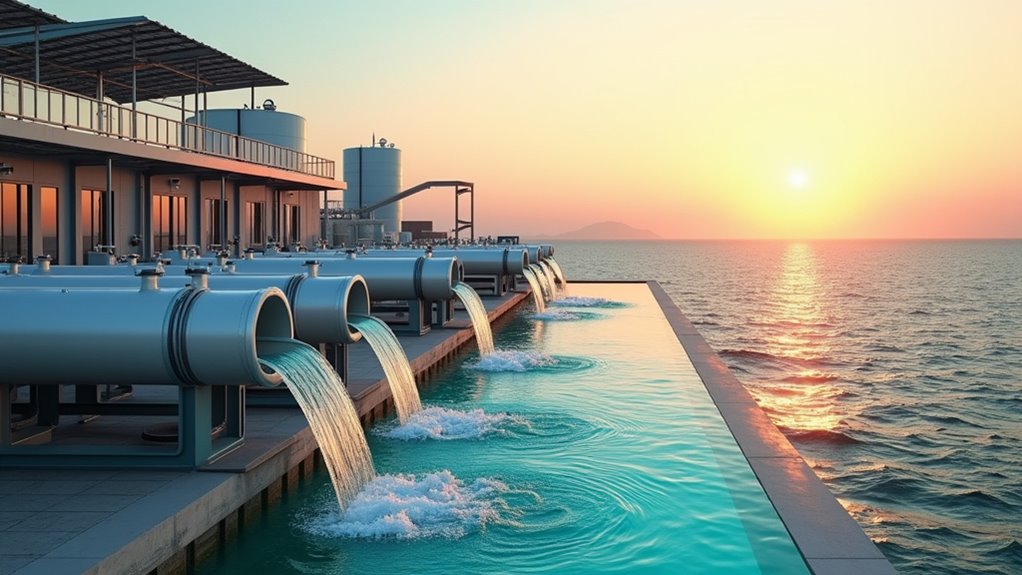
Nearly half of the world’s desalination capacity resides in the Middle East, where advanced technologies transform seawater into safe drinking water for millions. With over 18,000 desalination plants worldwide producing 95 million cubic meters of water daily, these facilities have become essential infrastructure in water-scarce regions. Modern desalination generates 141.5 million cubic meters of brine waste for each batch of freshwater produced.
The technology has evolved dramatically since its early days, with modern plants using just 3-4 kilowatt-hours of energy per cubic meter of water, compared to 20 kilowatt-hours in the 1970s. Recent innovations include a solar-powered system that can produce 4 to 6 liters of drinking water per hour at the size of a suitcase. At the same time, the importance of water conservation becomes increasingly apparent, linking the desalination efforts to a broader global initiative. In regions facing severe water scarcity, desalination provides a critical, sustainable alternative to traditional freshwater sources, helping to alleviate the pressure on depleted aquifers and rivers.
Reverse osmosis has emerged as the dominant desalination method, accounting for about 69% of global capacity. The process works by forcing seawater through specialized semipermeable membranes that remove 99.8% of dissolved salts and impurities. While effective, traditional thermal methods like multi-stage flash distillation still play an important role, particularly in processing highly saline or contaminated water sources. Increased evaporation rates threaten water quality in many regions, further emphasizing the importance of desalination technology.
The global desalination market, valued at $17.7 billion in 2020, continues to expand as regions face increasing water scarcity. Operating costs typically range from 50 cents to $1 per cubic meter of produced water, with larger facilities benefiting from economies of scale. Capital investments are substantial, requiring between $1-2.5 million for every 1,000 cubic meters of daily capacity. Government policies on water play a crucial role in supporting desalination projects and ensuring equitable access to the technology.
Innovation in the field is accelerating, with promising new technologies on the horizon. Forward osmosis harnesses natural osmotic pressure differences, while capacitive deionization uses electric fields to remove ions from water. Perhaps most exciting are developments in biomimetic membranes that mimic biological cell structures and graphene oxide filters that can process water at the molecular level.
However, desalination isn’t without its environmental challenges. The process generates concentrated brine that can harm marine ecosystems when discharged back into the ocean. Plant operations contribute to greenhouse gas emissions, while intake systems risk trapping marine life.
To address these concerns, many facilities are increasingly powered by renewable energy and implementing more sophisticated brine management techniques.
The United States maintains roughly 2,000 desalination facilities, while China is rapidly expanding its infrastructure. As climate change intensifies and freshwater sources become increasingly stressed, desalination technology continues to evolve. Energy recovery devices now recapture pressure energy, while advanced nanomaterials improve membrane efficiency, making the process more sustainable and cost-effective.
The industry’s total energy consumption reaches approximately 75.2 terawatt-hours annually, highlighting the significance of continued efficiency improvements. Despite the challenges, desalination technology represents an essential tool in addressing global water security. As innovations drive down costs and environmental impacts, these facilities are increasingly indispensable in ensuring access to clean drinking water for communities worldwide.
Frequently Asked Questions
How Much Does It Cost to Build a Desalination Plant?
Desalination plant costs vary greatly based on size and location. A small 2.5 MGD plant costs around $32 million, while larger 100 MGD facilities can exceed $650 million.
The Carlsbad plant in California, at 35 MGD, cost $250 million. Major expenses include civil works (30-40%), mechanical equipment (20-30%), and labor (15-20%).
Location, water source quality, and environmental regulations also impact total costs. Energy typically comprises 35-45% of operating expenses.
Can Desalinated Water Be Used for Agriculture and Farming?
Yes, desalinated water can be effectively used for agriculture and farming, particularly for high-value crops and protected cropping systems.
While the high treatment costs make it impractical for some crops, desalination provides essential benefits like improved crop productivity, water security, and soil recovery in salt-affected areas.
Spain has successfully implemented agricultural desalination, demonstrating its viability.
The technology continues to evolve, with new developments in farm-based systems and renewable energy integration making it increasingly feasible.
What Happens to Marine Life Near Desalination Plants?
Marine life near desalination plants faces several challenges.
The intake systems can trap larger animals against screens and pull smaller organisms into the facility.
Concentrated brine discharge creates hostile conditions on the seabed, affecting bottom-dwelling species.
High salinity levels and chemical pollutants disrupt local ecosystems, impacting fish populations, coral reefs, and seagrass meadows.
While some species adapt, others struggle as the altered environment affects their growth and distribution patterns.
How Long Does the Desalination Process Take to Produce Drinking Water?
The desalination process typically takes 2-8 hours from intake to drinkable water.
Modern reverse osmosis plants operate continuously, with seawater moving through several stages: pre-treatment (30 mins to hours), membrane filtration (30-60 mins), and post-treatment (15-30 mins).
Thermal distillation methods are slightly slower, requiring 1-2 hours through multiple stages.
Large-scale facilities can produce 50-100 million gallons daily when running at full capacity.
Do Home Desalination Systems Exist for Individual Household Use?
Yes, home desalination systems are readily available for individual households.
These compact units use reverse osmosis technology to convert seawater or brackish water into potable drinking water. Systems typically produce 600-2,200 gallons daily and can be powered by conventional electricity or renewable sources like solar.
While initial costs range from $16,000-$20,000, these systems offer water independence for coastal homes, boats, and remote locations requiring reliable freshwater access.