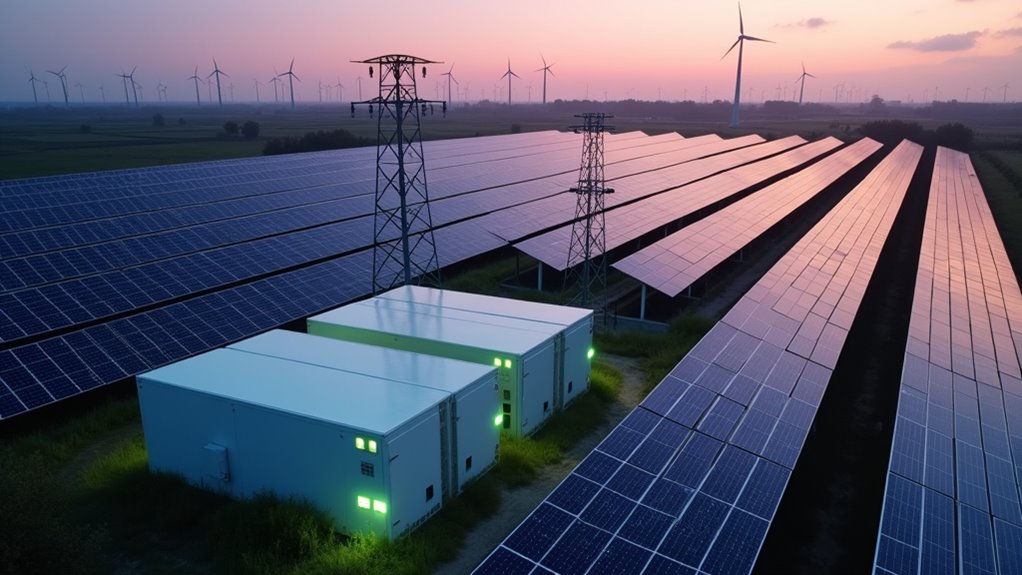
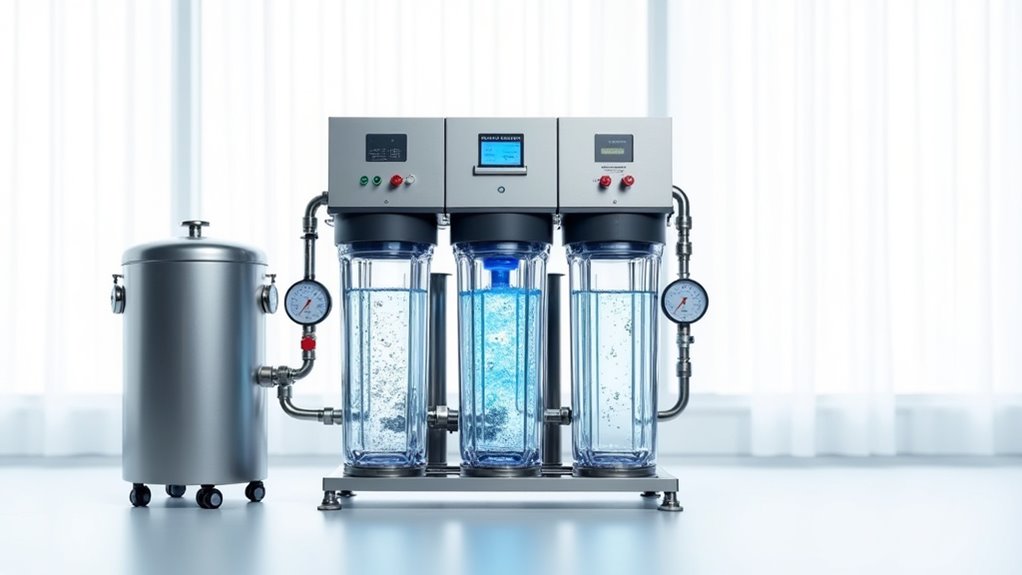
Carbon capture and storage (CCS) technology fights climate change by trapping CO2 emissions before they enter the atmosphere. Currently, 26 operational CCS facilities worldwide capture about 40 million tons of CO2 annually, with potential to reduce emissions by 13 gigatons by 2050. The process captures up to 90% of industrial emissions, compressing and storing CO2 safely underground in depleted oil reservoirs and saline aquifers. Despite high costs and energy requirements, advancing CCS technology presents promising solutions for our climate challenges.
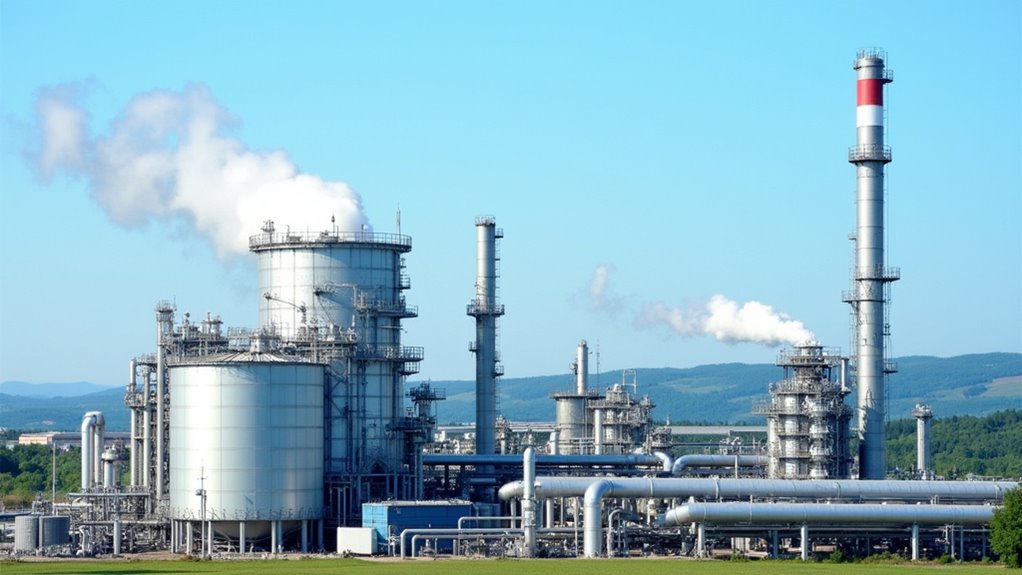
As the world grapples with rising carbon dioxide emissions, Carbon Capture and Storage (CCS) technology has emerged as a promising tool in the fight against climate change. This innovative approach captures CO2 from industrial sources and the atmosphere, compresses it for transport, and stores it safely underground in geological formations. With the ability to capture up to 90% of emissions from point sources, CCS represents a significant opportunity to reduce greenhouse gas emissions while allowing for a measured shift away from fossil fuels. The adoption of CCS, alongside renewable energy technology, can substantially enhance efforts to mitigate climate change. Increasing investment in climate finance flows, which reached $632 billion in 2019-2020, can further support the scaling of CCS technology.
Carbon Capture and Storage technology offers a vital solution for reducing emissions while enabling a strategic transition from fossil fuel dependence.
The technology operates through three main methods: post-combustion capture, which removes CO2 from flue gases; pre-combustion, which converts fuel to hydrogen and CO2 before burning; and oxy-fuel combustion, which burns fuel in pure oxygen. Additionally, direct air capture extracts CO2 directly from the atmosphere, while industrial carbon capture targets emissions from factories and manufacturing plants. These varied approaches provide flexibility in addressing different emission sources. Experts estimate that 9.1 billion tonnes of CO2 must be removed annually to keep global temperature rise within 1.5°C.
Currently, 26 operational CCS projects worldwide are capturing approximately 40 million tons of CO2 annually, with 80 additional projects in development. The captured CO2 finds permanent homes in deep saline aquifers, depleted oil and gas reservoirs, unmineable coal seams, and basalt formations. Some of this CO2 is also used for enhanced oil recovery, providing an economic incentive for implementation while helping to offset the technology’s significant costs. Storage sites must be located at least one kilometer deep to ensure safe and effective containment. The costs of carbon capture technologies have decreased by 30% since 2017, making them more accessible and economically viable.
The potential impact of CCS on climate change mitigation is substantial, with projections suggesting it could reduce CO2 emissions by up to 13 gigatons by 2050. However, the technology faces several challenges, including high implementation costs and energy requirements – CCS can consume 10-40% of a power plant’s energy output. There are also concerns about prolonging fossil fuel dependence and the risk of CO2 leakage from storage sites. Carbon capture and storage technology could mitigate one-fifth of emissions by mid-century, emphasizing its crucial role in global emission reduction strategies.
Despite these challenges, CCS plays an essential role in the Intergovernmental Panel on Climate Change’s mitigation scenarios. Government subsidies and tax credits are supporting development, while integration with renewable energy systems offers promising opportunities for future applications. The technology is creating new jobs and spurring innovation in the clean energy sector.
Looking ahead, the success of CCS depends on rapid scaling, improved capture efficiency, and reduced costs. Public acceptance and robust regulatory frameworks are essential for widespread adoption. While CCS isn’t a silver bullet for climate change, it represents an important piece of the puzzle in reducing global emissions.
As the technology continues to evolve and become more cost-effective, its role in combating climate change is likely to grow, particularly in hard-to-abate industrial sectors where few other decarbonization options exist.
Frequently Asked Questions
How Much Does Carbon Capture and Storage Cost per Ton of CO2?
Carbon capture and storage costs vary considerably, ranging from $15 to $150 per ton of CO2.
Pre-combustion capture is most economical at $15-$25 per ton for concentrated streams, while post-combustion methods run $40-$120 per ton.
Transport and storage add another $2-$15 per ton. The total expense depends on factors like CO2 concentration, distance to storage sites, and facility scale.
Costs are expected to decline as technology improves and facilities scale up.
Can Captured Carbon Be Reused for Other Industrial Purposes?
Captured carbon dioxide has numerous valuable industrial applications.
It’s used extensively in carbonated beverages, enhanced oil recovery, and food processing.
Modern technologies enable CO2 conversion into products like ethylene for plastics, artificial limestone for concrete, and even protein for meat alternatives.
The chemical industry utilizes it to produce formic acid, while supercritical CO2 finds applications in cosmetics and electronics manufacturing.
This creates a $4.4 trillion market potential by 2050.
What Happens if a Carbon Storage Facility Leaks?
Carbon storage leaks can have serious consequences. When CO2 escapes, it can contaminate groundwater, acidify soil, and create dangerous pockets of concentrated gas that displace oxygen.
Large leaks pose risks to human health, potentially causing symptoms from headaches to cardiac arrest in severe cases. Environmental impacts can extend for miles, affecting ecosystems and releasing other harmful substances.
These risks highlight the importance of rigorous monitoring systems and strict safety regulations at storage facilities.
How Long Can Carbon Dioxide Remain Safely Stored Underground?
Carbon dioxide can remain securely stored underground for exceptionally long periods – typically 10,000+ years or more.
Multiple natural trapping mechanisms work together to keep CO2 contained, starting with structural trapping beneath impermeable rock layers and evolving to more permanent forms like mineral trapping.
The Intergovernmental Panel on Climate Change estimates that 99% of injected CO2 stays trapped for at least 1,000 years, with storage security increasing over time.
Which Countries Currently Lead in Carbon Capture and Storage Technology?
The United States leads globally with 154 CCS projects in development, followed by the United Kingdom with 45 projects.
Norway stands out with its groundbreaking Northern Lights facility, the world’s first cross-border CO2 transport and storage system.
China is rapidly expanding its CCS capabilities, with four new facilities launched in 2023.
These nations are investing heavily in the technology, with the US currently capturing over 50 Mt CO2 annually across various facilities.