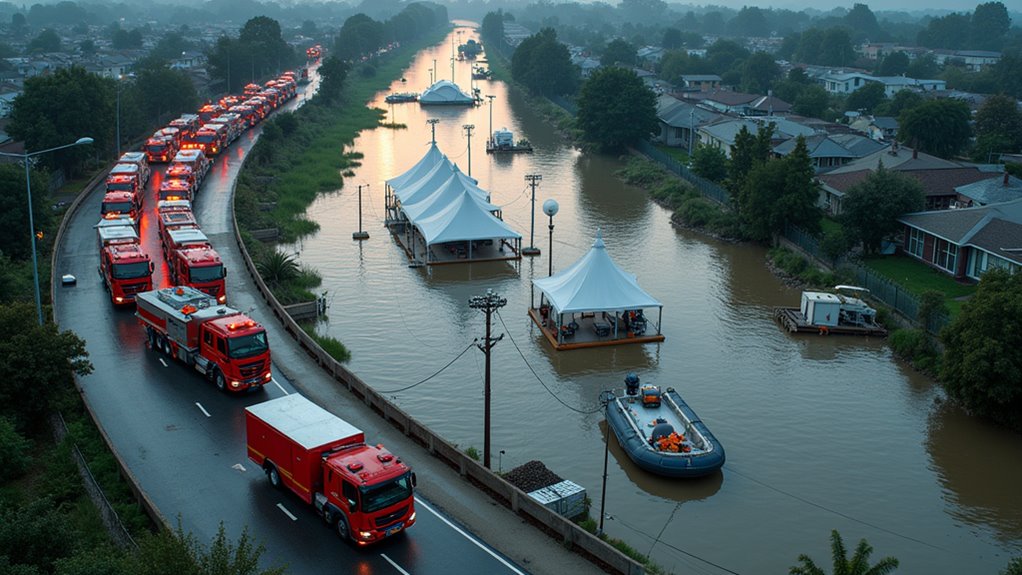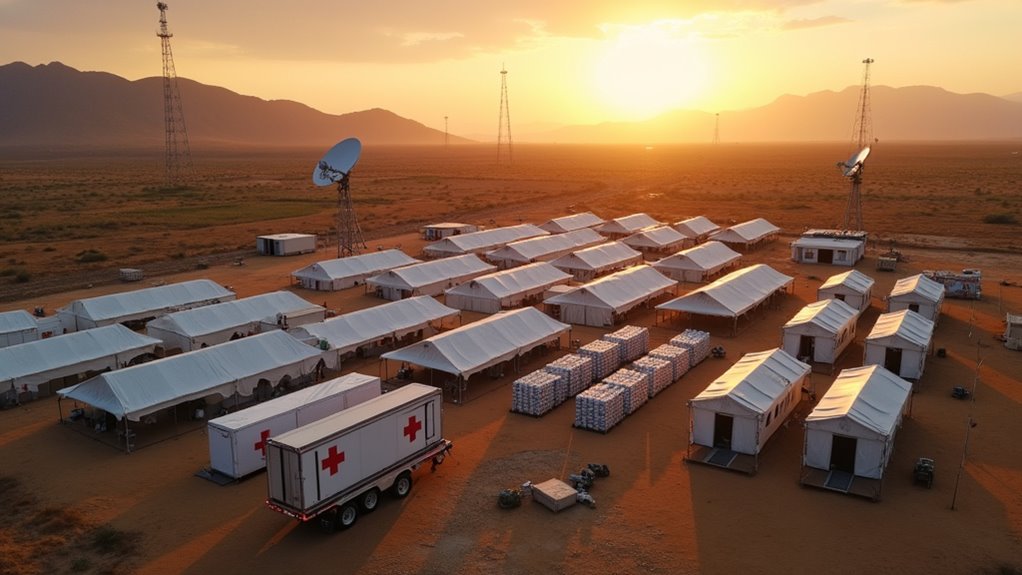

NGOs serve as crucial first responders during global disasters, deploying trained teams and resources within hours of catastrophic events. These organizations establish emergency relief centers, coordinate with local authorities, and deliver essential supplies like food, water, and medical care to affected populations. Through early warning systems and needs assessments, NGOs guarantee efficient aid distribution while supporting long-term recovery efforts. Their work extends beyond immediate crisis response to building community resilience and advocating for better disaster preparedness – a complex system of support that continues to evolve.
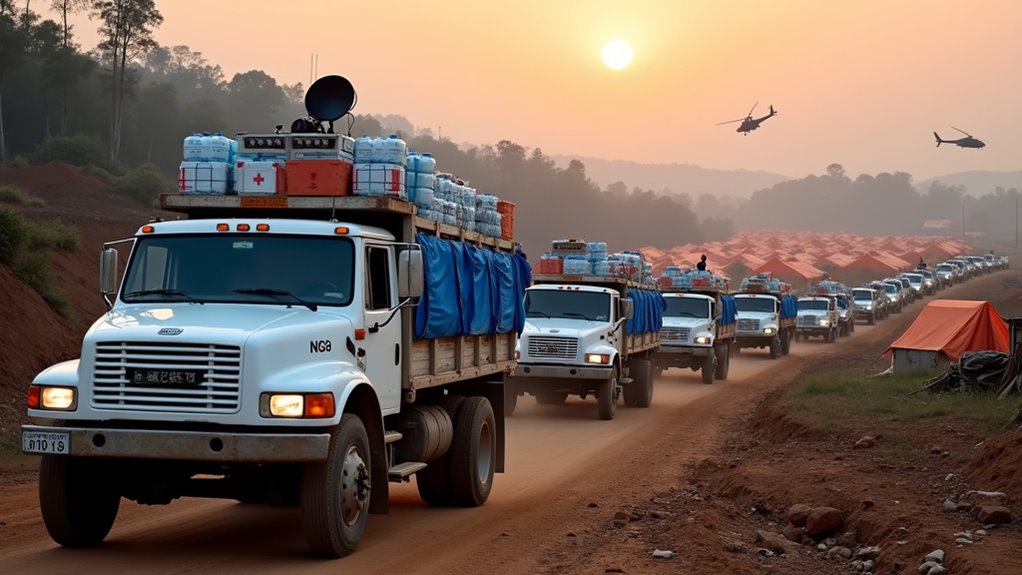
When disaster strikes communities around the world, non-governmental organizations (NGOs) serve as fundamental first responders, mobilizing within hours to provide life-saving assistance and support. These organizations deploy trained disaster workers, establish emergency relief centers, and coordinate with local authorities to guarantee rapid and effective response to crises. Through pre-positioned supplies and established volunteer networks, NGOs can quickly reach affected populations with essential aid. The increasing frequency and severity of disasters, often linked to extreme weather patterns, underscore the urgent need for these rapid responses.
The immediate priority in disaster response is meeting basic human needs. NGOs distribute food, water, and emergency supplies while setting up temporary shelters for displaced populations. Medical teams provide urgent care and first aid, addressing both physical injuries and mental health needs. Establishing sanitation facilities and hygiene services is crucial to preventing disease outbreaks, which often follow in the wake of disasters. The IFRC-DREF Council provides critical oversight to ensure efficient allocation of emergency resources. Response and relief efforts represent the largest portion of foundation giving at 38% of total disaster funding. Grassroots movements play a crucial role in ensuring that vulnerable populations have a voice in shaping these emergency responses.
Emergency response starts with basics: food, shelter, medical care, and sanitation to protect vulnerable populations from immediate dangers and disease.
Communication plays a significant role in effective disaster response. NGOs implement early warning systems and disseminate critical information to affected communities. They facilitate connection between separated family members and conduct detailed needs assessments to confirm aid reaches those who need it most. Regular updates keep donors and the public informed about relief progress and ongoing challenges. Analyzing lessons from environmental disasters helps NGOs refine their strategies and improve future disaster preparedness.
Beyond immediate emergency response, NGOs contribute considerably to long-term recovery efforts. They assist with debris removal, infrastructure repair, and the rebuilding of homes and community facilities. Programs supporting livelihood restoration help communities regain economic stability, while disaster risk reduction strategies strengthen resilience against future catastrophes.
NGOs bring specialized expertise and resources that amplify their impact. Technical teams deploy with advanced equipment for tasks like water purification and search and rescue operations. Modern technology enables precise mapping and data collection, while cultural and language expertise guarantees effective communication in diverse contexts.
Resource mobilization is essential for sustained disaster relief. NGOs launch emergency appeals, coordinate with corporate partners, and leverage existing donor networks to secure necessary funding. They’ve embraced innovative fundraising approaches, including crowdfunding and social media campaigns, while maintaining transparency in fund management.
These organizations also serve as powerful advocates for improved disaster preparedness and response policies. They raise awareness about ongoing crises, particularly those that receive limited media attention, and promote adherence to international humanitarian standards. Through collaboration with governments and representation of affected communities, NGOs help shape more effective disaster management strategies.
The thorough approach of NGOs to disaster relief – combining immediate response, long-term recovery, specialized expertise, and advocacy – has proven indispensable in helping communities survive and rebuild after catastrophic events. Their ability to mobilize quickly, coordinate effectively, and maintain sustained support makes them indispensable actors in global humanitarian response efforts.
Frequently Asked Questions
How Can Individuals Volunteer With Disaster Relief NGOS Internationally?
Individuals can volunteer internationally with disaster relief NGOs through several established pathways. Organizations like Red Cross, All Hands and Hearts, and Samaritan’s Purse maintain volunteer rosters.
Applicants typically need relevant skills (medical, construction), must complete required training, and undergo background checks. Medical Teams International and Heart to Heart deploy qualified volunteers to disaster zones worldwide.
Volunteers should be prepared for challenging conditions and able to deploy quickly when needed.
What Percentage of Donations Actually Reaches Disaster-Affected Communities?
Based on recent data, only a small portion of disaster relief donations directly reaches affected communities. Around 90% goes to immediate response, while just 10 cents of every dollar supports long-term recovery and preparedness.
Specifically, in 2021, only 4.8% went to reconstruction, 1% to preparedness, and 4.1% to risk reduction efforts.
Administrative costs, organizational inefficiencies, and donor preferences greatly impact fund distribution.
Local partnerships and improved transparency can help increase effectiveness.
How Do NGOS Coordinate With Local Governments During Emergency Responses?
NGOs coordinate with local governments through established communication channels, emergency hotlines, and joint briefings.
They align their operations with existing disaster management frameworks while providing specialized expertise and resources where needed.
Regular coordination meetings and standardized reporting formats guarantee consistent information flow.
NGOs also develop long-term partnerships through memorandums of understanding, joint training initiatives, and shared resource databases to enhance emergency response capabilities.
What Qualifications Are Needed to Work in Disaster Relief Organizations?
Working in disaster relief requires a strong educational foundation, typically including a bachelor’s degree in emergency management or related fields.
Key qualifications include specialized certifications from organizations like FEMA, first aid training, and demonstrated experience in crisis response.
Technical skills such as GIS mapping and data analysis are crucial.
Personal qualities like staying calm under pressure, cultural sensitivity, and willingness to deploy quickly are essential.
Language skills and international experience provide additional advantages.
How Do NGOS Determine Which Disasters Require Immediate Response?
NGOs use systematic assessments to determine emergency response needs.
Risk assessment teams analyze the likelihood and impact of hazards, while needs assessment teams evaluate urgent requirements for food, water, and shelter.
Organizations review their capacity to respond effectively and coordinate with other agencies to avoid duplication.
They prioritize disasters based on factors like population vulnerability, scale of impact, and their ability to provide meaningful assistance in the affected region.